


More than 50,000 workers marched to Plaza de Mayo in Buenos Aires on Friday to protest President Javier Milei's economic policies. The demonstration coincided with Saint Cajetan's Day, the patron saint of work, and brought together major labor confederations, popular movements, and human rights groups.
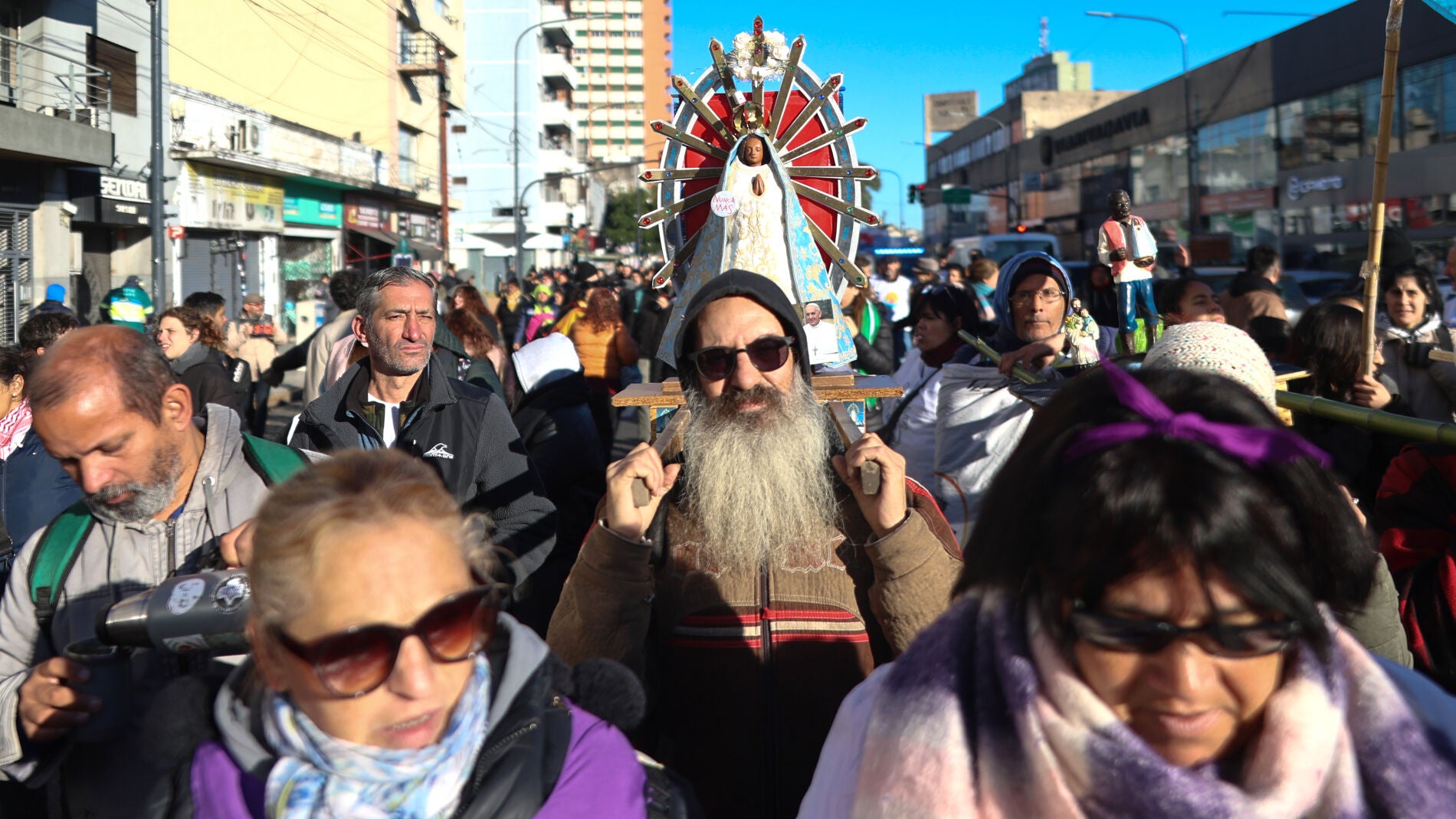
Protesters gathered in the morning at the sanctuary of Saint Cajetan in the Liniers neighborhood of Buenos Aires, where priests performed the traditional blessing of work tools. Demonstrators then walked more than 13 kilometers across the city to the Plaza de Mayo, located in front of the executive headquarters.
The mobilization was called by the General Confederation of Labor (CGT), the Center of Argentine Workers (CTA), human rights organizations, and popular economy groups. The march marked 10 years since the first Saint Cajetan demonstration under the slogan demanding peace, bread, land, shelter, and work.
March across Buenos Aires
Alejandro Gramajo, general secretary of the Union of Workers of the Popular Economy (UTEP), told EFE that union leaders were convinced they would reverse the situation in favor of working class sectors. He said that through faith, unity, struggle, and organization, no family would lack food, work, healthcare, or education.
The day included a tribute to Taty Almeida, a historic member of Mothers of Plaza de Mayo who died on June 14. Nobel Peace laureate Adolfo Pérez Esquivel participated in the tribute and said people must work together to think about how to rebuild the country, adding that Argentina faces a situation of hunger and unemployment.
Criticism of government policies
During the rally, organizers read a manifesto describing the social and economic situation as one of the most difficult in recent decades. They criticized the policies of Milei's administration, accusing it of prioritizing financial speculation and wealth concentration over domestic production and employment.
The statement said that behind speeches on fiscal balance and financial markets, millions of workers suffer daily from lost wages, uncertainty, unemployment, and fear of the future.
The document defended registered employment, collective bargaining agreements, trade unions, national production, public works, and social protection. Organizers also demanded a greater state presence in areas such as healthcare, education, science, and technology.


