

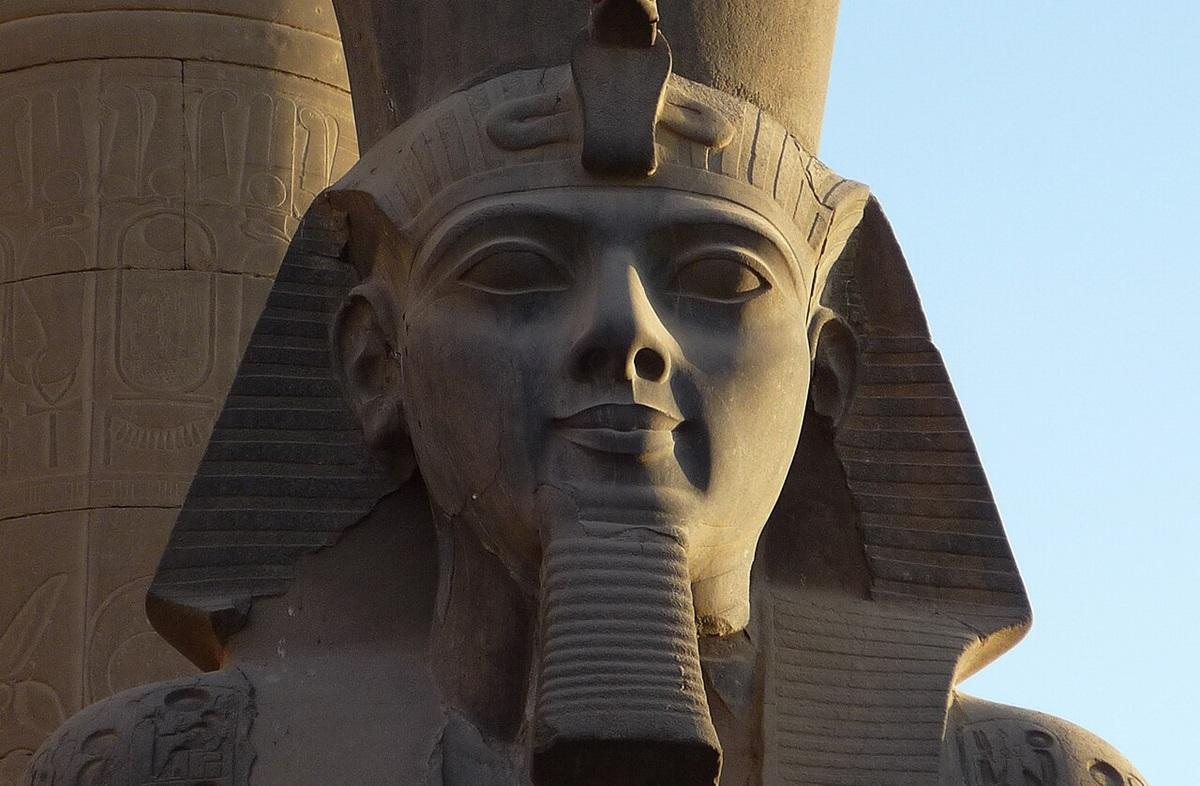
A colossal statue of the Egyptian pharaoh Ramesses II, which lay in two separated pieces for almost a century, has been physically reassembled and reinstalled at its original location in Egypt, according to a report by Daily Galaxy.
The lower half of the statue was discovered in 1930, but the upper half was not found until 2024. The reassembled colossus stands about 6.7 metres tall and weighs more than 40 tons. It once again guards the northern entrance to a temple at Hermopolis Magna, the site where it was first erected more than 3,200 years ago.
Ramesses II ruled ancient Egypt during the 19th dynasty and is remembered as one of its most powerful pharaohs, known for major building projects across the country during a long reign.
A Discovery Decades in the Making
In 1930, German archaeologist Gunther Roeder found the lower part of the statue near the modern town of El-Ashmunein in Egypt. In antiquity, the site was known as Khmun, the provincial capital of the Old Kingdom.
For decades, the upper half of the statue was thought to be lost, one of many treasures believed to still lie buried beneath the desert sands surrounding the ancient city. Daily Galaxy noted that the reconstructed statue is the first complete colossus recovered from Middle Egypt, and the first to be studied using modern archaeological methods.
An Accidental Find
The report said the missing fragment was actually found lying face down in the ground weeks before a joint Egyptian-American team made its announcement in March 2024. Experts from Egypt's Ministry of Tourism and Antiquities described the recovered piece as a figure standing about 3.8 metres tall.
Archaeologists already knew that a large part of Hermopolis Magna's ancient treasures remained underground, but the exact location of this last fragment still came as news to the team.
Risks of Digging Near the Nile
Yvona Trnka-Amrhein, co-director of the expedition and an associate professor of classics at the University of Colorado Boulder, said the team knew such a find was possible but had not been actively searching for it at the time. Excavating so close to the Nile carried a real risk to preserving the stone.
Trnka-Amrhein said in a press release that the site's location next to the river created constant problems with groundwater levels.
Further excavation confirmed that the fragment had survived in remarkably good condition. Researchers also found traces of blue and yellow pigment still clinging to the surface, a rare instance of preservation that could eventually help scientists better understand the statue's original coloring and the circumstances of its creation.


