

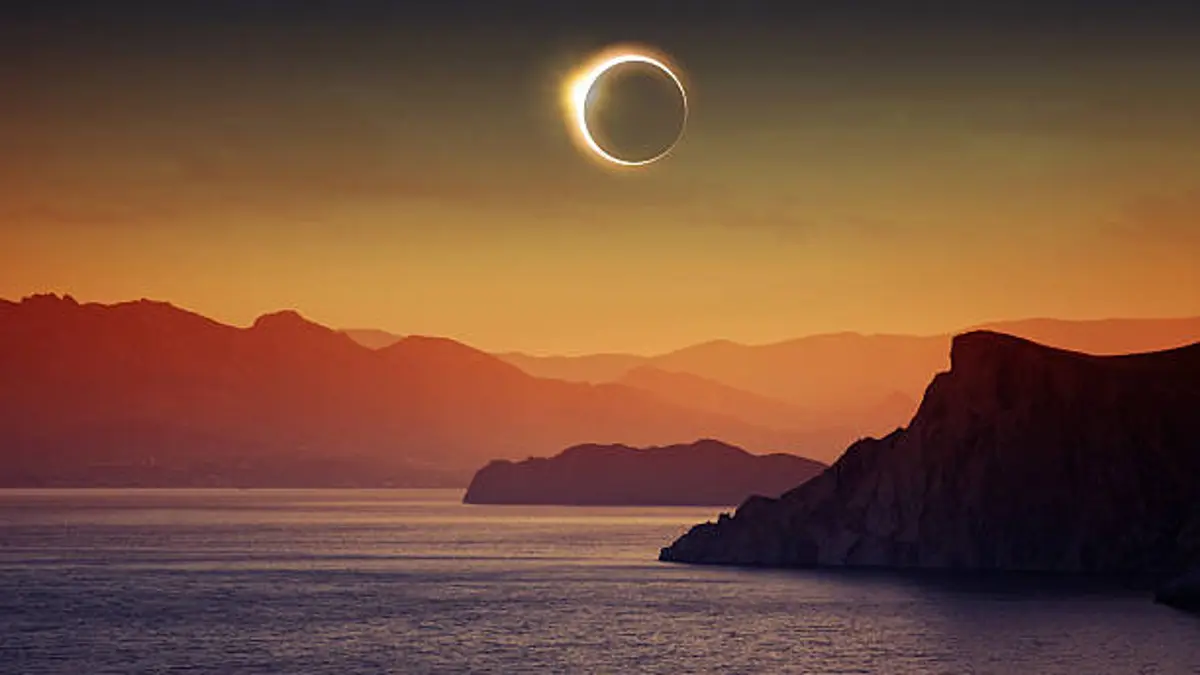
Restaurants across Mallorca are reporting a sharp rise in reservations ahead of the total solar eclipse on August 12, as residents and tourists rush to secure spots to watch the phenomenon, according to hospitality operators on the island.
Demand is highest at venues with clear sea views, since the eclipse will coincide with sunset, an unusual combination that has turned the date into one of the most sought-after on the island's restaurant calendar.
Sea-view restaurants most in demand
The areas seeing the biggest jump in bookings include Puerto de Sóller, Sant Elm, Port d'Andratx, Calvià and several establishments along the Bay of Palma. These locations offer a prime vantage point for the total solar eclipse, which is why many venues are already fielding a high volume of requests.
Hospitality operators are advising both residents and visitors planning trips to the island not to wait until the last minute to book. Given the level of demand, many of the best-located restaurants are expected to fill their capacity well in advance.
Juan Miguel Ferrer, president of Restauración Mallorca CAEB, described the event as an opportunity to enjoy Mallorca's dining scene while witnessing an exceptional astronomical phenomenon, one capable of drawing visitors and astronomy enthusiasts from many different places.
Eclipse path stretches across Spain
Although Mallorca has become one of the most sought-after destinations for viewing the eclipse, it will not be the only place where it can be seen. The band of totality will cross Spain from west to east, passing through the mainland before reaching the Balearic Islands.
Cities within the path of totality include A Coruña, Lugo, León, Burgos, Bilbao, Logroño and Teruel, in addition to several points across the Balearic archipelago. These locations are expected to become reference points for thousands of people hoping to witness one of the most anticipated astronomical events in recent years.
Spain's first eclipse of its kind since 1912
The event carries particular historical weight, since Spain has not experienced an eclipse of this kind since 1912. More than a century later, the country will once again fall within the path of a total solar eclipse, a phenomenon visible only from a narrow strip of territory and one that rarely coincides with such densely populated areas.
This will not be the only major astronomical event visible from Spain in the coming years. Over roughly a year and a half, three eclipses will be observable from different parts of the mainland. After the one on August 12, the next will arrive on August 2, 2027, followed by a third on January 26, 2028.


