Peruvian television presenter Magaly Medina launched a sharp warning against former national football team striker Jefferson Farfan on Tuesday night, September 29, 2026, declaring she will take their legal battle to Peru's Constitutional Court after he publicly alleged irregularities in their ongoing court proceedings in Lima.
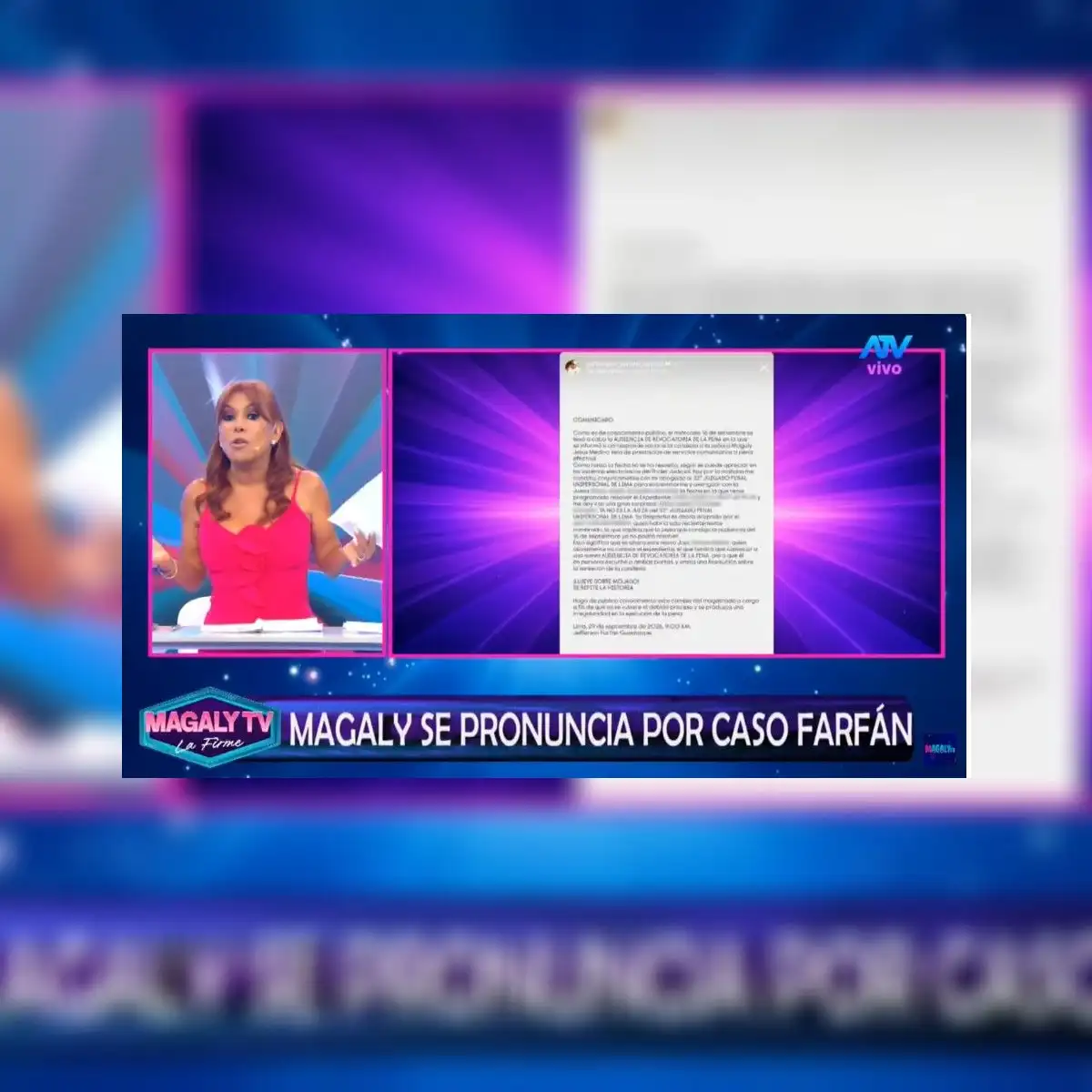
Speaking live during her broadcast of Magaly TV, La Firme, the 63-year-old presenter rejected claims of judicial manipulation and accused Farfan of seeking to send her to prison at all costs following a last-minute change of judge handling their defamation case.

Medina described the former footballer's public accusations as outrageous, disclosing that she had already filed a constitutional injunction before the 9th Constitutional Court in Lima nearly a year ago.
She explained that the constitutional challenge was submitted because her legal defense identified multiple procedural errors during the initial trial that violated her fundamental constitutional right to due process.
The legal dispute escalated after Farfan publicly complained about a last-minute replacement of the presiding magistrate, claiming that removing the judge who held authority to sentence Medina to prison delayed the final resolution of the case.
Background of the Legal Battle
Medina is a veteran Peruvian investigative journalist and entertainment television presenter who has hosted celebrity news programs for decades on the ATV network. Known for her aggressive commentary on public figures, she is one of Peru's most influential media personalities, having faced several high-profile defamation suits throughout her broadcasting career.
Farfan is one of Peru's most celebrated former professional footballers, having earned over 100 international caps for the Peru national team and represented the country at the 2018 FIFA World Cup. He played as a forward for major European clubs, including PSV Eindhoven in the Netherlands and Schalke 04 in Germany, before ending his career at Alianza Lima and transitioning to digital media as co-host of the podcast Enfocados.
The legal conflict between the television host and the retired athlete stems from defamation lawsuits initiated by Farfan over investigative segments and commentary broadcast on Medina's show concerning his personal life.
Under Peruvian constitutional jurisprudence, a constitutional injunction action serves as an extraordinary legal instrument designed to protect individuals against the violation or threat of fundamental rights guaranteed by the constitution, particularly when standard court decisions involve procedural flaws.
Judicial Independence and Due Process
During her broadcast, Medina strongly denied taking any action behind the scenes to influence the Judicial Branch or cause modifications to the panel of judges handling the lawsuit.
She questioned Farfan's public complaints, asking whether anyone had seen her issue a formal public statement or demonstrate outside the headquarters of the National Board of Justice to lodge a complaint against court officials.
The National Board of Justice operates as an independent constitutional agency in Peru responsible for appointing, evaluating, and disciplining judges and prosecutors across all levels of the national legal system.
Medina asserted that constitutional protections apply equally to all litigants in a court of law, emphasizing that Farfan does not hold ownership over the Judicial Branch or the historic Palace of Justice courthouse in central Lima.
Next Steps in the Constitutional Court
Medina further questioned why Farfan consistently adopted a triumphant attitude regarding the litigation while her constitutional challenge remained pending decision before the 9th Constitutional Court.
She stressed that she had been waiting nearly a year for the court to rule on the procedural errors that affected her right to a fair trial.
Closing her statement, Medina confirmed that she will continue pursuing every legal recourse available within the Peruvian judicial system, affirming that she will not stop until her appeal reaches the Constitutional Court, Peru's highest authority for constitutional review.