
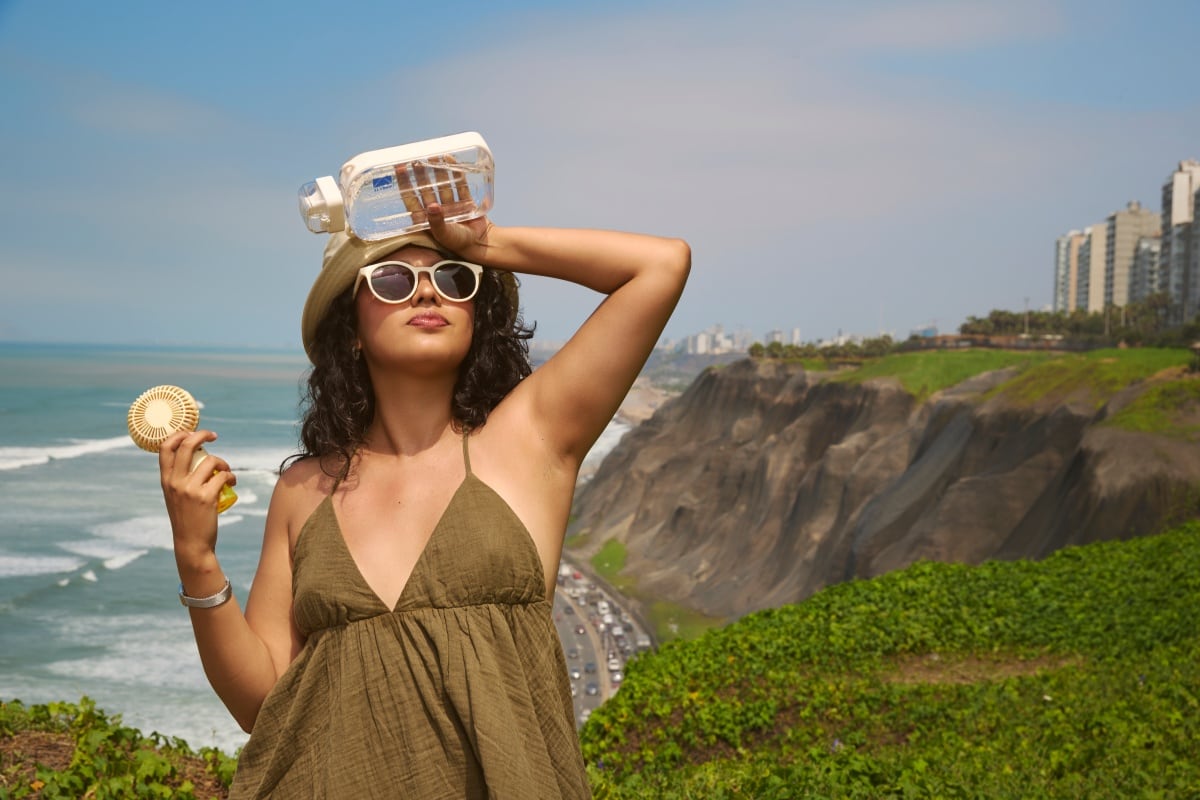
Lima is enduring an unusually hot November, with temperatures in the Carabayllo district reaching 33 degrees Celsius last week and some mornings starting at 25 degrees Celsius, six degrees above what is normal for this time of year. With less than a month to go before summer begins, the heat is becoming hard to bear both on the streets and at night in people's homes.
"This is historic. We have never had temperatures above 32 degrees in Lima in November," said engineer Grinia Ávalos, acting head of Peru's National Meteorology and Hydrology Service, known as Senamhi. She said a normal November afternoon should sit around 24 or 25 degrees Celsius, but thermometers in the capital have shown readings between 28 and 30 degrees, and even higher in some eastern districts. Ávalos compared the current readings with November 1982, 1997 and 2015, years that preceded intense El Niño episodes, and said none of them showed heat like this.
Why Lima is so hot
Ávalos pointed to abnormal warming of the sea off the Peruvian coast as the cause. Peru's multisectoral committee that monitors El Niño, known as Enfen, forecasts that the coastal El Niño will continue at an extraordinary magnitude until February before gradually weakening. For Lima, that means higher than normal temperatures through December, January and February, which Ávalos said will be much hotter than November. She warned that even autumn could begin with intense heat.
Senamhi has not ruled out temperatures exceeding 36 degrees Celsius in Lima this summer. But Ávalos said what concerns her more is a run of consecutive days above 32 or 33 degrees, since nights that barely cool down leave the body no time to recover, unlike a single hot afternoon followed by a cooler one.
The hottest districts
Ávalos identified Ate, La Molina, San Juan de Lurigancho and Carabayllo as among the hottest areas of the capital. Districts closer to the sea benefit from the breeze, while that relief fades further inland. As a result, a general forecast for Lima can understate what people actually feel in the east or north of the city, where shade is also harder to find during everyday outdoor activities.
The health risks of extreme heat
Doctors say the heat deserves to be taken seriously because it can disrupt walking, working, commuting by public transport and even sleeping. The body has to work harder to keep its temperature stable, and while sweating helps cool it down, losing too much water and salt can bring on fatigue and other signs of exhaustion. Drinking water throughout the day matters even more for people who spend hours outdoors or in hot spaces.
Young children, older adults, people with chronic illnesses and pregnant women need particular attention, according to Dr. Mónica Naranjo, an obstetrician-gynecologist at Clínica Internacional. She said heat can be especially difficult for pregnant women to cope with. Naranjo distinguished heat exhaustion, linked to excessive loss of water and salts, from heat stroke, a medical emergency in which the body's temperature regulation fails and confusion, convulsions or loss of consciousness can follow. The World Health Organization also lists pregnant women and young children among the groups most at risk from extreme heat.
Clinically, heat stroke usually involves a body temperature above 40 degrees Celsius along with altered mental state. That figure refers to body temperature, not air temperature, so someone can suffer heat stroke even without Lima itself reaching 40 degrees. If signs such as confusion or loss of consciousness appear, the advice is to call for medical help immediately and begin cooling the person while help is on the way.
Dr. Claudia Yauli, a family physician at the Mapfre Medical Center, pointed to another effect of the heat: sudamina, an itchy heat rash that commonly appears on the neck, armpits and other skin folds. To prevent it, she advised seeking out cooler environments and wearing loose cotton clothing, even long sleeves, that covers the skin, along with taking three short showers a day to help regulate body temperature.
How to protect yourself
Ávalos recommended checking Senamhi's weather reports and alerts before spending several hours outside, a habit common elsewhere but not yet widespread in Peru. All forecasts and alerts are published on Senamhi's website and updated throughout the day.
- Dr. Naranjo said ventilation matters, especially air currents, and that houseplants help purify and cool indoor air, while curtains on windows help block out the sun.
- Doctors recommend drinking between 2 and 2.5 liters of liquids a day, with some suggesting up to three liters, and keeping a water container on hand to sip from regularly without waiting to feel thirsty.
- People are advised to avoid going out between 10 a.m. and 4 p.m. and, if they must, to stick to shade, wear loose cotton or linen clothing rather than synthetic fabrics, apply sunscreen, carry a wide-brimmed hat or umbrella and a water bottle, and eat fruits such as watermelon, melon or papaya.
- In Peru, the free 24-hour emergency medical number for heat stroke is 106, run by SAMU. Free medical guidance is available by calling Line 113 and selecting option 3.
Pets are at risk too
Dogs and cats can also suffocate and suffer heat strokes, a veterinary emergency that can be life-threatening. Unlike humans, pets do not sweat across their whole bodies, regulating their temperature mainly through panting and the pads of their paws, a system that can fail in very hot or poorly ventilated environments. Specialists also warn that the sun damages the skin of dogs and cats, with the nose, ears, eyelids and abdomen the most exposed areas. Shaving a dog is not recommended because it strips away its natural protection. Pet owners are advised to keep animals in the shade, well ventilated and well hydrated during this period.
What happens next
Senamhi forecasts that December, January and February will be hotter than November, with the coastal El Niño expected to persist at extraordinary magnitude until February before gradually weakening, and summer temperatures in Lima could exceed 36 degrees Celsius.
Test yourself
What temperature did Carabayllo reach last week, according to the article?
What is Grinia Ávalos's role, according to the article?
What is Peru's free 24-hour emergency number for heat stroke?
Have your say
How are you coping with Lima's unusually hot November?
Where it happened
Lima, Peru