
Chinese space company LandSpace will attempt to land the first stage of its Zhuque-3 rocket on Monday, August 10, following a launch from the Jiuquan Launch Center in northwestern China.
The mission aims to place the rocket's second stage into orbit before guiding the first stage back to Earth for a controlled vertical landing, allowing the booster to be recovered and refurbished for future space flights.
The upcoming flight will be the second recovery attempt by Beijing-based LandSpace for the Zhuque-3, following its inaugural mission in December 2025. During that first launch, the rocket's upper stage successfully reached orbit, but the first stage exploded during the final phase of its landing attempt.
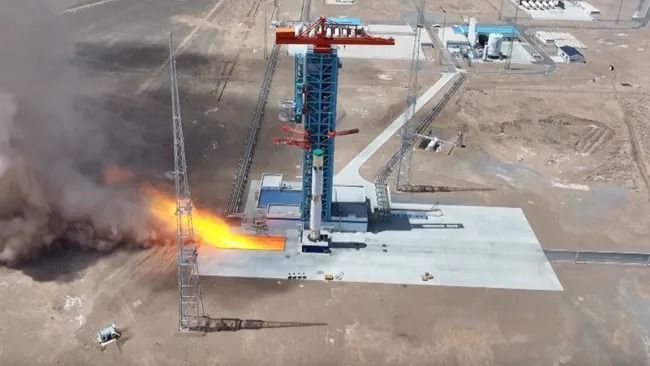
Ahead of the new attempt, LandSpace performed a static engine ignition test on June 29, a ground procedure where engines are fired while the rocket remains anchored to the launch pad. LandSpace stated that all test results were within expected parameters.
Zhuque-3 rocket specifications
The Zhuque-3 is a 66-meter-tall rocket constructed from stainless steel and powered by a liquid methane and liquid oxygen propellant combination. The vehicle is engineered to carry up to 18.3 metric tons of payload into low Earth orbit, the region of space up to 2,000 kilometers above the planet.
LandSpace designed the rocket around a reusable booster concept similar to the Falcon 9 developed by American aerospace company SpaceX. Rather than falling into the ocean after launch, the first-stage booster returns through the atmosphere to land vertically on land for subsequent flight preparation.
China reusable rocket program
The August 10 mission will mark China's fourth attempt to perform an orbital booster landing. The nation's first two attempts, conducted with the Zhuque-3 in late 2025 and the Long March 12A rocket, both ended in explosions during atmospheric descent.
China made spaceflight history in July 2026 when the Long March 10B rocket successfully completed a controlled touchdown. That success made China the second country in the world, after the United States, to land an orbital rocket booster. LandSpace is now attempting to repeat the milestone with the Zhuque-3 as China seeks to advance reusable rocket capabilities for future space exploration.