

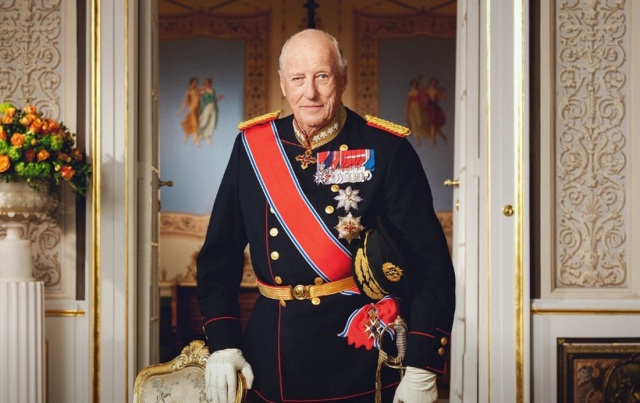
King Harald V of Norway, Europe's oldest active monarch and a cousin of King Charles III, died on Friday, August 28, 2026, at the age of 89 following a short hospitalisation in Oslo.
The Royal Court of Norway announced that the monarch passed away peacefully at 06:35 at Oslo University Hospital, Rikshospitalet.
King Harald had been hospitalised with hemolytic anemia, a disorder in which red blood cells are destroyed faster than normal, leading to fatigue, paleness and difficulty breathing.
Palace officials reported that his condition deteriorated after he contracted an infection, prompting members of the Norwegian royal family to gather at his hospital bedside on Thursday.
Crown Prince Haakon now accedes to the Norwegian throne and is expected to take the regnal name King Haakon VIII.
Norwegian parliamentary speaker Masud Gharahkhani stated that Norway had lost its beloved king and that the entire nation was in mourning over the monarch who ruled under the motto All for Norway.
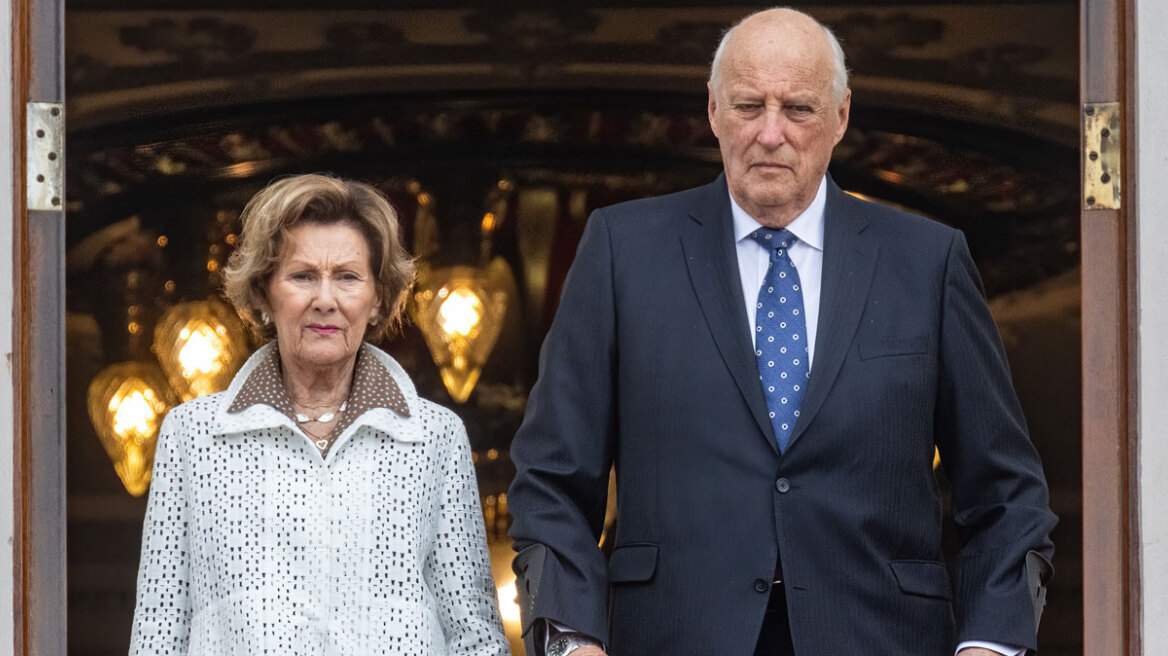
Succession and international tributes
King Charles III paid tribute to his cousin in a personal message published on British royal family social media channels.
The British monarch said that he and his wife learned of King Harald's passing with the deepest sadness, noting that the Norwegian king had served his people with unwavering devotion for 35 years.
King Charles added that King Harald had guided Norway through periods of major change with warmth and humility, and that his family joined in remembering a relative whose kindness, compassion and sense of duty resonated across the sea and through the decades.
King Harald had occupied the Norwegian throne since January 17, 1991, becoming the oldest reigning monarch in Europe following the death of Queen Elizabeth II in 2022.
Childhood and wartime exile
Born on February 21, 1937, Harald was the third child and only son of King Olav V of Norway and Princess Martha of Sweden.
He was a great-grandson of King Edward VII of Britain, with godparents including Queen Mary and King George VI, the grandmother and father of Queen Elizabeth II.
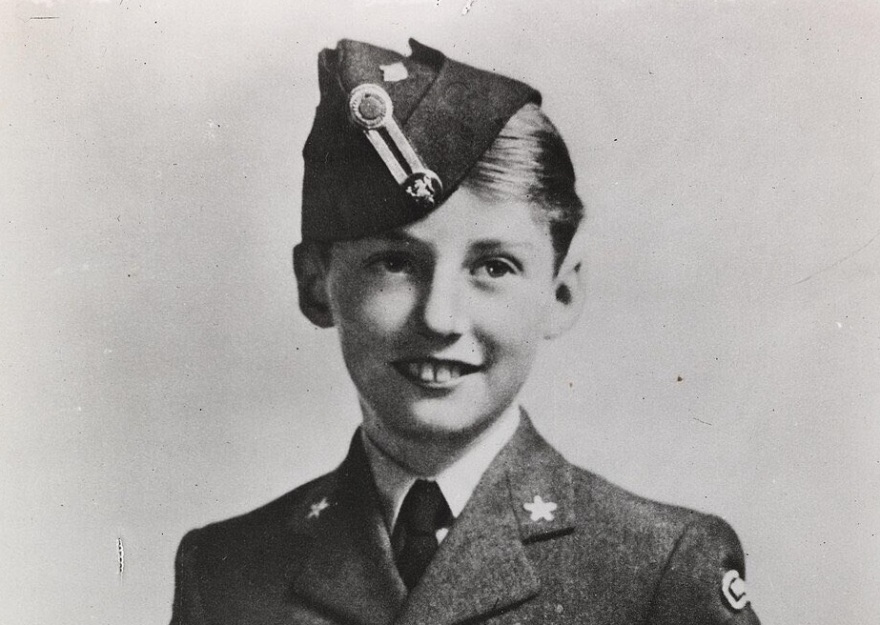
His early childhood was shaped by World War II when Nazi Germany invaded Norway in April 1940, when Harald was three years old.
Prince Harald, his mother Princess Martha, and his two older sisters, Ragnhild and Astrid, fled to Sweden before traveling to the United States in August 1940 to live in Washington until the war ended.
His father, then Crown Prince Olav, and his grandfather, King Haakon VII, remained in Norway to resist German forces before evacuating to London in June 1940 with the exiled government.
During their exile, Crown Prince Olav and King Haakon stayed initially at Buckingham Palace, where a young Princess Elizabeth found the two royals sleeping on the floor of the royal shelter during an air raid.
Princess Elizabeth noted in a letter to Queen Mary that while she was glad to host them, it was slightly tiring to never be alone.
Prince Harald returned to Norway in June 1945 at age seven following the defeat of Nazi Germany, finding that the royal palace had served as a prison during five years of occupation while the population suffered severe hardship.
Education and royal romance
In 1954, nine years after returning home, Prince Harald lost his mother to cancer when he was 17 years old, later naming his firstborn daughter Martha in her memory.
King Haakon VII died three years later in 1957 at age 85 after nearly 52 years on the throne, making Harald the heir apparent.
Prince Harald studied at the University of Oslo and graduated from the Norwegian Military Academy in 1959.
Earlier in 1959, he met Sonja Haraldsen, the daughter of an Oslo clothing merchant, at his graduation ball.
Her commoner background sparked strong opposition within the royal court, forcing the couple to keep their relationship secret for years.
When the relationship became public, the palace maintained that they could not marry, leading Prince Harald to threaten that he would remain unmarried for life if he was not allowed to marry the woman he loved.
King Olav V eventually yielded and granted his consent, allowing the couple to marry in 1968 at Oslo Cathedral.
Both had completed higher education in England prior to their wedding, with Sonja studying English at Cambridge and Harald studying Politics, Philosophy and Economics at Balliol College, Oxford, between 1960 and 1962.
An avid sportsman, Prince Harald competed in rowing and represented Norway in sailing at the Olympic Games in Tokyo in 1964, Mexico City in 1968, and Munich in 1972.
Reign and British royal ties
The couple welcomed their first child, Princess Martha Louise, in 1971, followed by Crown Prince Haakon in 1972.
Prince Harald ascended the throne at age 53 in January 1991 following the death of his father, leaving Haakon to wait decades before becoming heir apparent.
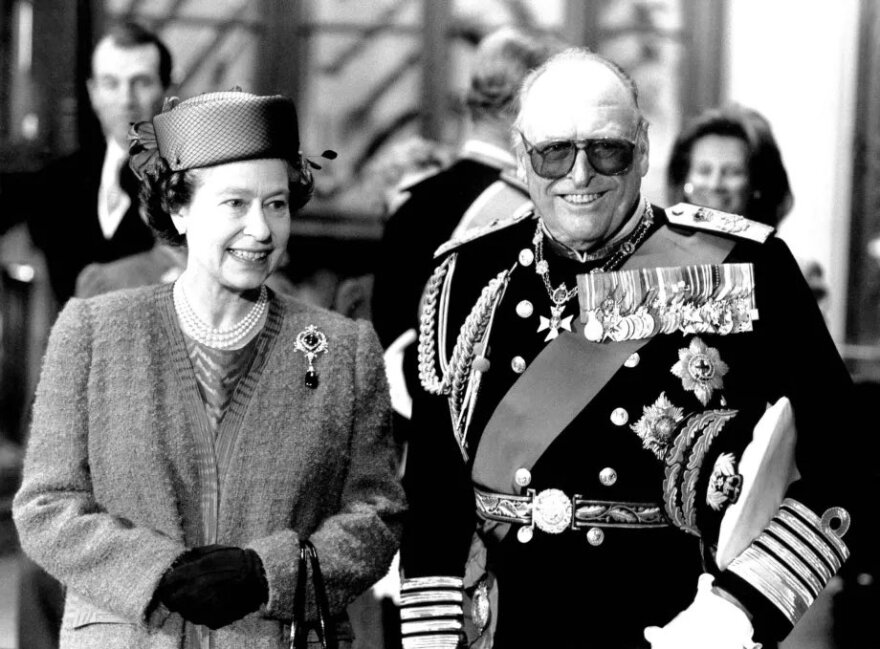
King Harald maintained close personal ties with the British royal family throughout his life, visiting Sandringham for a hunting weekend in 1996 and attending Prince Charles's 50th birthday at Highgrove in 1998 among roughly 250 guests.
He attended the 2011 wedding of Prince William and Kate Middleton as well as Queen Elizabeth II's Diamond Jubilee lunch in 2012.
Queen Elizabeth II made three official state visits to Norway during her reign, traveling to the Scandinavian nation in 1955, 1981, and 2001.
Family controversies and Greek ties
Like other European royal houses, King Harald's family faced occasional public controversies during his reign.
In recent months, the royal family was shaken by revelations surrounding Princess Mette-Marit, the wife of Crown Prince Haakon, and her past ties to Jeffrey Epstein.
Princess Mette-Marit faced public criticism after archive records showed she stayed at Epstein's Palm Beach mansion in 2013 following his conviction for offences against underage girls, with emails indicating contact until months before his death.
Princess Mette-Marit, who has been diagnosed with pulmonary fibrosis, issued a public apology stating that the emails did not represent the person she wished to be.
King Harald publicly defended his daughter-in-law, stating that she had done nothing illegal and had severed ties with Epstein relatively early.
King Harald also maintained diplomatic and dynastic links to Greece, completing an official state visit to Athens with Queen Sonja in December 2012 where they visited the Acropolis and attended a hotel reception.
He held distant ancestral links to the former Greek royal family through the House of Glücksburg, and 1960s gossip columns once speculated on a potential marriage to Princess Irene of Greece and Denmark before his marriage to Sonja.
Health struggles and final days
The final years of King Harald's life were marked by recurrent medical problems that repeatedly forced him to step back from official duties.
He was fitted with a pacemaker during an emergency medical procedure in Malaysia two years prior to his death.
In February 2026, the 89-year-old monarch was admitted to a hospital in Tenerife while vacationing with Queen Sonja to receive treatment for an infection and dehydration, with his condition listed as satisfactory.
On August 17, 2026, he was urgently admitted to Oslo University Hospital with hemolytic anemia.
Palace officials announced on August 23 that his condition had deteriorated over the weekend and that he was receiving intravenous antibiotics for a bacterial blood infection.
The palace added that cortisone treatment for his anemia had caused fluid retention, requiring extended hospitalisation and a planned two-week leave of absence.
Despite his failing health, King Harald repeatedly rejected calls to abdicate, stating that his coronation oath before the Storting was a lifelong commitment.
His condition proved irreversible, ending a reign that spanned more than 35 years.


