

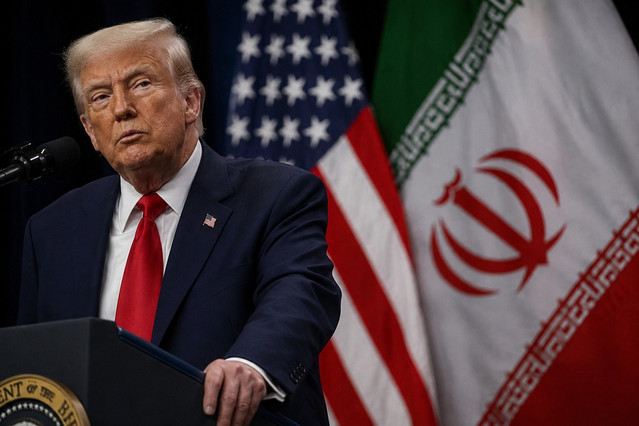
Iran's Economy Minister Ali Madanizadeh said Tehran is prepared to withstand a new wave of American economic pressure, hours after the Trump administration unveiled what it calls the largest financial offensive it has ever mounted against a rival nation.
Madanizadeh told Iranian state television that the United States had done everything possible to test the resolve of the Iranian people and their leaders, and had failed every time, adding that Washington seemed determined to suffer another defeat. He said the government was ready and had a two-year plan to manage the fallout.
Pentagon does not rule out new strikes
US Defense Secretary Pete Hegseth said the Trump administration had not ruled out further military action against Iran, after Washington revealed its plans for what it called an economic D-Day against Tehran, a reference to the Allied landings in Normandy in 1944. Hegseth told reporters the United States was in no way ruling out strikes anywhere in the Strait of Hormuz or around Iran, arguing that Tehran could not withstand the economic pressure about to be applied.
From 'economic D-Day' to a 'warning shot'
President Donald Trump and Treasury Secretary Scott Bessent had raised expectations sharply beforehand by trailing an economic D-Day, with Bessent previewing the scale of the measures in an article for the Financial Times. When the announcement came, however, Washington chose not to immediately activate its full arsenal of secondary sanctions against states and companies trading with Iran.
Bessent described the choice not as a retreat but as a first message to those still doing business with Tehran, calling the economic D-Day a warning shot. Asked about it at a press conference, he said a warning shot and a clear statement of expectations was the right approach, adding that Washington was giving everyone a chance to correct their bad behaviour. He said applying sanctions immediately, without warning, risked blowing up the global financial system.
A grace period with an expiry date
The message to Tehran's economic partners came with a clear warning that the adjustment window would not stay open indefinitely. Bessent said it was important to set out the framework and give those involved time to correct the situation, but that they should know things would move very quickly afterward and that Washington was serious about what it said. He did not specify how long the grace period would last, but said American patience had limits, and he signaled that sanctions against a major financial institution would be announced by the end of the week. Trump has meanwhile begun personal contacts with foreign leaders to press for limits on their countries' dealings with the Iranian government.
Operation Economic Outcast: five new sectors targeted
The new pressure mechanism is named Operation Economic Outcast and aims to sharply restrict Tehran's international sources of financing. It significantly widens the scope for secondary sanctions across five sectors: digital assets, technology, gold, aviation and shipping.
The US Treasury also announced measures against more than 60 individuals, companies, organizations and vessels across several countries, which it accuses of helping traffic Iranian oil, supply technology for nuclear and missile programs, and carry out cyber operations. The strategy extends beyond Iran's borders, aiming to make the cost of dealing with Tehran high enough that third-country governments, banks and businesses are forced to pick a side. The Treasury said each country would be given a clearly defined timetable to end Iran-related activity identified by US authorities.
China in the frame
A central question is whether Washington is truly willing to apply the new sanctions regime to Iran's most important economic partners. Bessent declined to say which countries had already received US warnings, what timelines they would be given, or which specific companies and banks might land on the sanctions list. Asked about Beijing, and specifically about Chinese banks financing imports of Iranian oil, he said China would not be exempted from the measures. According to the US side, the campaign will continue until Iran is isolated from international financial and trade channels, with Washington also hoping the pressure will push Tehran to shift its stance over the Strait of Hormuz.
Netanyahu says Iran tried to kill his son
Amid the escalating tension, Israeli Prime Minister Benjamin Netanyahu disclosed a threat he said had been directed at his own family. In a phone call with Channel 14 military correspondent Noam Amir, broadcast on Monday, Netanyahu said Iran had tried to assassinate one of his two sons.
He said it was an unbelievable case, that Iran had targeted one of his sons and tried to assassinate him. Netanyahu did not say whether he was referring to Yair or Avner, nor did he give details of when the plot was allegedly organized, how it was planned, or how close it came to succeeding.
According to Israeli media reports, the case had been known for months but was covered by a publication ban. In July, expanded protection had been approved for Netanyahu's wife, Sara Netanyahu, and for his sons Yair and Avner.
Security for political rivals ahead of the election
Netanyahu used the disclosure to argue for increased protection not only for his own family but also for political figures considered possible targets. He said Iran had tried to assassinate one of his sons, and that without the safeguard he was pledging, they could have succeeded, adding that people needed to show restraint, especially during an election campaign.
The remarks were directly linked to the security of former Israeli armed forces chief of staff Gadi Eisenkot, one of Netanyahu's most significant political rivals ahead of Israel's election on October 27. Netanyahu said he had spoken with the head of the Shin Bet and asked him to ensure appropriate security for anyone who runs for prime minister.
The prime minister's comments came as Israel's election contest intensifies and relations with Tehran remain central to both the country's politics and its security. Iran's mission to the United Nations had not immediately responded to Netanyahu's allegation.


