
Greece's Minister of National Economy and Finance, Kyriakos Pierrakakis, and Deputy Minister Thanos Petralias presented the 2027 state budget and the Multiannual Fiscal Plan (MFP) 2027-2030 to the Cabinet on November 25, setting out €11.45 billion worth of permanent fiscal measures to be phased in by 2030.
The MFP, now drafted for the second time, is approved by the Cabinet before parliament votes on the state budget and sets fiscal targets over a four-year horizon. The 2027-2030 plan is consistent with the limits set out in Greece's Medium-Term Fiscal-Structural Plan 2025-2028, which was submitted in October 2024 and approved by the European Council.

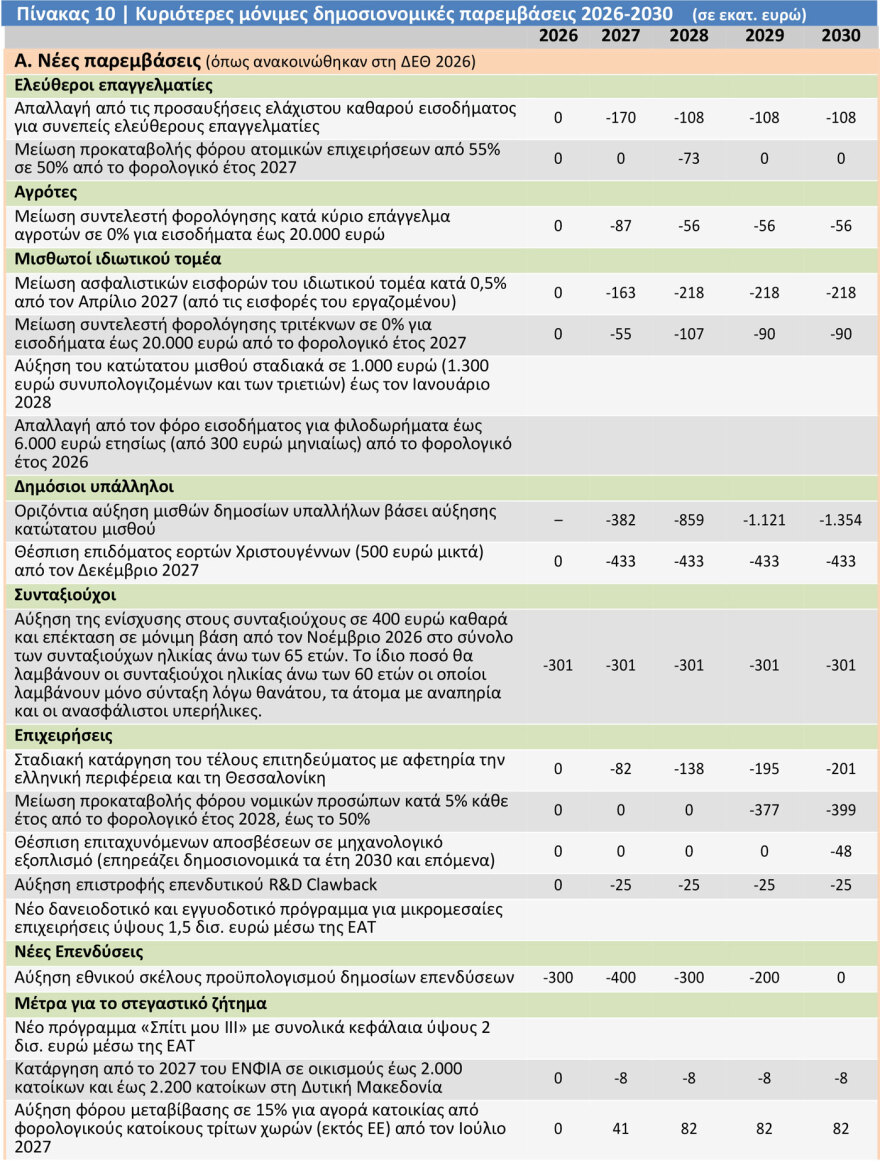
The plan brings together every fiscal intervention legislated or announced for 2027-2030. The cost of new permanent measures is estimated at €605 million for 2026 and €2.28 billion for 2027, rising gradually to €3.6 billion by 2030.
Breakdown of the fiscal cost
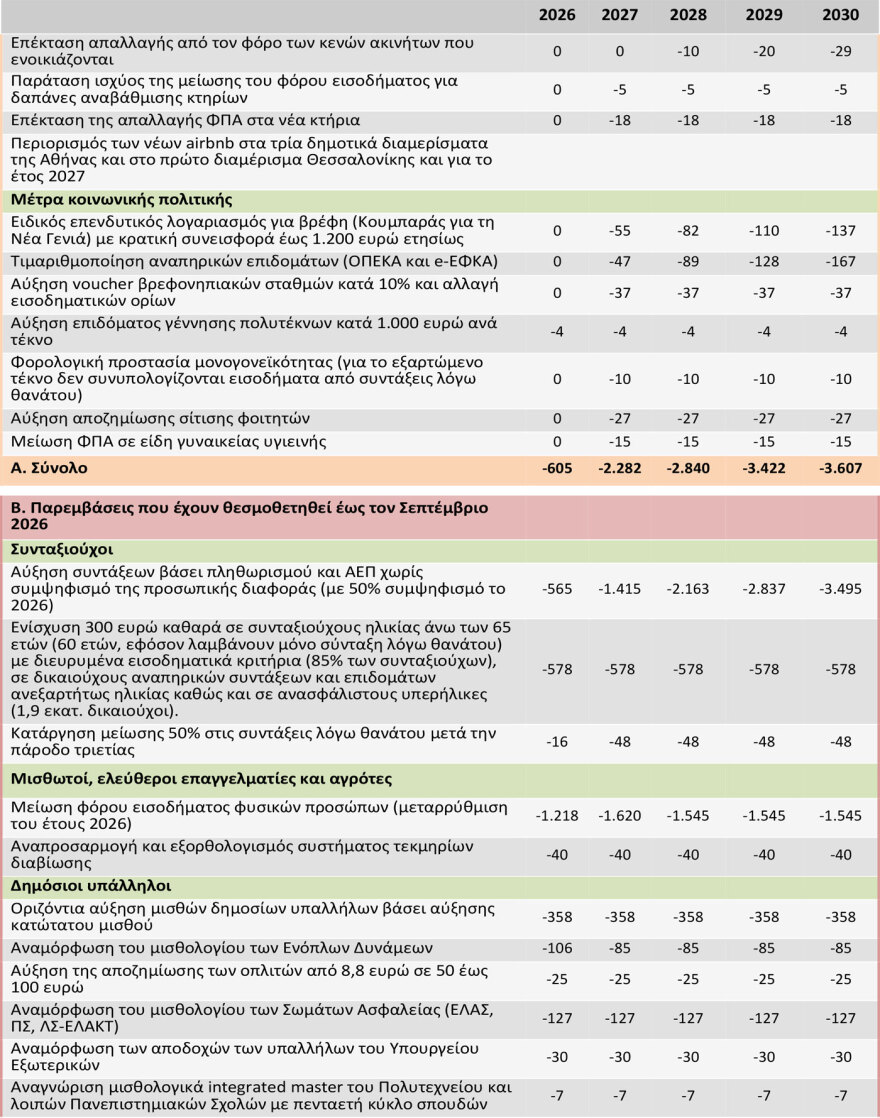
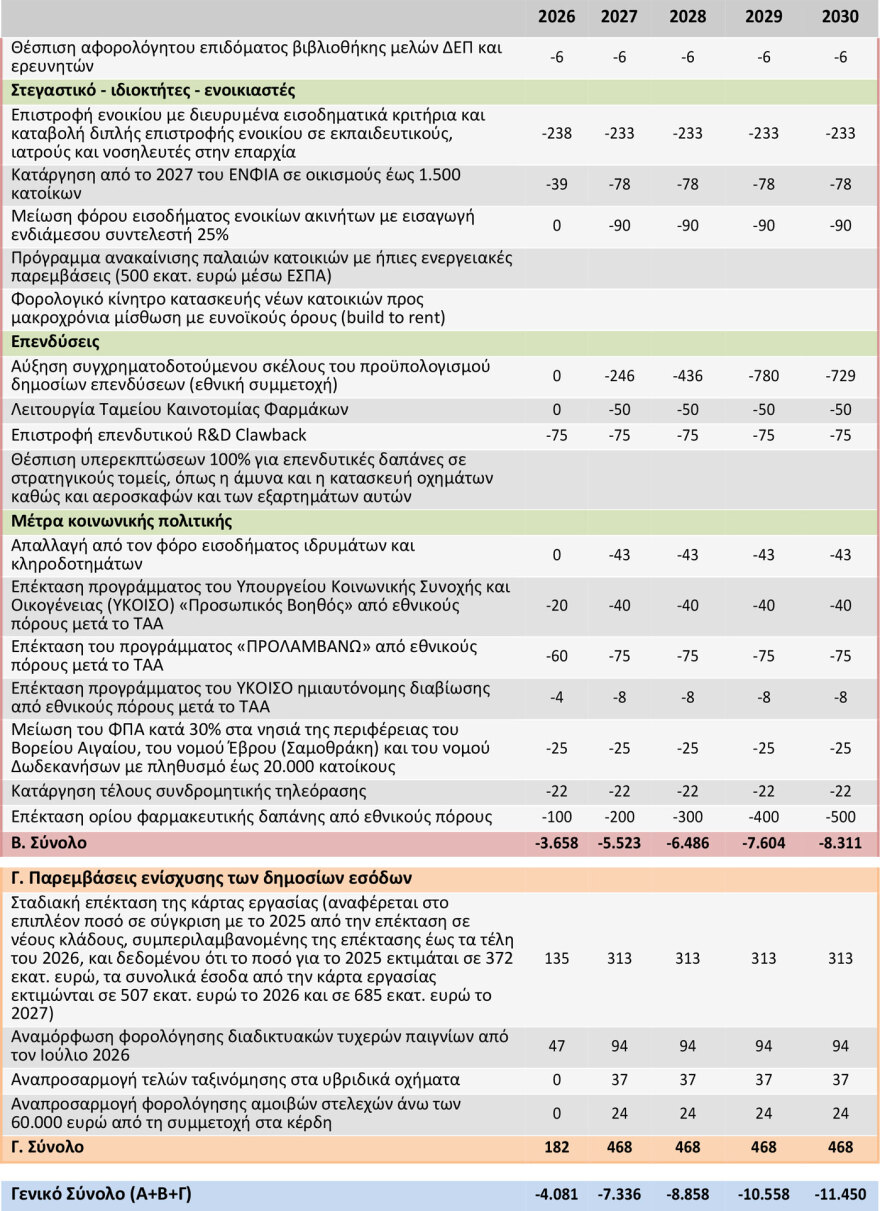
Permanent measures already legislated by September and being rolled out since the start of 2026 carry a separate fiscal cost, estimated at €3.66 billion in 2026 and €5.52 billion in 2027, climbing to €8.3 billion by 2030. The plan also includes measures to boost public revenue worth €182 million in 2026 and €468 million from 2027 onward.
Taken together, the main permanent fiscal interventions are estimated to cost €4.08 billion in 2026, rising to €7.3 billion in 2027, €8.86 billion in 2028, €10.56 billion in 2029 and €11.45 billion in 2030. The measures for 2027 match those already announced as part of the 2027 budget.
Key measures from 2028 onward
Some of the interventions planned for 2028 and later years include:
- Raising the minimum wage to €1,000 in January 2028, alongside a horizontal increase in public sector wages and further annual rises under existing legislation
- Gradually abolishing the business activity fee for legal entities and in the Attica Region
- Cutting the tax prepayment rate for the self-employed from 55% to 50% from the 2027 tax year, and reducing the prepayment rate for legal entities by 5% a year from the 2028 tax year, bringing it down from the current 80% to 50%
- Shortening accelerated depreciation on business investment in machinery from 10 years to 6 years
- Adjusting disability benefits annually in line with GDP growth and inflation
- Extending housing measures including a three-year exemption from the vacant property tax for rented homes, an income tax reduction for building upgrade costs, and a VAT exemption for new buildings
- Continuing the "Piggy Bank for the New Generation" scheme, enrolling newborns each year
- Raising pensions annually without offsetting the personal difference
- Paying an annual €400 support payment to pensioners, people with disabilities and uninsured elderly people, a rent rebate, and a €500 Christmas bonus for public employees
- Rolling out investment to cut electricity costs by 30% between 2027 and 2029
- Expanding the pharmaceutical spending ceiling by €100 million a year on top of GDP-linked increases, and returning €200 million in R&D clawback every two years
- Increasing the Public Investment Programme by €1.2 billion in 2028 and a further €1 billion each following year
Upgraded growth forecasts
The medium-term growth forecasts in the MFP 2027-2030 have been revised upward for 2027-2029 compared with the previous MFP 2026-2029, published in November 2025.
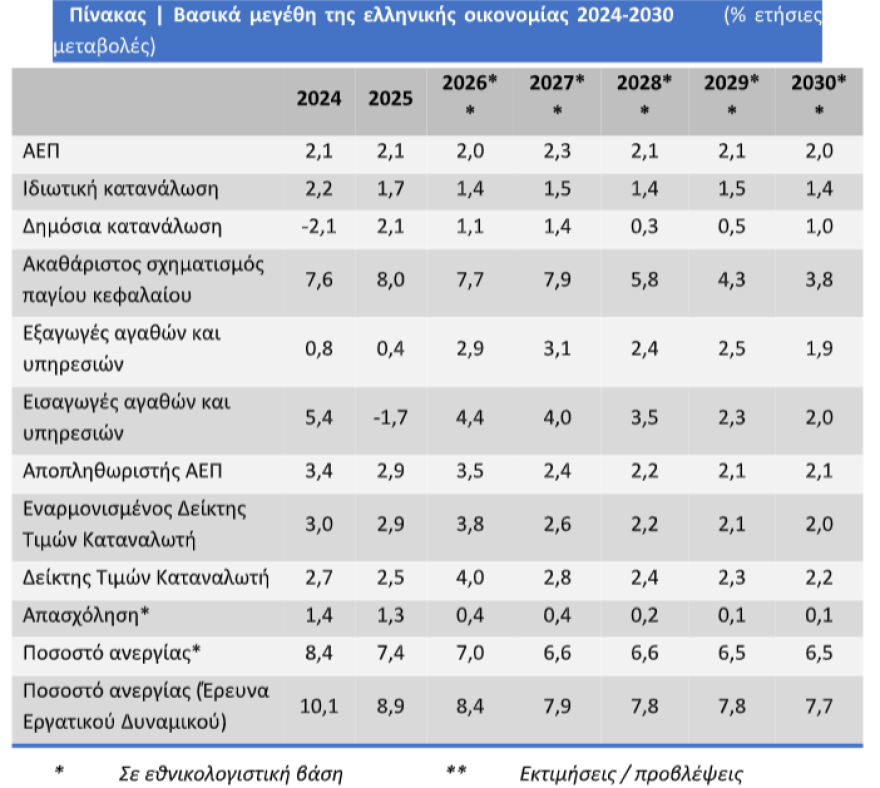
The earlier plan forecast real GDP growth of 1.7% for 2027, 1.6% for 2028 and 1.3% for 2029. The new plan revises those figures up to 2.3% for 2027, 2.1% for 2028 and 2.1% for 2029, increases of 0.6, 0.5 and 0.8 percentage points respectively. The government attributed the upward revision mainly to the policy measures announced at the Thessaloniki International Fair in 2026, with a horizon to 2030, and to significantly higher resources allocated to the Public Investment Programme compared with the previous plan.
Fiscal balance and debt outlook
Between 2027 and 2030, the fiscal balance is expected to remain in positive territory with only marginal fluctuations, staying well above the Stability Pact's reference value of -3% of GDP. The primary balance is projected at +3.2% of GDP for 2027 and is expected to average around +3% of GDP for 2028-2030.
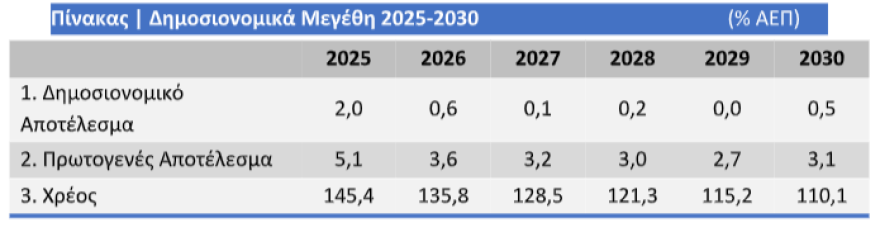
General government debt is projected to fall to 128.5% of GDP by the end of 2027, down from 135.8% in 2026. It is expected to drop further to 121.3% of GDP by the end of 2028, a fall of 7.2 percentage points on 2027, and to approach 110% of GDP by 2030.
Test yourself
What is the total estimated cost of the main permanent fiscal measures by 2030?
When is the minimum wage set to rise to €1,000 under the plan?
What is general government debt projected to approach by 2030?
Have your say
Do you think Greece's planned tax cuts and wage increases through 2030 are the right priorities?
Where it happened
Athens, Greece