


Greek Health Minister Adonis Georgiadis has referred Athens Medical Association president Giorgos Patoulis to the National Transparency Authority for a financial audit into his private business activities.
The decision comes after evidence emerged during an ongoing investigation into the death of Giorgos Mazonakis, who died at a medical clinic on Karneadou Street in Athens while attached to a plasmapheresis machine.

Speaking at a press conference at the Ministry of Health on Tuesday afternoon, Georgiadis announced that all records submitted by the Panhellenic Medical Association regarding Patoulis and his commercial healthcare companies had been transmitted to state auditors.
Georgiadis said he was obligated to order the inquiry because public concern had been aroused over recent news reports detailing Patoulis's corporate holdings. The health minister noted that while Patoulis is a personal friend, public officials and medical leaders remain subject to institutional oversight under Greek law.
Patoulis, a former regional governor of Attica who has led the Athens Medical Association since 2011, published a statement on his official X account supporting the audit. Patoulis said the referral of the allegations against him to the National Transparency Authority was the correct institutional path and one with which he fully agreed.
Patoulis stated that he had personally requested a comprehensive, in-depth investigation from the health minister to provide definitive answers, halt character assassination, stop the spread of false news, and end his personal targeting. He added that as president of the capital's primary medical body, he maintains complete confidence in state institutions and will assist auditors in every way so that the truth emerges.
The referral follows earlier public statements by Patoulis addressing reports linking his business interests to two medical facilities in Thessaloniki, Greece's second-largest city. He previously described those allegations as a systematic distortion of his professional career through inaccurate and defamatory claims designed to create false impressions and exploit a citizen's death for political gain.
Investigation into Quantum Medicine Practices
The Ministry of Health press conference also addressed findings concerning Maria Karystianou, the president of the Hope for Democracy organization. Georgiadis confirmed that Karystianou's medical practice will be audited by regional authorities after digital monitoring flagged her facility in yellow over quantum medicine services and the use of a biofeedback device.
Karystianou is a registered member of the Thessaloniki Medical Association, and Georgiadis noted that local oversight officials will examine her practice alongside all other flagged facilities. The minister stressed that all practitioners are presumed innocent until competent regulatory bodies issue formal rulings, but he added that claims surrounding quantum medicine lack scientific validity.
Under the ministry's digital monitoring criteria, a yellow status represents an intermediate alert for cases requiring further administrative review. The classification is assigned when inconsistencies are detected in commercial promotions or online medical advertising that require formal clarification and ongoing monitoring.
Digital Medwatch System Cuts Illegal Advertisements
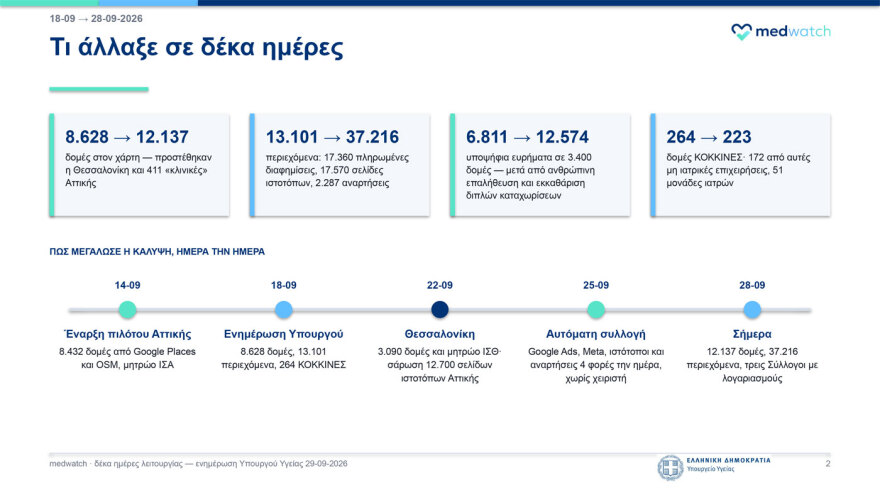
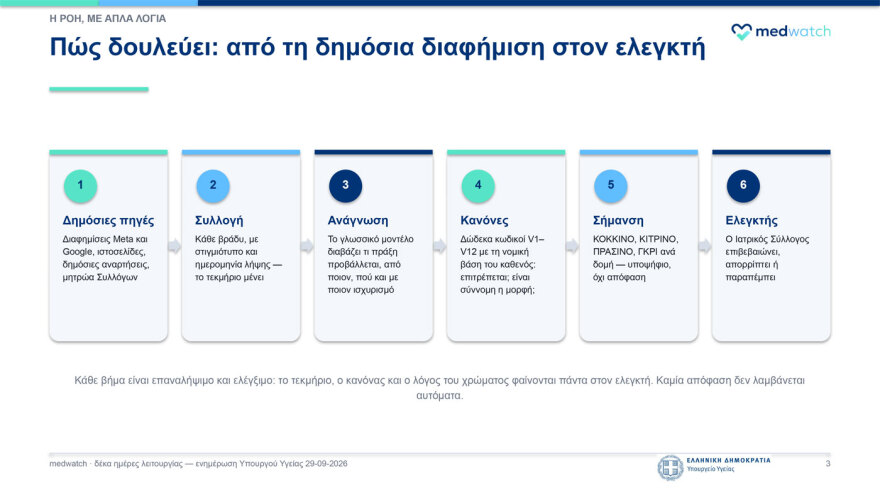
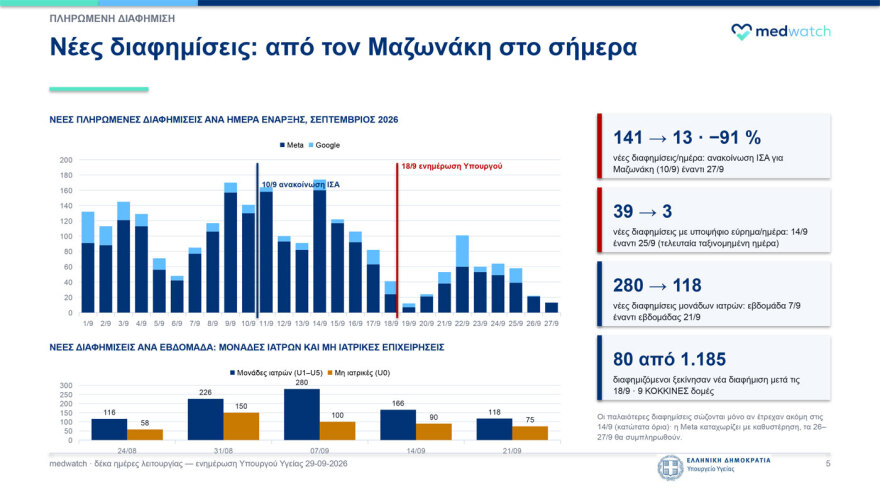
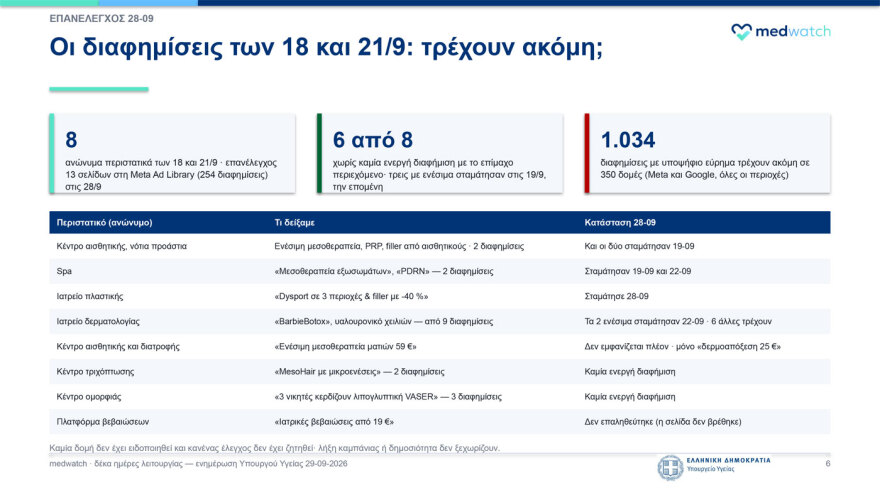
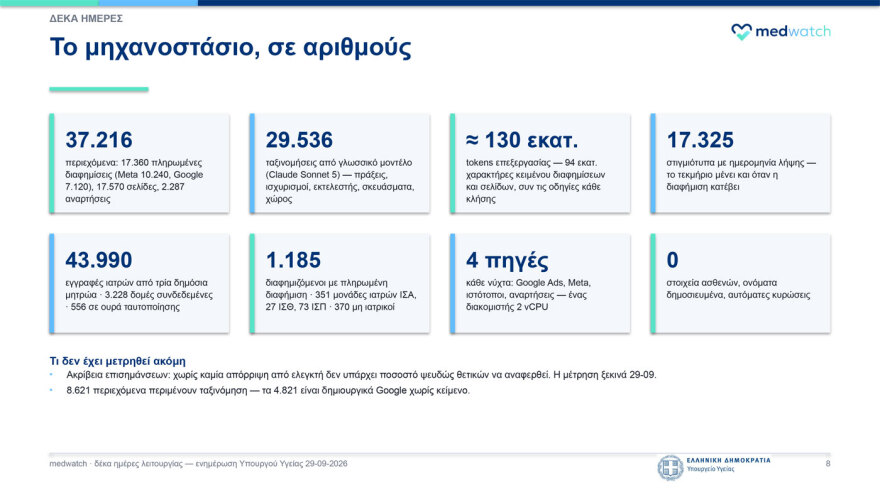
The audit orders coincide with the release of initial operational data from Medwatch, a digital monitoring tool launched ten days ago to crack down on illegal practices in regenerative medicine following the death on Karneadou Street.
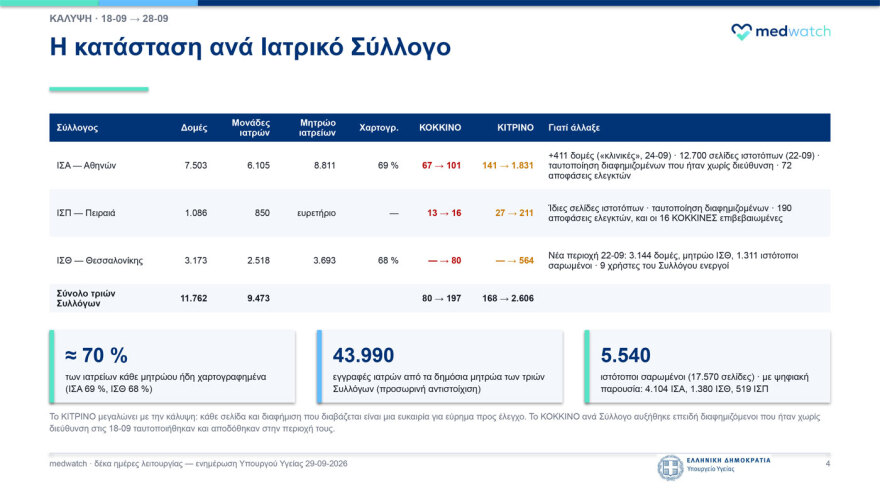
Georgiadis reported that online advertisements for unauthorized medical procedures fell by 91 percent across monitored platforms during the system's first ten days. Digital scans detected 141 suspect advertisements ten days ago, but that figure dropped to 13 by Monday, which the minister highlighted as evidence of rapid compliance among clinics.
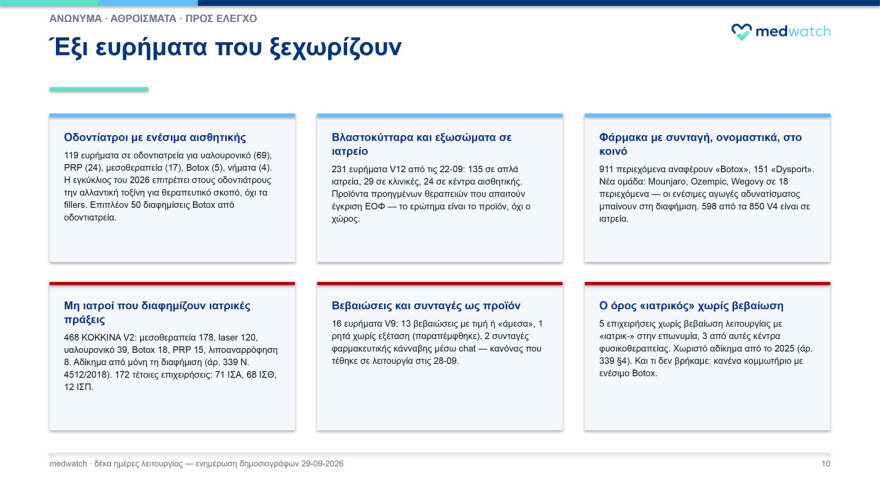
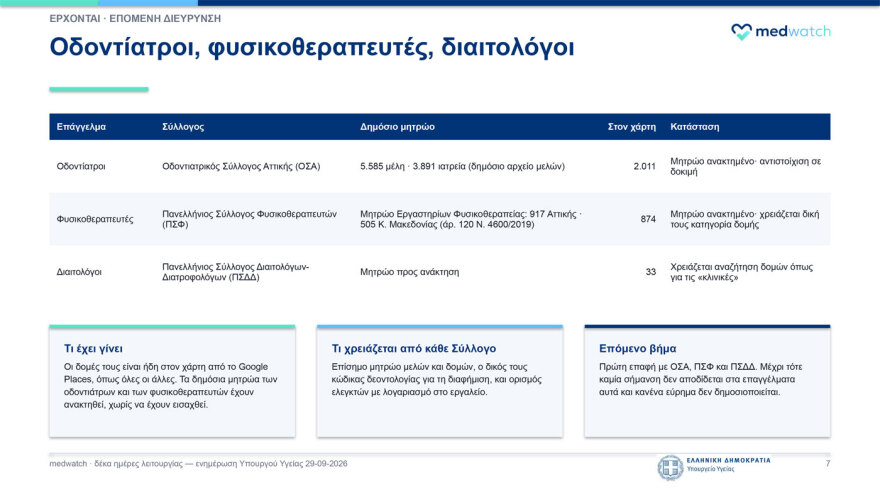
Systematic scans by Medwatch identified 119 specific infractions at dental practices involving the unlawful promotion of hyaluronic acid and botox treatments. Georgiadis announced that digital monitoring will soon expand to cover both dental surgeries and physiotherapy clinics, where medical treatments are frequently advertised without proper legal authorization.
Inspectors also uncovered 231 violations related to stem cell therapies advertised in locations prohibited by Greek healthcare law. The stem cell infractions comprised 135 cases at standard doctor offices, 29 at private hospitals and clinics, and 24 at commercial aesthetic centers.
Furthermore, Medwatch recorded 911 violations for illegal advertisements promoting botox and injectable weight loss treatments. The digital system generated 468 red alerts involving non-physicians who were actively advertising medical procedures to the public.
In total, the platform has identified 197 high-risk red clinics requiring direct enforcement action and issued 2,606 yellow warnings for ethical intervention. Data compiled by Medwatch is being forwarded to local medical associations and the National Transparency Authority, with deployment expanding from Athens, Piraeus, and Thessaloniki to nationwide coverage over the next five to six days as regional registries are updated.
Opposition Criticizes Government Healthcare Oversight
The government's announcement drew swift criticism from PASOK, Greece's main center-left opposition party, which issued a formal statement describing the minister's audit order as political mockery.
PASOK accused the ruling New Democracy administration of failing to supervise private healthcare facilities for years, allowing an unregulated sector to operate without oversight. The opposition party pointed out that Georgiadis had publicly defended Patoulis just days earlier, using phrases such as it was his taste and his hat if he wished to participate in regenerative medicine while attacking journalists for character assassination.
The opposition statement added that Prime Minister Kyriakos Mitsotakis had pledged in 2019 to establish an effective executive state to protect citizens. PASOK argued that seven years later, the administration has proven ineffective, unreliable, and corrupt, noting that previous legislation enacted under the executive state banner abolished specialized health inspection units whose regulatory role is now recognized as essential.


