
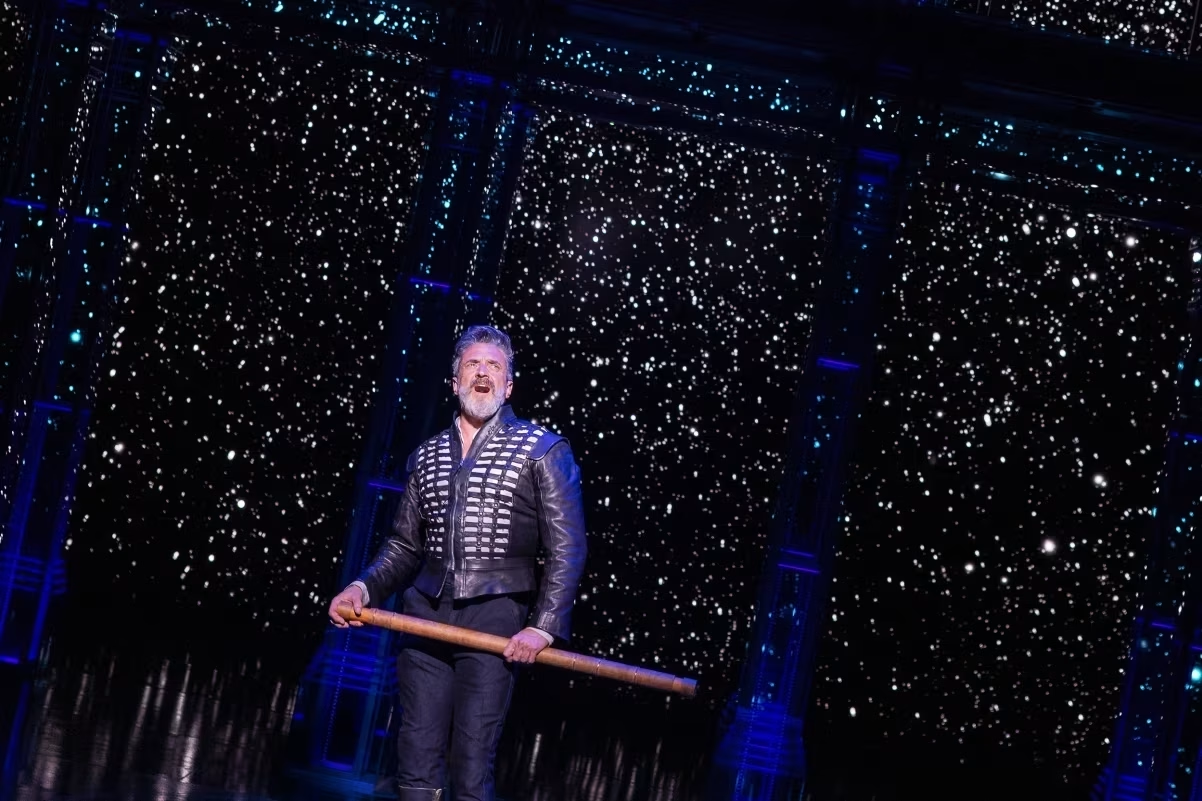
Galileo Galilei spent his life proving the Earth was not the center of the universe. Now a new Broadway musical, "Galileo," is bringing his story to the stage, starring Raúl Esparza and Joy Woods.
The show follows the famous astronomer as his research into the heliocentric model challenged the prevailing Aristotelian belief that the Earth sat at the center of the cosmos. Previews began November 10 at the Shubert Theatre in New York, ahead of an official opening on December 6.
Director Michael Mayer, who worked on the production for nearly a decade, said he instinctively sensed that Galileo, born in Italy in 1564, had the energy of a modern rock star. Historians have described him as defiant, arrogant and subversive.
Mayer said he decided the story should be told as a rock musical because Galileo, in his words, literally shook up the world. Astrophysicist Neil deGrasse Tyson, who serves as a co-producer on the musical, described Galileo more bluntly, calling him something of a jerk.
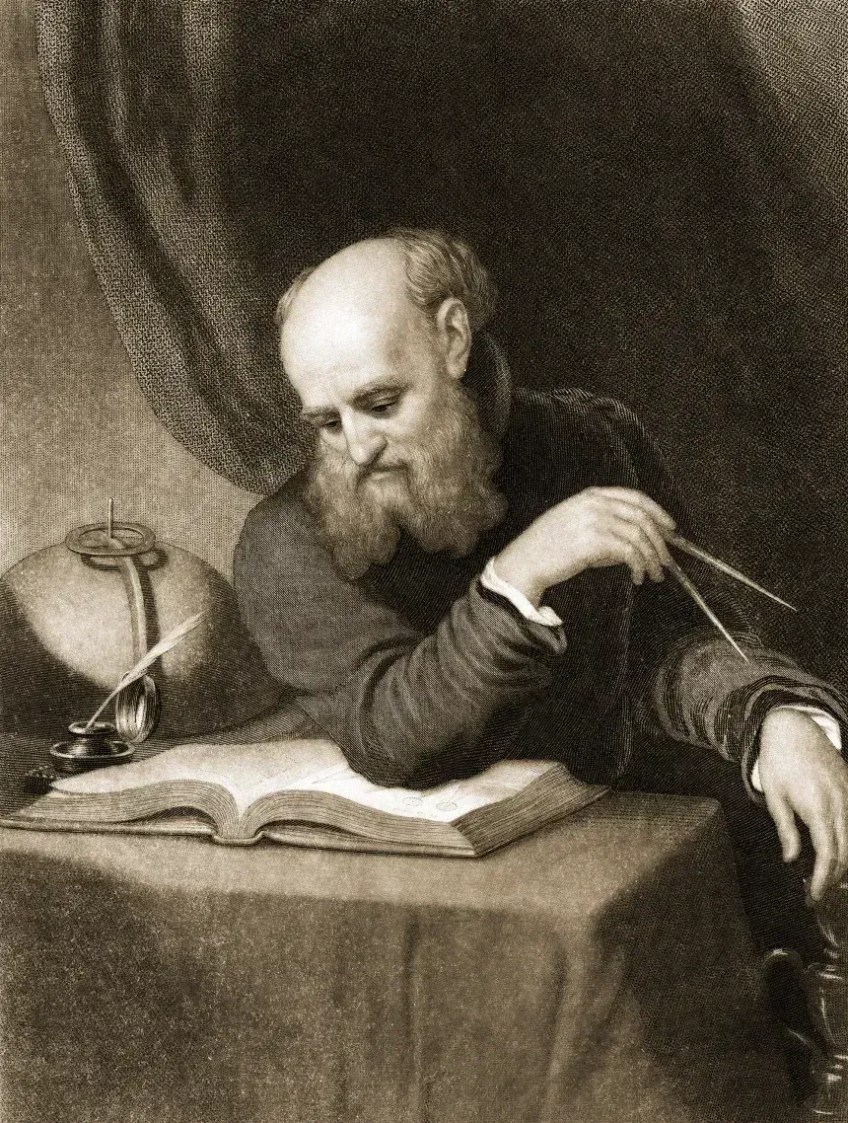
Tyson, director of the Hayden Planetarium at the American Museum of Natural History in New York, said Galileo's ego, perhaps more than his research itself, led to his downfall with church authorities, who banned his writings for more than 200 years and confined him to house arrest in Tuscany. Tyson said that had Galileo been more diplomatic, he might have avoided that fate.
Galileo died in confinement in 1642, but his ideas endured and spread. Two centuries after his death, the Catholic Church lifted its ban on his works, once it became undeniable that the combative astronomer had been right all along.
Tyson, Mayer and Esparza said they hope bringing Galileo's story to Broadway proves especially timely given the current political climate. Tyson said Galileo represents a man defending objective truth against dogmatic forces trying to suppress it, adding that this is something needed in the present moment.
A scientist who defied the church
Working from his home in the northern Italian city of Padua, under the shadow of a Catholic Church increasingly focused on enforcing orthodoxy, Galileo became one of the most skilled users of the newly invented telescope.
Based on observations he made with a homemade telescope, he became, in 1610, the first to suggest that Jupiter had moons. After studying how light moved across the surface of Venus, Galileo grew even more convinced that Renaissance astronomer Nicolaus Copernicus had been right when he proposed, in the early 16th century, that the planets, including Earth, orbit the Sun.
As Galileo began sharing his findings, he drew the attention of Cardinal Roberto Bellarmine, sometimes called the "Hammer of Heretics." The cardinal made clear to Galileo that a heliocentric model contradicted scripture and ordered him to drop the subject. Bellarmine does not appear in the Broadway production, which instead features some fictional religious leaders.
The portrayal of Virginia, one of Galileo's daughters, as a young woman in love, played by Woods, also takes some creative liberties. Her character is depicted as a brilliant scientist who plays an active role in Galileo's research, but in real life the astronomer's daughter entered a convent at age 13, where she developed skills as an apothecary.
Real history on stage
The production also draws heavily on real events, including experiments Galileo carried out when he began questioning nearly 2,000 years of accepted knowledge about the laws of motion. Using an inclined plane, for example, Galileo demonstrated that falling objects accelerate.
Years later, after Galileo's first clash with the Roman Inquisition, which barred him from promoting Copernican theory, he found a powerful ally in Pope Urban VIII, played by Jeremy Kushnier in the musical. Believing he had the pope's support, Galileo published one of his most famous works, "Dialogue Concerning the Two Chief World Systems." He wrote the text in Italian rather than Latin so his ideas could reach a wider audience.
The book was meant to present arguments for and against a heliocentric model, but Galileo again drew the church's anger by including a character named Simplicio, who echoed arguments used by the pope himself, leading to an abrupt break in his relationship with Urban VIII.
Esparza, who is making a long-awaited return to Broadway after 14 years, said Galileo cannot control himself, adding that he believes the astronomer thought he was smarter than everyone else in the room.
Facing the Roman Inquisition in 1633, Galileo was charged with heresy, an accusation that had already led others to be burned alive. He recanted his positions on heliocentrism.
Staging the cosmos
To bring the story to life, Esparza said the production team hired Ethan Tobman, creative director of Taylor Swift's Eras Tour, to design effects that transform the Shubert Theatre into an immersive digital star field resembling a planetarium.
Esparza said the effect is almost dizzying, and that he loves it because a show about technology should let the audience experience something they have never seen before.
Broadway is notoriously unstable, and finding the right combination of theme and musical style to captivate audiences can be a daunting task. But Mayer and Tyson said Galileo's life is full of lessons about curiosity, sacrifice and conviction that they hope will move audiences.
Tyson called it one of the most famous stories in the history of science, and asked how it had taken this long to become a musical, wondering why no one had done it decades earlier.