


Searches conducted by Madrid City Council and historical associations in Fuencarral have failed to locate a mass grave containing 451 Spanish Civil War victims whose bodies were dumped in 1941.
The plot at Fuencarral cemetery had originally been set aside during the conflict for members of the International Brigades and Spanish Republican soldiers before a local Francoist official ordered their remains thrown away.
The details were outlined during a historical walking lecture organized by Gefrema, the Group for the Study of the Civil War in Madrid, led by writer Pedro Blasco alongside local history enthusiasts.
Gefrema regularly conducts guided educational walks across the Madrid region to document key battlegrounds, fortifications, and municipal history from the 1936 to 1939 conflict. The district of Fuencarral, situated in northern Madrid, operated as an independent municipality until its annexation into the capital city during the 1950s.
Wartime role of the local church
During the Spanish Civil War, the local parish church in Fuencarral served as a strategic communications hub and defensive stronghold for Republican forces defending the northern approaches to Madrid. Blasco noted that church personnel used telephone lines from the building to warn Madrid of approaching aircraft belonging to General Francisco Franco's Nationalist forces.
The building also functioned as a key defensive position to resist any potential breakthrough by Nationalist troops advancing along that sector of the front. Hundreds of foreign volunteers serving with the International Brigades used the church structure as both a shelter and an active battlefield position.
The International Brigades were military units formed by the Communist International in late 1936 to assist the Second Spanish Republic. Tens of thousands of foreign volunteers from around the world traveled to Spain to fight against Franco's Nationalist coalition, with Madrid serving as one of their primary defense sectors.
Executions and cemetery monuments
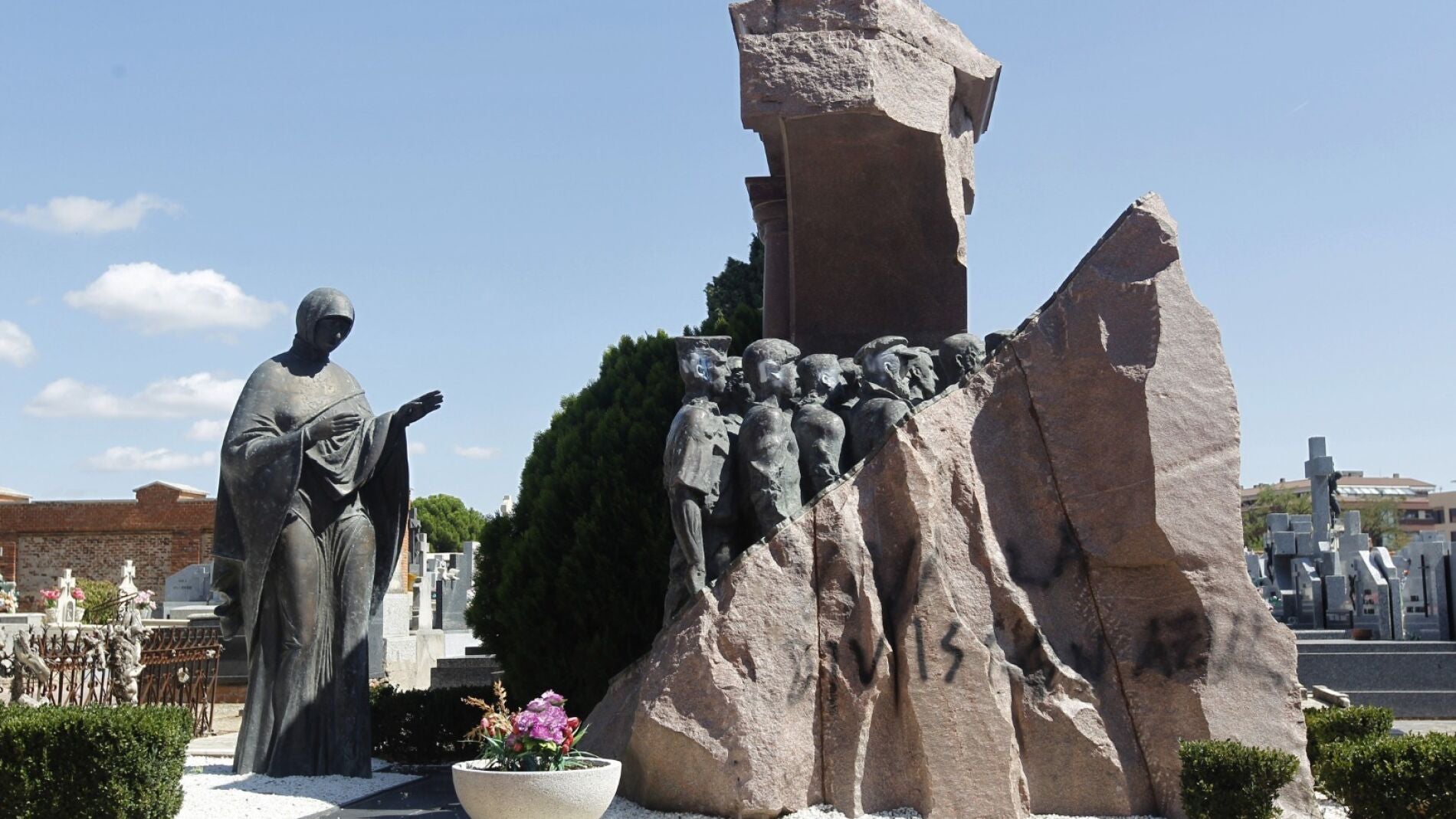
The historical tour concluded at Fuencarral cemetery, where monuments commemorate fallen figures from both sides of the civil war. Immediately after Franco's military uprising began in July 1936, local men aligned with the political right were executed by firing squad without trial in the village.
Those victims rest in the cemetery under simple inscriptions reading "Died for God and for Spain," while others display the yoke and arrows symbol of the Falange. The Falange was Spain's fascist movement, whose emblem of five arrows joined by a yoke became an official state symbol under the Franco regime.
A separate plot within Fuencarral cemetery was established during the war to receive 451 deceased International Brigade members and Spanish defenders of the Republic. However, in 1941, a local Francoist boss described as anti-Christian declared that Republicans did not deserve burial and organized the removal and dumping of their remains.
Failed searches and ongoing vandalism
Where the 451 bodies were taken after being removed from the cemetery plot remains unknown. Subsequent search efforts organized by Madrid City Council and historical memory associations have been unsuccessful in finding the mass grave.
In recent years, monuments dedicated to both Republican brigadistas and Nationalist victims have been repeatedly targeted with graffiti by opposing political groups. Local authorities have been forced to clean vandalized memorials on both sides of the cemetery.
Blasco stated that vandals from both sides appear to have reached an agreement to disrupt both the living and the dead, preventing those who fought for their respective visions of Spain from resting in peace.


