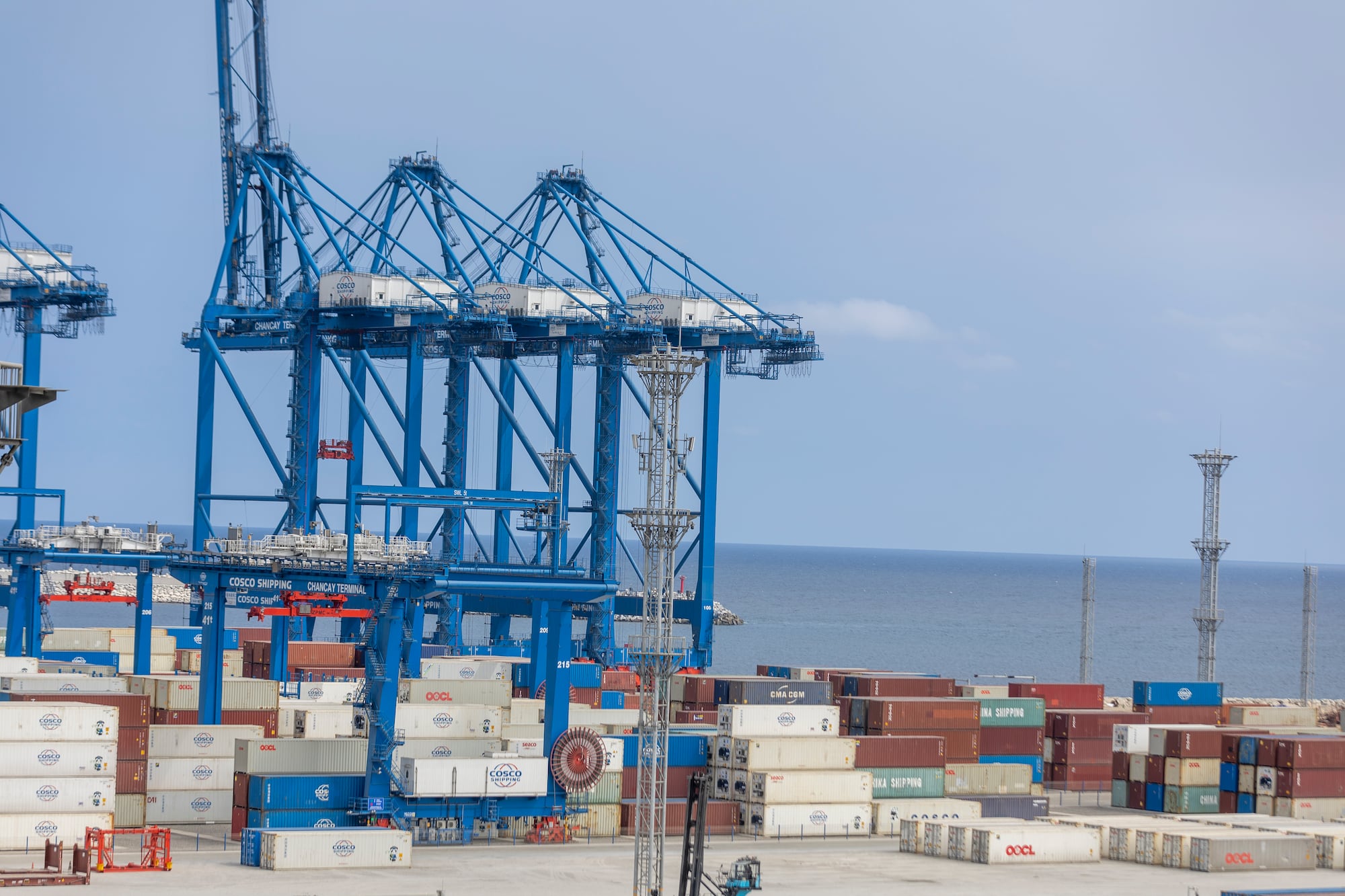
Peru's Private Investment Promotion Agency, ProInversión, presented a new Chancay-Callao-Pisco Central Strategic Corridor, an initiative to link ports, airports, roads and productive infrastructure into a logistics, industrial and commercial platform connecting the country's coast, highlands and central jungle with markets in Asia-Pacific and South America.
ProInversión, which operates under Peru's Ministry of Economy and Finance, announced the plan at an event titled "Central Strategic Corridor Chancay-Callao-Pisco: a new logistics, industrial and commercial platform for Peru's integration with Asia-Pacific and South America." The event was organized jointly with the Ministry of Transport and Communications and drew government officials, investors and private sector representatives.
Priority Projects
The Central corridor spans the regions of Lima, Huancavelica, Junín, Pasco, Huánuco and Ucayali. It comprises 27 Public-Private Partnership projects, two Asset Projects and eight addenda to existing concessions, all aimed at strengthening transport, energy, sanitation and water infrastructure.
Among the highlighted projects are a new port terminal in Pucallpa, road corridors numbered 1, 4, 5, 6 and 7, airports in Huánuco and Jauja, electricity transmission projects, and investments in drinking water and water security.
The plan also includes the Artificial Peninsula, known as the Gateway of the Pacific, valued at $767 million, along with two addenda worth a combined $1.496 billion to expand the Muelle Sur dock and the Mineral Concentrate Shipping Terminal in Callao.
Infrastructure Already in Place
Since 2002, ProInversión has awarded 123 projects and initiatives worth a combined $22.549 billion across the six central departments, building the infrastructure base the new corridor seeks to connect.
The corridor integrates six strategic nodes: Chancay, Ancón, Jorge Chávez International Airport, Callao, Pisco and Pucallpa, linking ports, airports and highways with production and distribution centers.
The six regions also hold a Maximum Annual Capacity Ceiling of 15.618 billion soles to drive further investment through Peru's Works for Taxes mechanism, known as OxI, which allows private companies to fund public infrastructure in exchange for tax credits.
Officials and Participants
Speakers at the event included Carolina Lenkey Ramos, director general of policies and regulation in multimodal transport; Sayuri Bayona Matsuda, deputy minister of foreign trade; and Alberto Ego-Aguirre Yáñez, president of the maritime, port and customs affairs commission at the Lima Chamber of Commerce.
Participants said the goal of the corridor is to make use of existing infrastructure to attract new investment, boost regional economies, create jobs and help Peruvian producers, entrepreneurs and companies reach national and international markets.
Representatives of the Lima Chamber of Commerce, Lima Airport Partners, Cosco Shipping Ports Chancay Peru, Lima Expresa, Norvial and the concessionaire of the General San Martín Port Terminal in Pisco also attended, alongside other public and private sector officials.
Test yourself
Which Peruvian agency presented the Chancay-Callao-Pisco corridor plan?
How much is the Artificial Peninsula, or Gateway of the Pacific, project valued at?
How many projects has ProInversión awarded in the six central regions since 2002?
Have your say
Do you think large infrastructure corridors like this one help regional economies?
Where it happened
Lima, Peru