
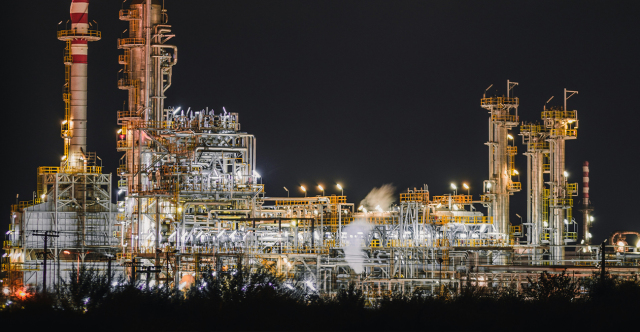
The European Union is preparing to revise its strategy for securing fuel supplies, as the fallout from the war with Iran, the shrinking of Europe's refining industry and rising military needs reshape the continent's energy security calculations.
Analysts in the international oil market have warned of a risk of diesel shortages beginning in spring 2027, Reuters has reported. At the same time, Brussels is working on changes to the rules governing member states' strategic reserves, for the first time taking into account the fuel needs of armed forces in the event of a prolonged crisis.
The issue is not only about how much crude oil European countries hold, but also whether they can secure enough finished fuels, such as diesel and aviation fuel, to keep their economies running. The availability of crude oil on international markets does not automatically guarantee fuel supply, since refining capacity, storage infrastructure and distribution networks all play a decisive role.
Risk of diesel shortage in 2027
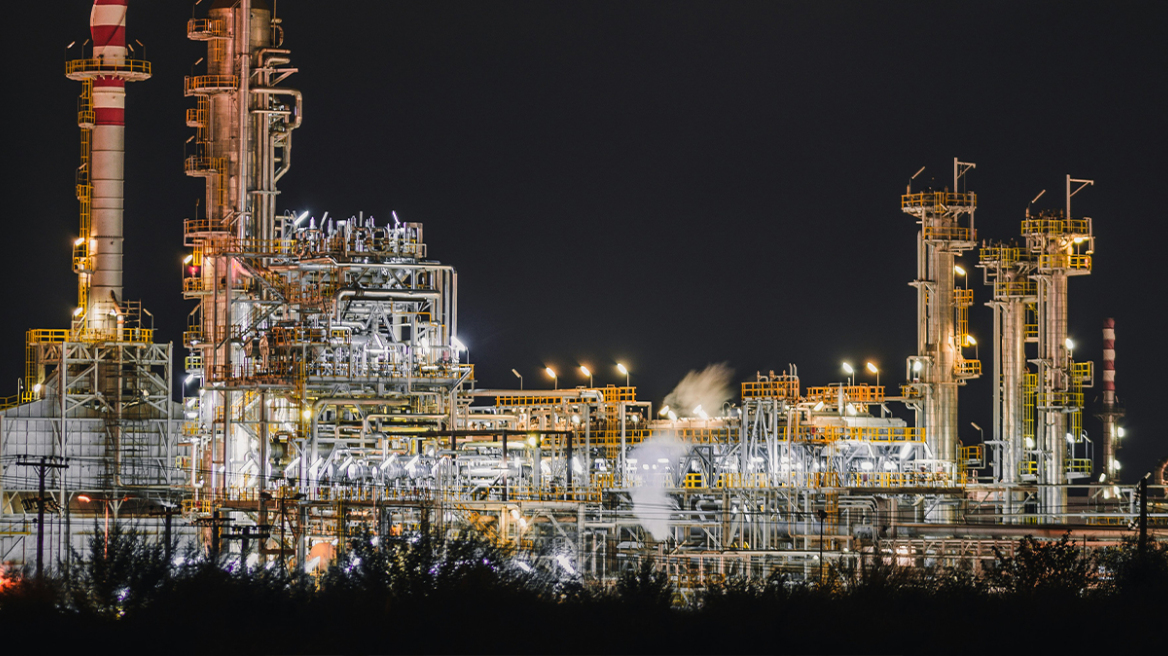
According to Reuters, the global diesel market is expected to move from a small supply surplus into a deficit during the second quarter of 2027. Scheduled refinery maintenance is expected to limit production at a time when fuel supply is still being affected by the wars in the Middle East and Ukraine.
Diesel exports from the Middle East remain at roughly one third of pre-war levels, while Ukrainian strikes on Russian refineries are adding further pressure on global supply. Data from the analytics firm Kpler, cited by Reuters, showed the Middle East and Russia together accounted for more than 28% of global diesel exports in 2025. In the Amsterdam-Rotterdam-Antwerp hub, Europe's largest oil trading centre, diesel stocks are already down 19% compared with the same period last year.
The development matters directly for the European economy, since diesel is a key fuel for freight transport, agriculture and much of industrial activity. A prolonged period of limited supply could raise transport and production costs, with wider effects on prices and inflation.
Fuel for citizens and armies
Brussels' concern is not limited to the economic impact of a new energy crisis. According to a draft European Commission document cited by Euronews, the EU wants to include military needs in how it calculates national fuel reserves and assesses the risks facing each member state.
In a Commission assessment carried out in 2025, 61.54% of member states reported difficulties securing enough fuel for military movements across European territory. That shortfall is a significant obstacle to the EU's effort to strengthen its defence readiness by 2030. Governments will need to plan for a possible sudden rise in military fuel needs at a time when civilian and business supplies could also come under pressure.
Aviation fuel reserves cover just 49 days
A NATO study on energy security has identified aviation fuel supply as a particularly vulnerable point for Europe. According to the study, available reserves cover just 49 days, while Europe imports between 27% and 30% of its aviation fuel from outside the bloc.
The concentration of those imports among a small number of suppliers is also significant: one country accounts for 36% of imports from outside the EU, while three supplying countries together cover 65% of the total. That dependence creates added risk if a geopolitical crisis were to restrict imports at the same time as military demand increases.

Commission meets with refining industry
The shrinking of Europe's refining industry is already a central concern for the Commission. On October 28, it held its first high-level meeting with industry representatives, chaired by the Commissioner for Energy and Housing, Dan Jørgensen, and the Commissioner for Defence and Space, Andrius Kubilius. Representatives of refineries, alternative fuel producers, technology companies, industry associations and NATO took part.
According to the Commission's official statement, a key priority is maintaining sufficient production capacity in Europe to cope with periods of increased demand, including from defence. Kubilius said that defence without fuel was impossible, underlining the importance of energy supply for Europe's military readiness. The Commission says European refineries currently cover about 85% of Europe's diesel needs and 70% of its aviation fuel needs.
The Commission is seeking to draw up a roadmap with industry that combines keeping up conventional fuel production with developing sustainable biofuels and synthetic fuels, aiming to avoid gaps in supply during the transition to an economy less dependent on fossil fuels.
Reserves fall across the EU, Greece unaffected
Eurostat figures published on November 12 show the EU's strategic oil reserves falling. Emergency reserves held by member states stood at 103.5 million tonnes in July 2026, down 4.2% year on year and 2.5% compared with the previous month.
Of that total, 43.7 million tonnes was crude oil, 36.5 million tonnes was middle distillates including diesel, and 9.8 million tonnes was gasoline. Notably, 13 of the EU's 27 member states were below the minimum mandatory reserve levels in July: Bulgaria, the Czech Republic, Ireland, Croatia, Italy, Cyprus, Latvia, Lithuania, Austria, Portugal, the Netherlands, Malta and Romania.
Germany held the largest strategic reserves at 20 million tonnes, followed by France with 16.4 million tonnes, Spain with 14.2 million tonnes and Italy with 9.4 million tonnes. Commercial reserves moved in the opposite direction, rising to 52.5 million tonnes, up 10.6% compared with July 2025. Greece was not among the 13 member states reported to be below the minimum required levels.
What EU rules require
Under existing EU legislation, specifically Directive 2009/119/EC, member states must hold oil reserves equal to at least 90 days of average daily net imports or 61 days of average daily domestic consumption, whichever figure is higher.
The revision of the EU framework is expected to carry particular weight for countries such as Greece, which has domestic refining capacity along with significant shipping and aviation activity. The European Commission is expected to present its proposal for revising the oil supply security rules on December 2.
What happens next
The European Commission is expected to present its proposal to revise the EU's oil supply security rules on December 2.
Test yourself
When does Reuters say the global diesel market could shift from surplus to deficit?
According to a NATO study, how many days of coverage do Europe's aviation fuel reserves provide?
Which commissioner said that defence without fuel is impossible?
Have your say
Should EU countries prioritize military fuel needs alongside civilian supply when planning strategic reserves?
Where it happened
Brussels, Belgium