The European Union's ambitious plan to revive European industry risks pushing away close trade partners after causing severe commercial issues for Switzerland and Norway.
Both non-member nations have been forced to intervene in recent months to resolve trade disruptions triggered by EU policies. According to reporting by the Financial Times, these friction points stem largely from unintended consequences rather than deliberate discrimination against neighboring states.
In one instance, EU regulations favored municipal waste processing strictly within member states such as Germany and Austria. This applied even when the nearest processing facility was located across the border in Switzerland. Officials in Bern intervened to establish an exemption, allowing waste to be sent to the closest plant.
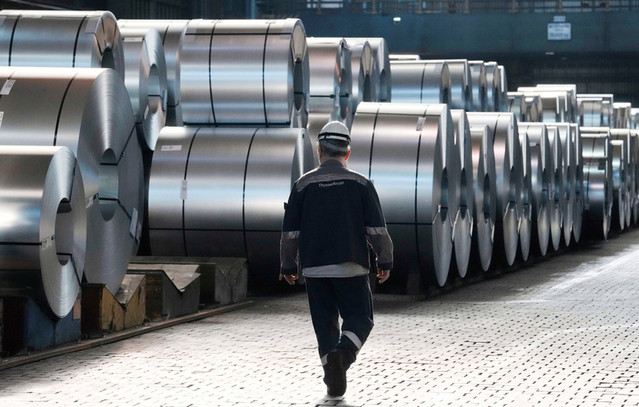
Switzerland also protested proposed EU steel protection measures that treated it less favorably than European Economic Area members Norway, Iceland, and Liechtenstein. Swiss authorities raised additional concerns regarding provisions in the EU's Industrial Accelerator Act, warning that excluding Switzerland from industrial support measures could leave EU supply chains less competitive.
Switzerland is not a member of the EU or the European Economic Area, relying instead on bilateral agreements to govern market access with the bloc.
Norwegian trade restrictions
Norway encountered unexpected trade hurdles last year when Brussels subjected certain Norwegian steel alloys to EU trade restrictions designed to protect European manufacturers from Asian competition. The move highlighted Oslo's economic vulnerability despite its close alignment with the bloc.
Norway pays hundreds of millions of euros annually to participate in EU programs and contributes separately to initiatives aimed at reducing economic inequality across the bloc. Norway is also a member of the European Free Trade Association, which forms the second largest free trade network in the world after the EU, with 35 agreements spanning 49 partner countries.
Norwegian Finance Minister Jens Stoltenberg warned that as tariffs and customs duties gain greater importance during rising trade tensions between major blocs like the United States and the EU, such barriers could carry increasingly severe consequences.
The mounting trade disputes have prompted the Norwegian business community to argue that the country's European Economic Area agreement is no longer sufficient, reopening political debate over Norway's future relationship with the EU.