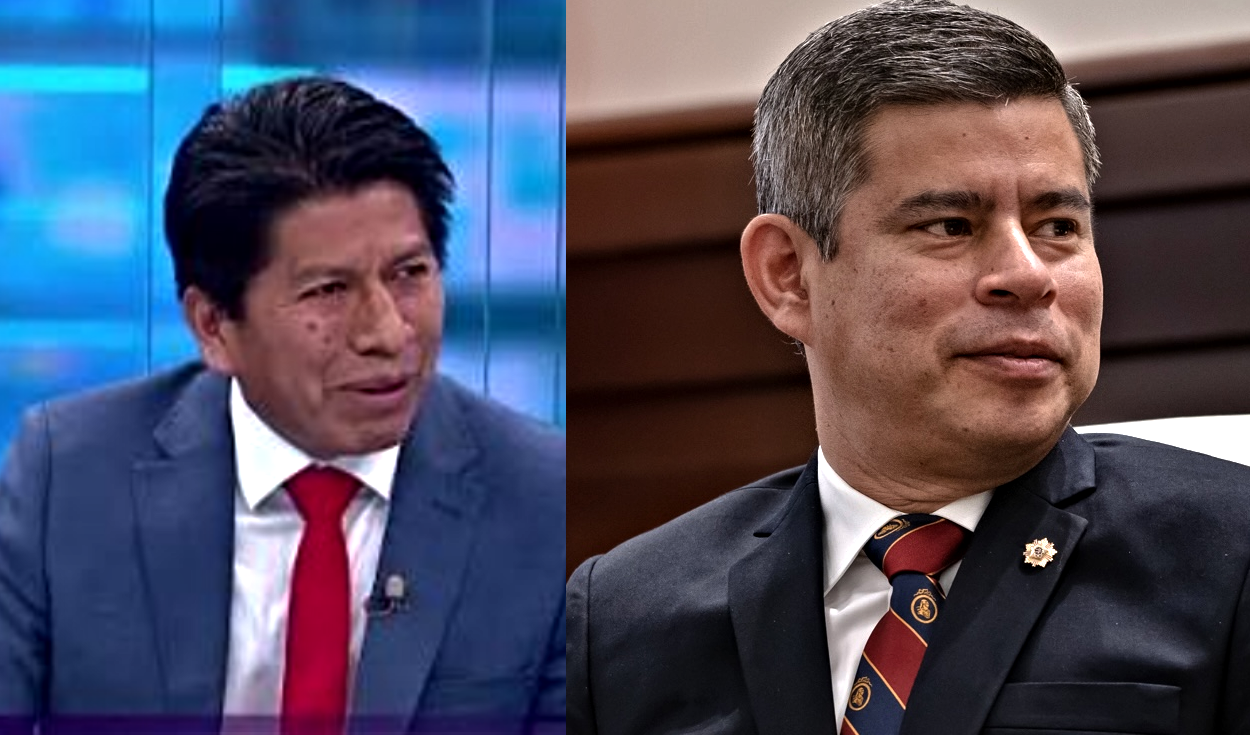
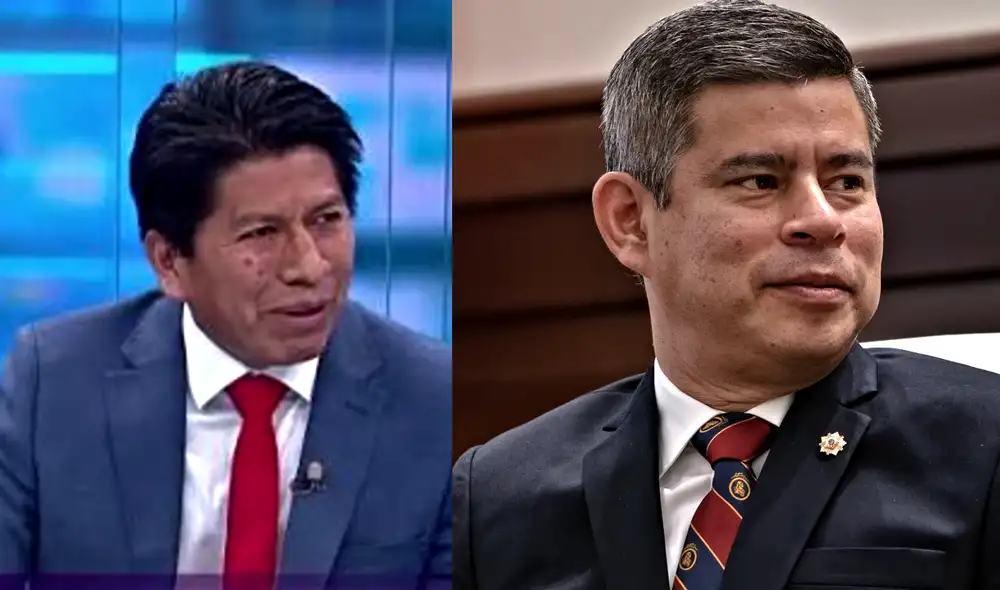
Peruvian lawmaker Edwin Espinoza has asked Prime Minister Luis Galarreta to reformulate the government's request for delegated legislative powers to prioritize crime and disaster response.
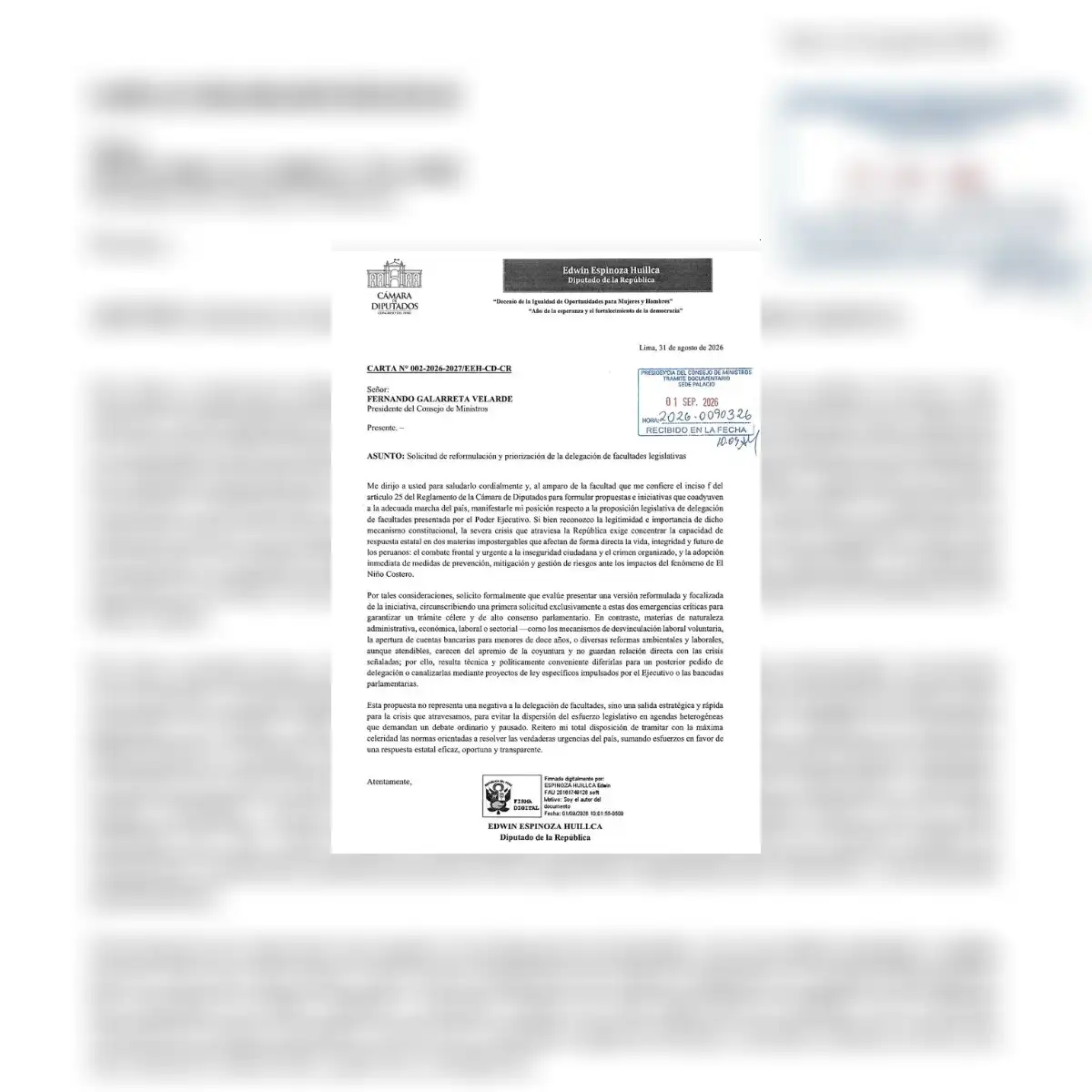
Espinoza, a member of the Buen Gobierno parliamentary group, formally requested that the executive branch split its initiative into two parts, focusing an initial proposal strictly on fighting organized crime and mitigating the impacts of the El Niño Costero weather phenomenon.
In a formal letter delivered to Galarreta, who serves as president of the Council of Ministers, Espinoza proposed that all other non-emergency measures in the executive request be postponed. He suggested those secondary items could be introduced later in a second delegation request or submitted to Congress as standalone legislative bills.
Espinoza emphasized in his communication that narrowing the initial request would ensure rapid parliamentary processing and build broad political consensus. He clarified that his initiative does not constitute a refusal to grant special legislative powers to the executive branch, but rather a strategic proposal to address immediate national emergencies without dispersing congressional debate.
The executive request currently includes a wide array of policy proposals outside of public safety and weather preparation. Among the secondary subjects embedded in the draft are voluntary employment severance schemes, authorization to open bank accounts for children under twelve years of age, and various environmental and labor policy modifications.
Cross-party support for narrowing legislative powers
Espinoza's proposal has gained traction across several parliamentary groups in Peru's Chamber of Deputies. César Holguín, the official spokesperson for deputies representing the Ahora Nación party, backed the call to focus the executive's initiative. Holguín told news outlet La República that common sense dictates the government's original proposal lacks specific, precise, or concrete measures to resolve either the national security crisis or the threats posed by El Niño.
Holguín noted that multiple congressional caucuses share the view that the executive must revise its request. He stated that if lawmakers offer any feedback to Prime Minister Galarreta's cabinet, it will be to demand a streamlined proposal focused strictly on those two primary priorities.
Pilar Sulca, a deputy representing the Juntos por el Perú party, echoed the demand for a refined delegation of powers. Sulca stated to the publication that everyday citizens urgently require effective measures against rising crime, which should form the sole focus of any special delegation. She questioned why the government chose to bundle routine regulatory changes into an emergency request rather than submitting them to standard parliamentary debate.
Sulca singled out several specific proposals for sharp criticism, asserting there is no urgency to rewrite national labor laws or remove interest rate caps on financial loans. She claimed the proposed labor revisions appeared designed to trim employee rights, weaken SUNAFIL, Peru's national labor inspection agency, and resurrect the contentious provisions of the 2014 youth employment legislation known as the Pulpin Law. She added that there is equally no justification for easing environmental standards governing natural resource extraction in the Amazon rainforest.
Sulca argued that complex labor, financial, and environmental reforms require open debate in Congress rather than expedited executive decrees. She noted that under standard congressional rules, the executive branch can submit urgent bills that receive expedited committee reviews without bypassing public oversight. She urged the government not to evade parliamentary debate on issues that impact all sectors of Peruvian society.
Diverging views and caucus clarifications
Another deputy from Juntos por el Perú, Catherin Palomino, offered a harsher assessment of the government's strategy. Palomino argued that debating whether to reformulate or trim the delegation request misses the main point. She asserted that the executive branch already possesses adequate statutory authority and administrative tools to combat crime and prepare for severe weather, accusing the cabinet of stalling the public to mask incompetence and improvisation.
Meanwhile, the internal consensus within Espinoza's own party remains unsettled. Nery Hernández, the parliamentary spokesperson for Buen Gobierno, clarified that Espinoza's letter represents an individual stance rather than an official party line. Hernández stated that the caucus is currently conducting a thorough legal and political evaluation of the executive's proposal and will publish an official position once that internal review is complete.
Procedural hurdles and initial cabinet omissions
The debate over legislative powers comes amid initial procedural missteps by the executive branch. When the request first arrived at the Chamber of Deputies, parliamentary authorities discovered that the cabinet had failed to attach the official minutes from the Council of Ministers meeting. The missing document was legally required to certify the very urgent status of the bill and initiate formal statutory timelines for congressional review.
The cabinet subsequently rectified the procedural error by submitting a certified copy of the minutes from its August 27 session. The official document confirmed that the Council of Ministers had unanimously approved the legislative powers bill and authorized its urgent submission to Parliament, allowing congressional committees to formally begin processing the request.
Among the specific administrative measures contained in the executive's package is a proposal to repeal the law creating the Professional College of Artists of Peru (CPAP) as part of a bureaucratic simplification drive. The proposal has raised eyebrows in Parliament, as the original legislation creating the artists' professional association was enacted by the previous Congress with the active support of thirteen lawmakers from the Fuerza Popular party.