

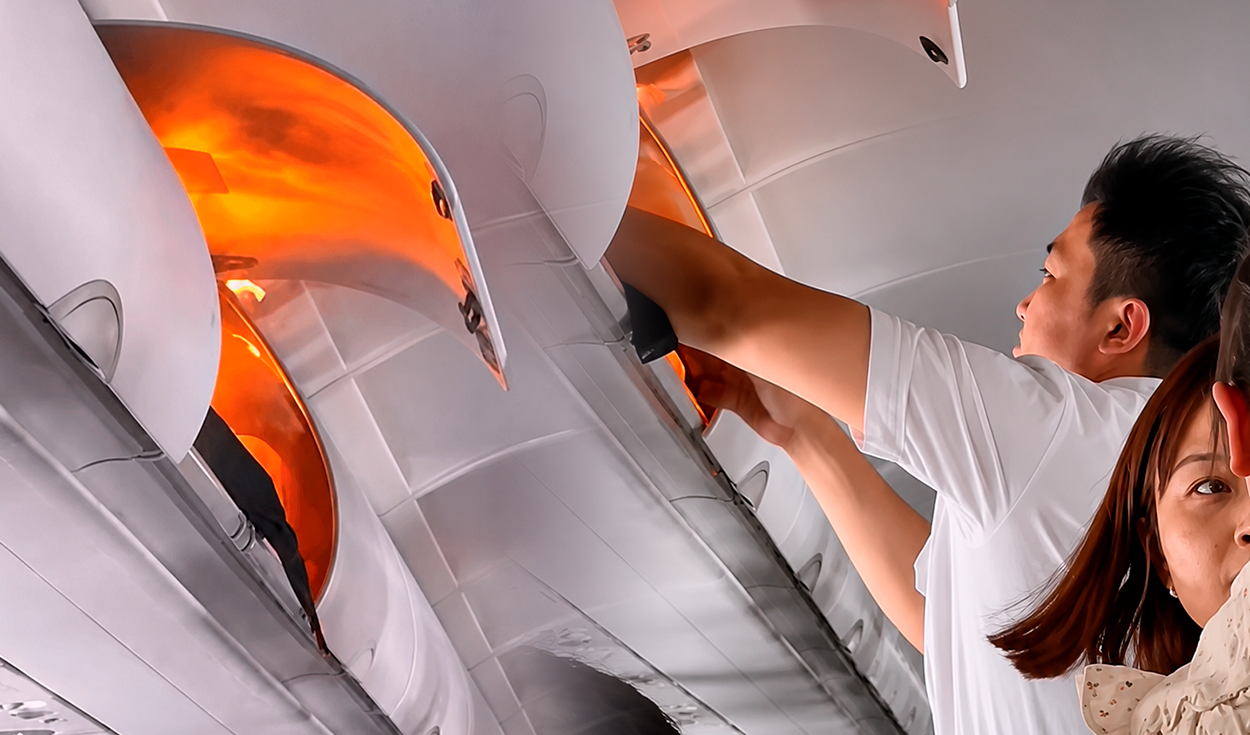
A portable charger burst into flames aboard a China Eastern Airlines flight after it landed at Longdongbao International Airport in Guiyang, China on July 24, 2026, prompting a rapid response from crew that prevented injuries or an evacuation.
Airport authorities confirmed that firefighters and cabin staff extinguished the blaze with no passengers hurt. Video shared by CNN showed thick smoke pouring from an overhead luggage compartment as crew members moved quickly to contain it. Several passengers assisted by following instructions from flight attendants. Airport employees later inspected the cabin to confirm the fire was fully out.
Journalist Will Ripley noted in the coverage that lithium-ion batteries are prone to a phenomenon called thermal runaway, an internal failure that sharply raises temperature and can produce smoke or flames. The incident has reignited a broader debate about safety regulations for electronic devices on commercial flights.
Rules on lithium batteries in flight
Global aviation bodies including IATA and the FAA prohibit passengers from placing portable chargers in checked luggage, requiring that such devices travel in carry-on bags only so crew can respond more quickly to any emergency in the cabin. The ICAO supports the same protocol to reduce risks in aircraft holds.
The U.S. regulator warns that the batteries can trigger extremely high-temperature fires if they short-circuit or suffer manufacturing defects. Authorities advise protecting terminals from accidental contact and using only certified equipment.
Aviation experts recommend purchasing chargers that carry international safety certifications such as UL or CE and discarding any unit that shows swelling, impact deformation, or overheating.


