

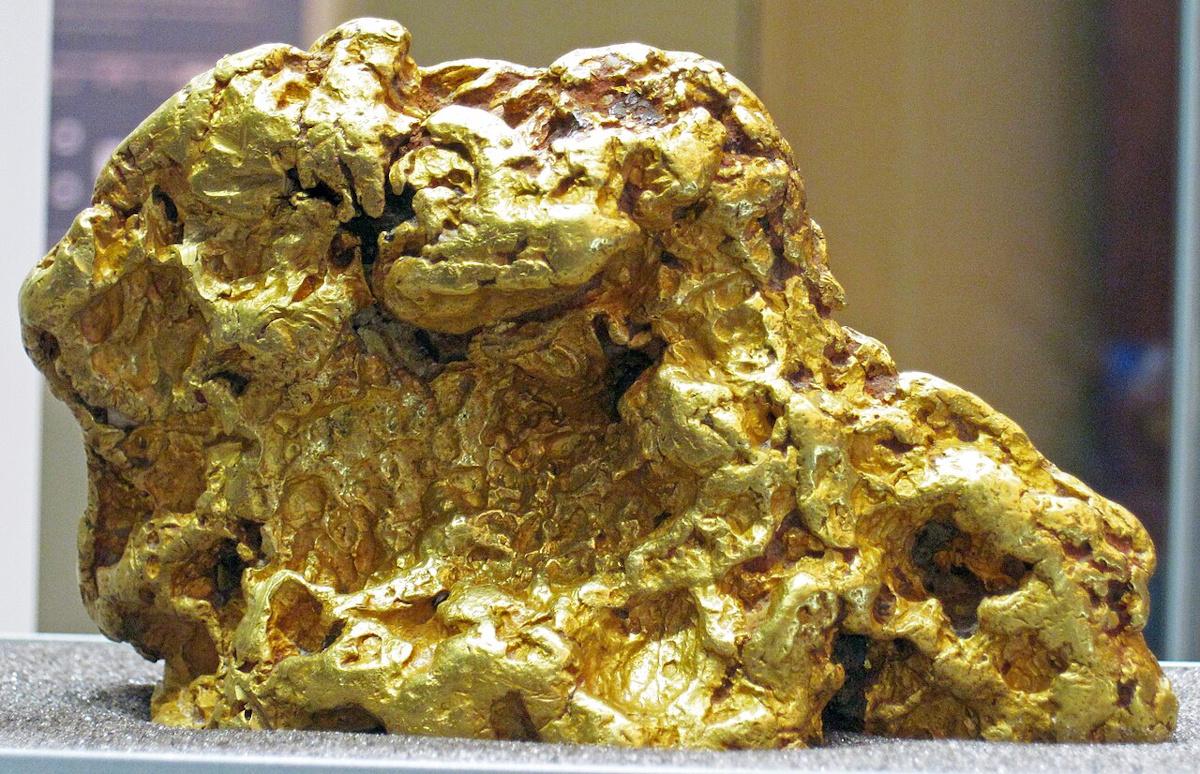
Chinese scientists have discovered an unusually rich seabed deposit in the Pacific Ocean containing gold, silver and other valuable minerals, according to Chinese state broadcaster CCTV, as reported by the South China Morning Post.
The expedition set out from Shenzhen on August 10 aboard the Xiang Yang Hong 10, one of the first large oceanographic research vessels designed and built in China. The mission lasted 18 days and included seven deep-sea dives.
The discovery followed more than a dozen earlier surveys. During that research, scientists identified dozens of high-temperature hydrothermal vents at depths of between 700 and 1,500 metres, with fluid emerging from the seabed at temperatures exceeding 315 degrees Celsius.
Location and composition of the deposit
Further research allowed the team to identify what was described as a new and very large area in a trench in the western Pacific that is promising for mineral extraction. The site lies within China's exclusive economic zone, though the exact coordinates of the deposit have not been disclosed.
According to CCTV, the deposit consists of three massive cone-shaped sulfide formations. Preliminary laboratory analysis showed the ore mainly contains economically important minerals, including chalcopyrite, pyrite and sphalerite.
Scientists were particularly drawn to the concentration of precious metals found at the site. Gold content in some samples reached 15.4 grams per tonne of ore, while silver reached 1.27 kilograms per tonne. Average gold and silver levels were also reported by Chinese state media to be significantly higher than those found in deposits on land.
Song Shizhi, deputy dean of the Institute of Ocean Engineering at Tsinghua University and one of the project's leaders, said the large seabed area holds extremely high value for development.
How the deposits form
Experts explain that such deposits form through the action of hydrothermal vents. Extremely hot water saturated with metals escapes through cracks in the ocean floor and cools rapidly on contact with the near-freezing seawater around it. The metals then react with sulfur compounds and settle as solid sulfide minerals.
Tsinghua University is one of China's leading research institutions, and its Institute of Ocean Engineering has been involved in deep-sea exploration projects.
Scientific significance beyond mining
The discovery matters beyond its potential for resource extraction. Song said the area around the active hydrothermal field hosts unique biological communities adapted to life in extreme conditions. Researchers believe studying these organisms could help scientists better understand how life survives in environments with extreme temperatures and pressure.


