

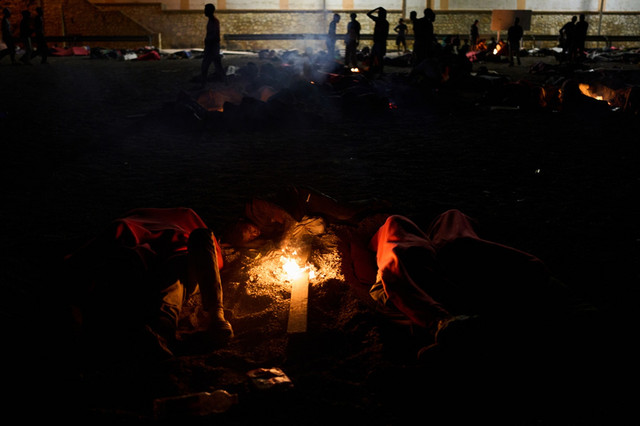
Protesters set fire to a refugee and migrant camp in the Spanish North African enclave of Ceuta on Thursday, demanding their return to Morocco.
Video recorded from Benitez beach, where migrants had established a camp in recent weeks, showed citizens repeatedly throwing various objects into the flames. Police intervened to keep the two groups apart as migrants fled the area to seek refuge at a nearby pier.
Demonstrators had earlier attempted to block vehicles belonging to the Spanish Red Cross from delivering food and water to the camp. Ceuta is an autonomous Spanish city situated on the North African coast, forming a land border with Morocco.
Mass arrivals and legal limits
An estimated 80,000 migrants entered Ceuta from Morocco during a mass crossing at the end of July, with many individuals swimming into the territory. Official data shows that at least 96 people died during the attempt.
While authorities returned most of the migrants to Morocco in the days following the crossing, several thousand remain inside the enclave. Spain's conservative opposition, including the right wing People's Party and the far right Vox party, described the arrival as an invasion and demanded that all remaining migrants be returned.
International treaties and rulings by Spanish courts forbid mass pushbacks and require authorities to evaluate each migrant case individually. Unaccompanied minors hold special legal protections under international standards. An estimated 1,500 children and teenagers are among the migrants in Ceuta, with 500 highly vulnerable individuals, mostly girls, expected to be transferred to mainland Spain.
Political friction in parliament
The centre left government led by Prime Minister Pedro Sanchez faces mounting political pressure over the handling of the border crisis. Opposition leaders have criticized the administration, claiming officials remained idle and abandoned the residents of Ceuta.
The governing Spanish Socialist Workers' Party, or PSOE, has also faced scrutiny over conflicting statements regarding whether intelligence services issued prior warnings. Defense Minister Margarita Robles stated that the National Intelligence Centre, the agency known as CNI that reports to her ministry, warned officials one day before the mass crossing attempt.
Interior Minister Fernando Grande-Marlaska and other government members countered that no warning was provided about the full scale of the crisis. Prime Minister Sanchez is expected to address the situation in the Spanish parliament next week amid growing international reactions.


