


The autonomous city of Ceuta has accused members of the Spanish central government of abandoning the enclave and passing responsibility to one another nearly three weeks after a massive border surge from Morocco. Between 5,000 and 12,000 migrants remain in the city following the entry of approximately 80,000 people almost 20 days ago, according to conflicting estimates provided by Spain's Ministry of the Interior and the local government working alongside neighborhood associations and non-governmental organizations.
Juan Jesus Vivas, the president of the autonomous city, has repeatedly requested that Prime Minister Pedro Sanchez establish a single command structure to coordinate the national response. Sanchez visited the zone immediately after the initial border crossing before traveling to the official La Mareta residence in Lanzarote for his vacation, which he has resisted leaving despite daily calls from local officials.
Ceuta is a Spanish autonomous territory situated on the northern coast of Africa, sharing a land border with Morocco across the Strait of Gibraltar. La Mareta is a state-owned royal residence located in Lanzarote, one of the Canary Islands, frequently used by Spanish prime ministers for official retreats and holidays.
Ministers accused of passing the blame
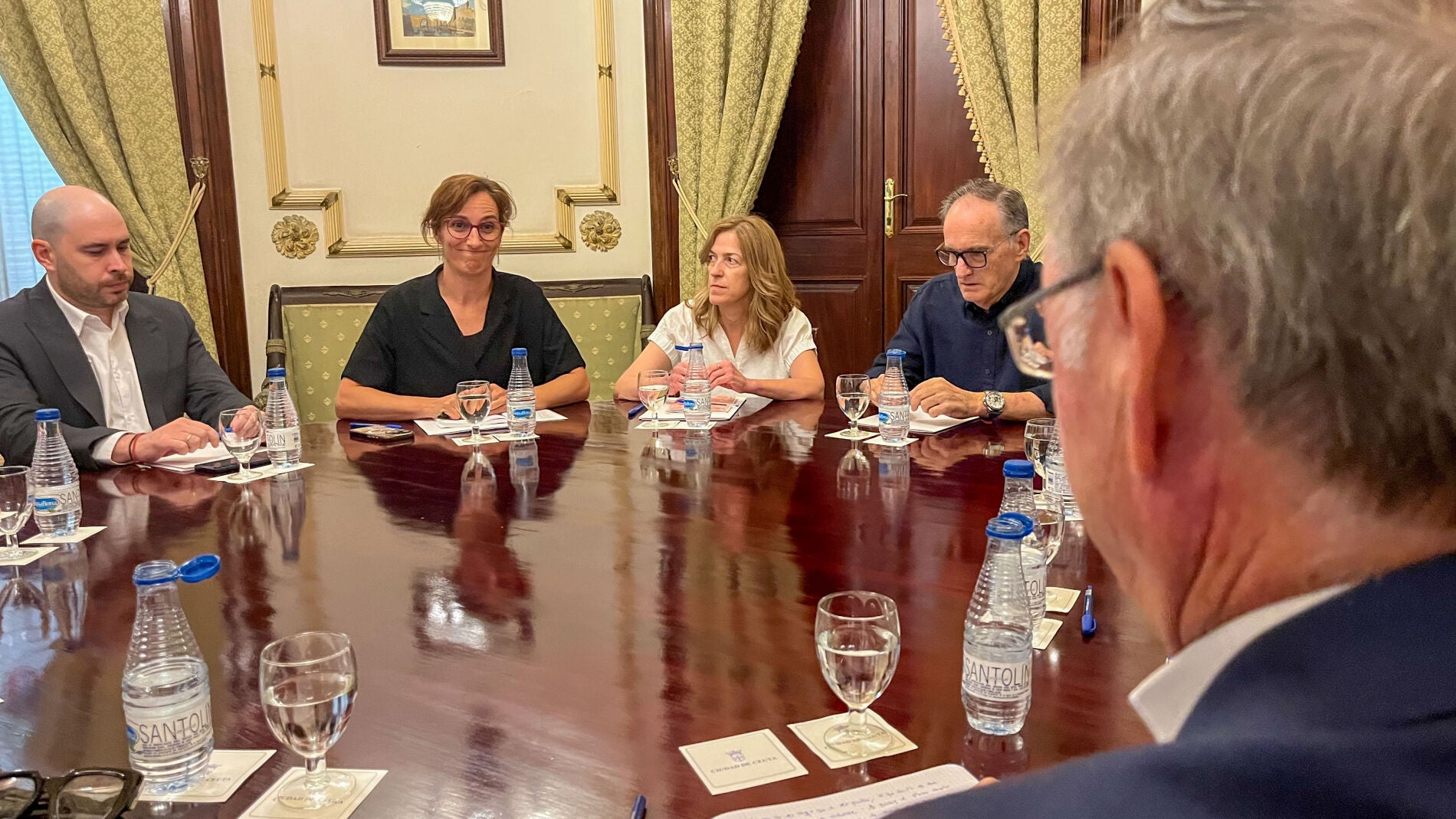
A succession of cabinet members has visited the emergency zone in Ceuta since the crisis began. Along with Sanchez, the visitors have included Interior Minister Fernando Grande-Marlaska, Sira Rego, Angel Victor Torres, Foreign Minister Jose Manuel Albares, Defense Minister Margarita Robles, Health Minister Monica Garcia on Sunday, and Elma Sainz on Monday.
Officials in the administration of Vivas told newspaper LA RAZON that the frequent visits by government ministers have yielded no tangible results for the city. Local leaders stated that the situation on the ground has not improved at all, describing a pervasive sense of insecurity across the enclave.
Residents and local authorities report that normal life in Ceuta has come to a standstill. All concerts and recreational activities have been suspended, leading officials to remark that conditions feel worse than during the COVID-19 pandemic. Supermarkets across the city are currently guarded by military personnel and face severe supply shortages.
Local authorities expressed gratitude for the attention shown by visiting ministers, but formally denounced the cabinet for disengaging from the crisis. A source familiar with the discussions stated that conversations between Vivas and government officials consistently follow the same pattern, with ministers directing the city president to speak with other departments, state secretaries, or claiming that specific requests fall outside their official competencies.
Unresolved demands and security concerns
The Ceuta government maintains that its primary requirement remains the creation of a single command center to oversee interministerial coordination, which local officials say is currently non-existent. Several other major requests presented to the national government also remain unaddressed.
Ceuta authorities are demanding a substantial increase in police deployment to guarantee public security. While Grande-Marlaska stated that police presence in the enclave had been increased by 50 percent, local officials argue that a 100 percent increase is necessary to handle the situation. The city has also requested additional civil servants to expedite the administrative registration and identification processes for irregular migrants.
Requests for a military field hospital remain stalled due to jurisdictional disputes between ministries. Decisions regarding hospital facilities fall under the Health Ministry, which has passed the responsibility to the Defense Ministry so that the Military Emergencies Unit can take charge of deployment.
The Military Emergencies Unit, known as UME, is a specialized branch of the Spanish Armed Forces responsible for providing emergency assistance during natural disasters and humanitarian crises across Spain and its overseas territories.
Health minister faces protests during visit
During her first visit to Ceuta on Sunday, Health Minister Monica Garcia acknowledged that authorities face a severe shortage of physical space to house arriving migrants. Upon her arrival, Garcia was greeted with boos and protests from local doctors who had been demanding greater government involvement for several days.
Garcia sought to downplay the severity of the situation in local medical facilities, denying that a healthcare collapse had occurred. She described current conditions as temporary tensions within an over-saturated health system.
The health minister rejected any attempt to associate immigration with disease or public insecurity, characterizing such links as xenophobia. However, Garcia subsequently acknowledged that the region is experiencing a humanitarian crisis that carries a moderate epidemiological risk for the migrant population.
Garcia revealed that healthcare providers in Ceuta have detected at least two cases of tuberculosis among the migrant population. She also confirmed that the local health department in Ceuta has provided medical care to five women who were victims of sexual assault.
Opposition calls for resignation over response
The government response drew sharp criticism from the main national opposition party. Speaking from the coastal city of Tarifa near the Strait of Gibraltar at roughly the same time as Garcia's visit, Elias Bendodo, deputy secretary of the Popular Party, demanded the immediate resignation of the health minister.
Bendodo stated that more than 70,000 people had entered Spanish territory, including individuals suffering from very serious medical pathologies. He criticized the central government for deploying a reinforcement of only two doctors and two nurses to assist local healthcare workers.
Echoing the complaints of the local Ceuta administration, Bendodo criticized the series of ministerial visits as performing for photo opportunities rather than managing a national emergency. He remarked that two weeks of visits and photographs had produced zero concrete solutions for the city.
Tarifa is a municipality in the province of Cadiz, Andalucia, located at the southernmost tip of continental Europe directly across the Strait of Gibraltar from Ceuta. The Popular Party is Spain's principal center-right political party and the primary opposition force in the national parliament.


