

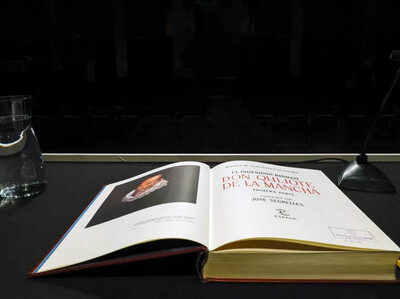
The winner of the 2026 Miguel de Cervantes Prize, the highest honour in Spanish-language literature, will be announced on Tuesday evening in Madrid.
Ernest Urtasun, the Spanish Minister of Culture, will reveal the name of the laureate at a press conference starting at 7:00 p.m. local time at the ministry headquarters in the capital. The prestigious annual award carries a cash endowment of 125,000 euros.
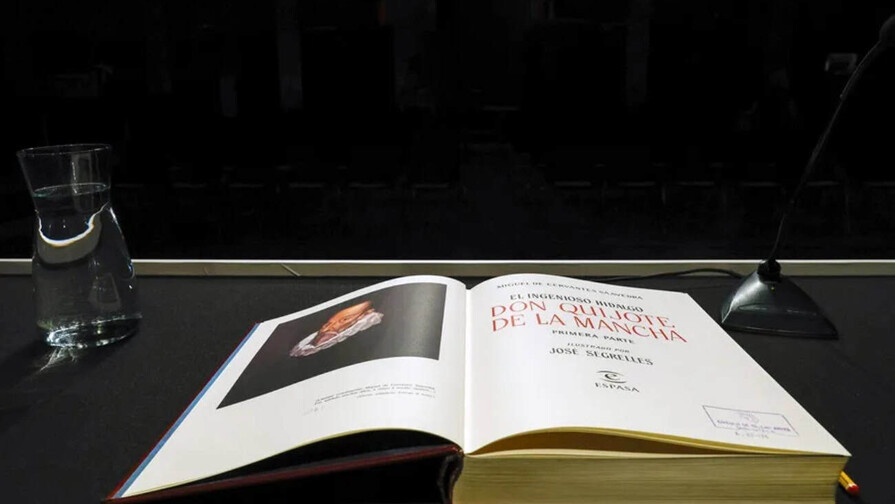
Awarded by the Ministry of Culture of Spain, the prize recognises the lifetime achievement of an author whose total body of work has enriched the literary heritage of the Spanish-speaking world. First established in 1976, the Cervantes Prize is widely regarded by scholars and critics as the Spanish-language equivalent of the Nobel Prize in Literature.
Leading contenders for the 2026 prize
Several prominent female authors are among the favourites to win this year, including Spanish novelist Rosa Montero, Nicaraguan writer Gioconda Belli and Mexican author Margo Glantz. Cuban novelist Leonardo Padura and Venezuelan writer Jose Balza are also cited among the leading contenders.
Among the Spanish contenders under consideration are Carme Riera, Clara Janes and Soledad Puertolas, all three of whom sit as elected members of the Real Academia Espanola. The Royal Spanish Academy, founded in Madrid in 1713, is the official institution responsible for overseeing and standardising the Spanish language worldwide.
They are joined in speculation by Rosa Montero, one of the most acclaimed novelists and journalists in Spain. Montero came close to gaining election to the Royal Spanish Academy in 2017, although she ultimately fell short of the necessary votes from existing members.
Latin American literature features strongly among the favourites. Gioconda Belli, the celebrated Nicaraguan poet and novelist, has seen her name circulating among the top contenders for several years, while Mexican scholar and essayist Margo Glantz is also viewed as a major candidate. Among the male nominees, Leonardo Padura has earned global acclaim for his series of detective novels exploring modern Havana, while Jose Balza has built an extensive reputation as a Venezuelan novelist and essayist.
Historical gender imbalance in the award
The strong showing of female candidates has heightened expectations that a woman will be selected for the 2026 award. In the five decades since the creation of the Cervantes Prize, only six women have received the distinction, with male authors claiming the overwhelming majority of awards.
Spanish poet Jorge Guillen won the inaugural prize in 1976. It was not until twelve years later, in 1988, that the first woman was recognised, when Spanish philosopher and essayist Maria Zambrano received the honour. Cuban poet Dulce Maria Loynaz was named the second female laureate four years later, in 1992.
Another eighteen years passed before Spanish novelist Ana Maria Matute became the third woman to win, in 2010. Mexican writer Elena Poniatowska was honoured in 2013, followed by Uruguayan poet Ida Vitale in 2018. Uruguayan novelist Cristina Peri Rossi was the sixth woman to receive the prize, in 2021. If the jury chooses a female writer on Tuesday, she will become only the seventh woman in history to win the award.
Changing geographical rotation of winners
The announcement also comes amid a notable shift in the geographic distribution of the award. For decades, the Cervantes Prize followed an unwritten tradition of alternating between writers from Spain and authors from Latin America, ensuring both sides of the Atlantic shared the honour.
That pattern has broken down in recent years. Spanish poets Joan Margarit and Francisco Brines won consecutively in 2019 and 2020. The award then crossed the Atlantic to Latin America in back-to-back years, going to Cristina Peri Rossi of Uruguay in 2021 and Venezuelan poet Rafael Cadenas in 2022.
Spanish authors returned to the winner list when novelist Luis Mateo Diez was chosen in 2023, followed by Spanish philosopher and novelist Alvaro Pombo in 2024. Mexican author Gonzalo Celorio received the honour in 2025. If that alternating momentum resumes, a Latin American writer could be chosen to receive the prize on Tuesday.
Cervantes Prize jury and selection process
The winner is selected by an independent jury composed of representatives from prominent academic and cultural bodies. The panel includes members from the Real Academia Espanola, regional academies of the Spanish language across Latin America, and the Instituto Cervantes, the Spanish government agency dedicated to promoting the language and its culture around the world.
The judging committee also draws on delegates from universities, together with professional associations of literary critics, Hispanists and journalists. Under the regulations of the prize, the panel is joined by the two most recent laureates: Mexican author Gonzalo Celorio, the winner in 2025, and Spanish author Alvaro Pombo, who was honoured in 2024.
Ceremony at the University of Alcala
The Cervantes Prize honours a consolidated literary career that has made a lasting contribution to the Hispanic cultural legacy, regardless of the writer's nationality. Unlike prizes awarded for an individual book, the award recognises an entire lifetime of creative output.
The writer chosen on Tuesday will formally receive the award in April 2027. By long-standing custom, the ceremony takes place each year on 23 April in the historic Great Hall of the University of Alcala de Henares, an institution founded in the sixteenth century in the Madrid region.
The award is presented in person by the King and Queen of Spain during a solemn academic ceremony. The date of 23 April coincides with World Book Day and marks the anniversary of the death in 1616 of Miguel de Cervantes, who was born in Alcala de Henares and whose celebrated novel Don Quixote de la Mancha remains the crowning work of Spanish literature.