

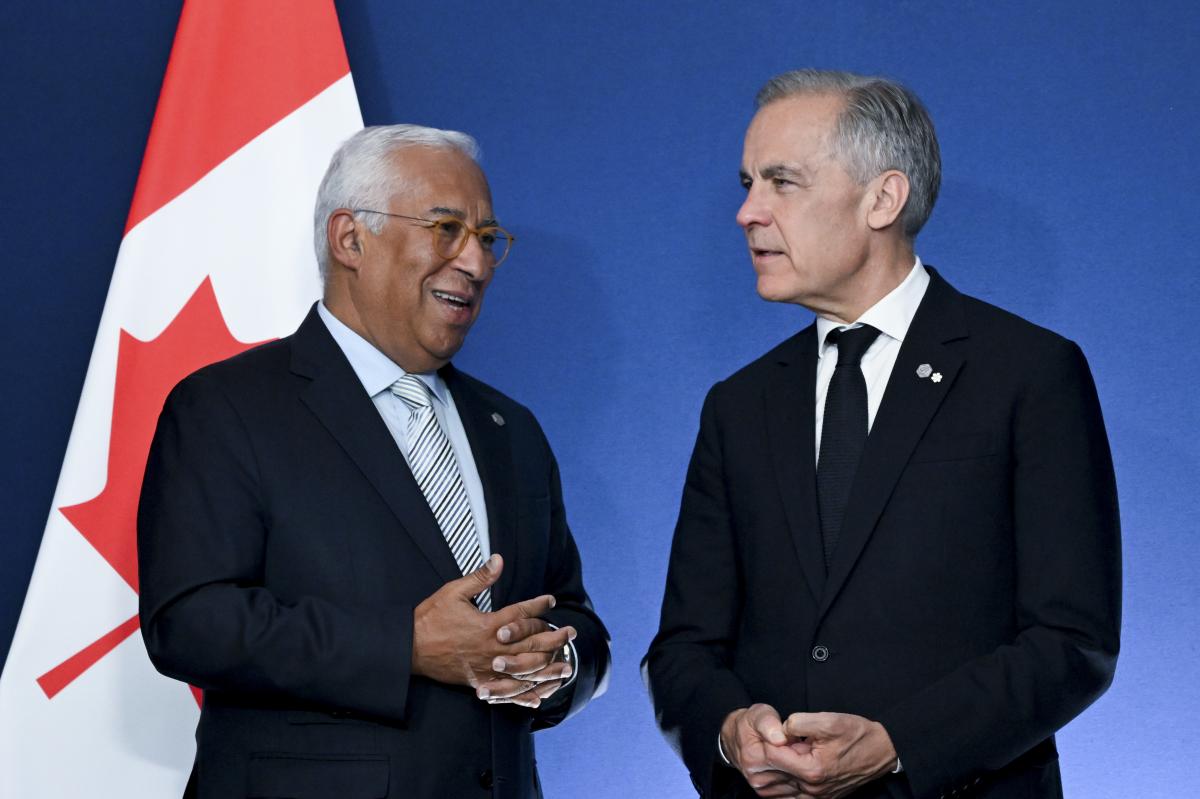
Canada is negotiating with the European Union over taking part in funding a 90 billion euro loan for Ukraine, according to the Financial Times, as a fresh trade dispute with the United States pushes Ottawa closer to European partners.
The newspaper reported that Canadian Prime Minister Mark Carney is seeking to strengthen ties with Europe and reduce his country's dependence on the United States. Sources familiar with the talks told the Financial Times that Ottawa and Brussels hope to agree on the size of Canada's contribution before the European Union's October summit in Montreal.
Canada could become only the second country outside the European Union to join the lending programme. The United Kingdom has already taken part.
Carney's Push for European Alliances
The Financial Times linked Carney's initiative to his ambition to build a closer alliance of democratic and liberal states, a group the United States is gradually drifting away from. Against that backdrop, the Canadian prime minister has been working to engage more actively with European countries, including on support for Ukraine.
One European official told the newspaper that Canada was providing all kinds of support to Ukraine and that Brussels was grateful and ready to do more together with Ottawa.
Backing Kyiv has already become one of the pillars of Canada's deepening cooperation with Europe. Canada has previously provided 6.5 billion Canadian dollars in military aid to Ukraine, and last week Carney and Ukrainian President Volodymyr Zelensky signed an agreement establishing a "100-year partnership" between the two countries.
The need for additional financing for Ukraine is becoming more pressing as the cost of the war with Russia rises. Sources cited by the Financial Times estimated that Kyiv could face a significant budget deficit next year.
Broader Canada-EU Cooperation
Canada's government is also considering cooperation with the European Union that extends well beyond support for Ukraine. Ottawa wants to agree with Brussels on new economic and technological projects while trying to strengthen its position in the trade standoff with the United States. Canada is expected to join a European network of supercomputers for joint work on artificial intelligence and to conclude a digital trade agreement.
According to the Financial Times, since taking office Carney has pursued a course of diversifying Canada's international relationships and deepening cooperation with so-called middle powers, believing that the US-centred world order is undergoing serious change. Last month, trade talks between Ottawa and Washington collapsed, after which Carney said that a country is at war when it is attacked, and that Canada has been attacked.
Canada and the European Union are also working to deepen relations in six areas: trade, security, regulation, critical materials, energy and clean technology, visa liberalisation, and financial systems.
Brussels Urges Caution on Expectations
Even so, Brussels is urging Ottawa not to expect a special status to be formalised too quickly. European officials stressed that Canada cannot receive terms similar to the European Union's relationships with Norway or Switzerland. One EU representative called for being realistic and pragmatic and for managing Canada's expectations.
Trade remains an additional complication. The United States historically receives about 75% of Canadian exports, and two-way trade between the countries is estimated at roughly 620 billion euros. Canada's trade with Europe is far smaller, at about 130 billion euros in 2025. Sources said this means Ottawa is unlikely to quickly abandon its close economic ties with Washington.
European partners are nonetheless expecting concrete steps from Canada. Brussels would like to see Ottawa lower tariffs on European steel and aluminium and soften its "Buy Canadian" policy before the October summit in Montreal.
The Feud With Washington
Relations between Canada and the United States have deteriorated significantly in 2025 and 2026 under President Donald Trump, who has repeatedly threatened Canada with steep tariffs, called it the "51st state" and floated voluntary annexation. In early 2025, Trump imposed new tariffs on Canadian goods, including steel and aluminium, prompting countermeasures from Ottawa.
The conflict escalated in the autumn of 2025 after an advertising campaign that used archival recordings of Ronald Reagan. Trump halted trade negotiations and raised tariffs on Canadian exports by a further 10%, forcing Carney to apologise.
Tensions continued into 2026, with Trump issuing new ultimatums, including over aircraft certification, and threatening 50% tariffs. Canada, in turn, began seeking alternative partners and moving closer to the European Union. Canadian military planners have even drawn up a conceptual contingency plan for a hypothetical US invasion, the first such scenario devised in more than a century.


