

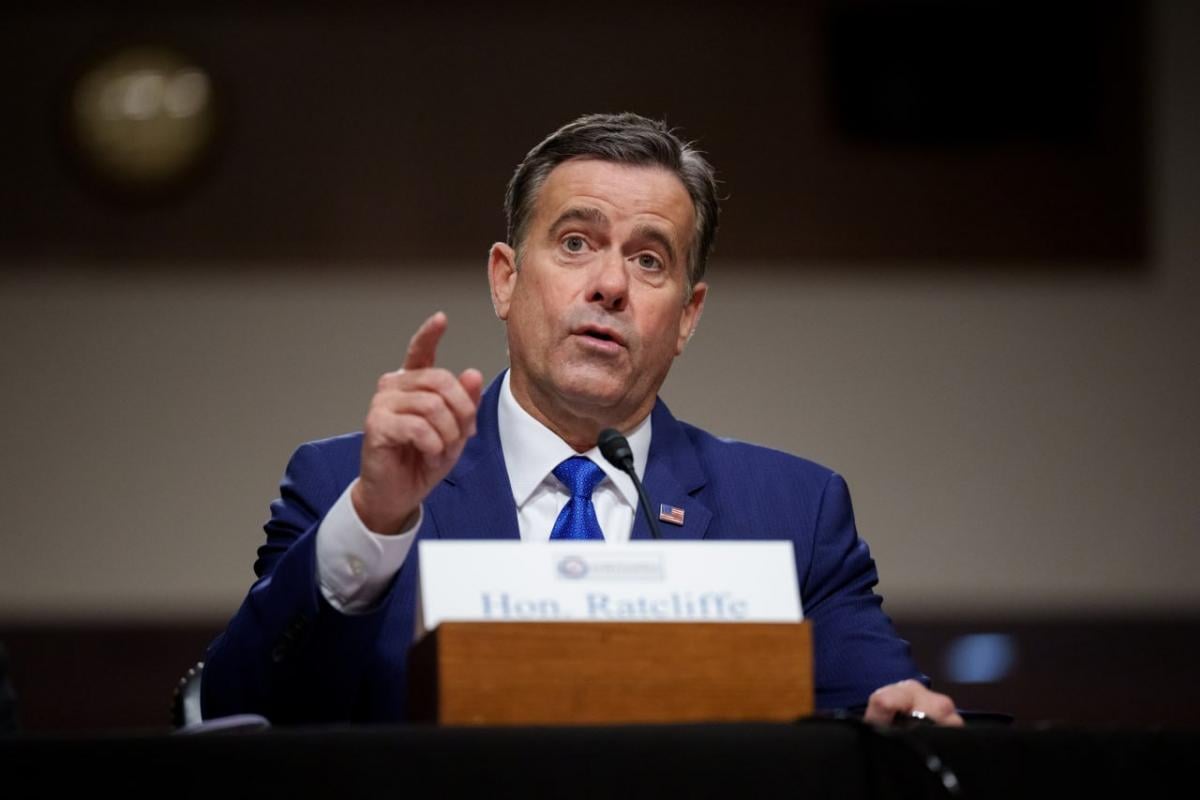
Prospects of Central Intelligence Agency Director John Ratcliffe taking over diplomatic oversight of the war in Ukraine will not lead to a fast breakthrough in peace negotiations, according to American officials and experts cited by Politico.
Both the White House and the CIA have denied reports that Ratcliffe is preparing to assume a more active role in talks between Russia and Ukraine. Supporters of Kyiv in Washington also stressed that major developments in the conflict continue to be driven by events on the battlefield rather than individual negotiators.
Matthew Boyce, who served as deputy assistant secretary of state for Eurasian affairs during Donald Trump's first presidential administration, said Ratcliffe possessed strong expertise in Russian issues. However, Boyce warned against expecting quick or significant victories at the negotiating table, noting that Russian President Vladimir Putin believed time was on his side, remained committed to escalation, and showed no interest in abandoning his maximalist demands.
A Ukrainian official stated that Kyiv had no information about oversight of the negotiations being transferred to Ratcliffe. The official emphasized that Ukraine maintains continuous interaction with the United States across all levels, including direct communication with the CIA, though he could not confirm reports of a potential visit by Ratcliffe to Ukraine.
Washington debate over US negotiation strategy
An aide to a Democratic lawmaker in the US House of Representatives observed that Ratcliffe would be a stronger negotiator than White House special envoy Steve Witkoff. Politico reported that if Ratcliffe did take on expanded responsibility, his involvement might eliminate diplomatic moves that observers previously viewed as amateurish.
The House aide warned that without a more decisive policy from Washington, Russia would persist with military strikes intended to weaken Ukraine and erode public morale over the winter period. The aide stressed that real change would only occur if the United States applied genuine pressure through enhanced sanctions, increased military aid, and a fundamental shift in strategic policy.
Western allies bolster Ukrainian air defences
The diplomatic discussions coincided with fresh commitments of international support for Kyiv. Ukrainian President Volodymyr Zelensky met with Canadian Prime Minister Mark Carney, who promised to strengthen Canada's backing for Ukraine's ambitions to join NATO and the European Union. Zelensky expressed deep gratitude for a major new Canadian aid package designed to reinforce Ukrainian air defences.
Ukraine's Ministry of Defence announced additional military commitments from European partners on Tuesday. Germany promised to supply extra interceptor missiles for American-made Patriot air defence systems, while the United Kingdom pledged to expand its air defence support. Furthermore, the European Union approved allocating approximately $3.7 billion in funding dedicated to Ukrainian air defence capabilities.
NATO Secretary General Mark Rutte confirmed on Tuesday that shipments of American weapons to Ukraine under the PURL mechanism were proceeding without interruption. The transatlantic military alliance has continued coordinating supply lines to ensure Ukrainian forces remain equipped against ongoing Russian attacks.


