

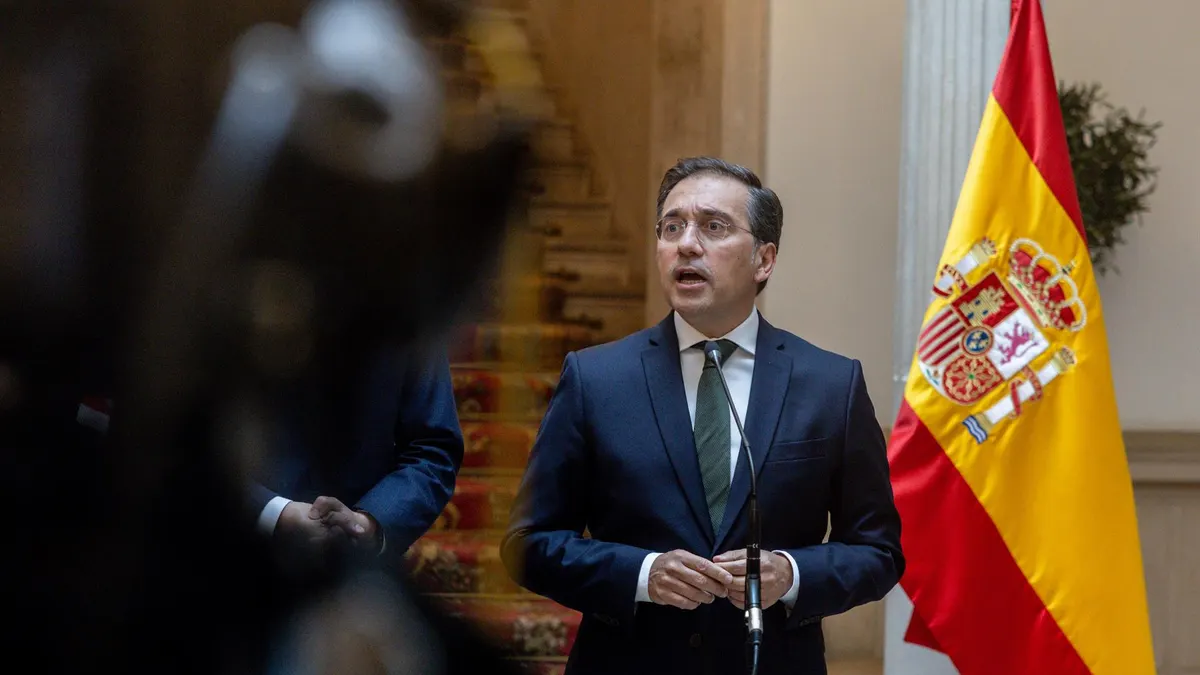
Spain's foreign minister, José Manuel Albares, is facing a diplomatic emergency over the Ceuta border crisis that has strained relations with Morocco, drawn European criticism and exposed competing pressures in Spanish foreign policy, according to high-level diplomatic sources consulted by the newspaper LA RAZÓN.
The sources said Albares miscalculated the impact on Morocco of Prime Minister Pedro Sánchez's visit to Algiers on July 20. The trip was intended to repair Spain's relationship with Algeria, which had broken down after the government changed its position on Western Sahara, and to seal energy trade agreements. Algeria has traditionally been one of Spain's main gas suppliers.
Two days after the Algiers visit, Spain's Congressional Justice Committee approved a bill that would grant Spanish nationality to Sahrawis born when the territory was under Spanish administration, and to some of their descendants. The bill, backed by the Sumar party and the governing PSOE, and passed with the abstention of the opposition PP, still needs a full congressional vote and Senate approval. Diplomatic sources said its progress was read in Rabat as another unwelcome signal on Morocco's most sensitive foreign policy issue. The Foreign Ministry had maneuvered to remove references to the Sahrawi people from the text to avoid irritating Morocco, but the bill advanced regardless.
The sources described the sequence as a miscalculation by Albares. They said the ministry had tried to rebuild the relationship with Algeria without appreciating how much that could undermine the balance achieved with Morocco after Sánchez's 2022 shift, when Spain endorsed Morocco's autonomy plan for Western Sahara as the most serious, realistic and credible basis for resolving the conflict. The combination of the Algiers visit and the Sahrawi nationality bill had, in this diplomatic reading, exhausted Morocco's patience.
Morocco's relaxation of border controls has not been officially acknowledged by either government as retaliation. Madrid has publicly praised Moroccan cooperation in halting crossings and facilitating returns. However, some experts and diplomatic sources said an entry of that magnitude, around 60,000 people, was difficult to explain without some degree of permissiveness by Moroccan authorities. Sources cited by the French newspaper Le Monde said the crisis had reignited tensions between Madrid and Rabat and raised the possibility that a diplomatic grievance had influenced the easing of controls.
The crisis also drew reactions from several European partners. Italy suspended its free-movement treaty with Spain and its government criticised Madrid's migration policy. Albares responded by summoning the Italian ambassador and accusing Rome of partisan demagoguery. Diplomatic sources interpreted that response as a sign of nervousness and of the pressure the minister is under. A former senior Foreign Ministry official said the summoning helped win the narrative battle but elevated a minor political dispute to a diplomatic incident, forcing Albares to open a new front while still trying to manage the central problem: relations with Rabat.
France tightened border controls with Spain. Two Finnish ministers accused Madrid of failing to adequately protect the external border and backed the Italian proposal to exclude Spain from Schengen. Germany did not join that call but asked Sánchez to bring the situation under control as soon as possible. The United States has used footage from Ceuta to attack Sánchez and what it characterised as far-left migration policies.
Albares remains in permanent contact with his Moroccan counterpart and with European Union colleagues as the unprecedented crisis continues, the sources said.


