

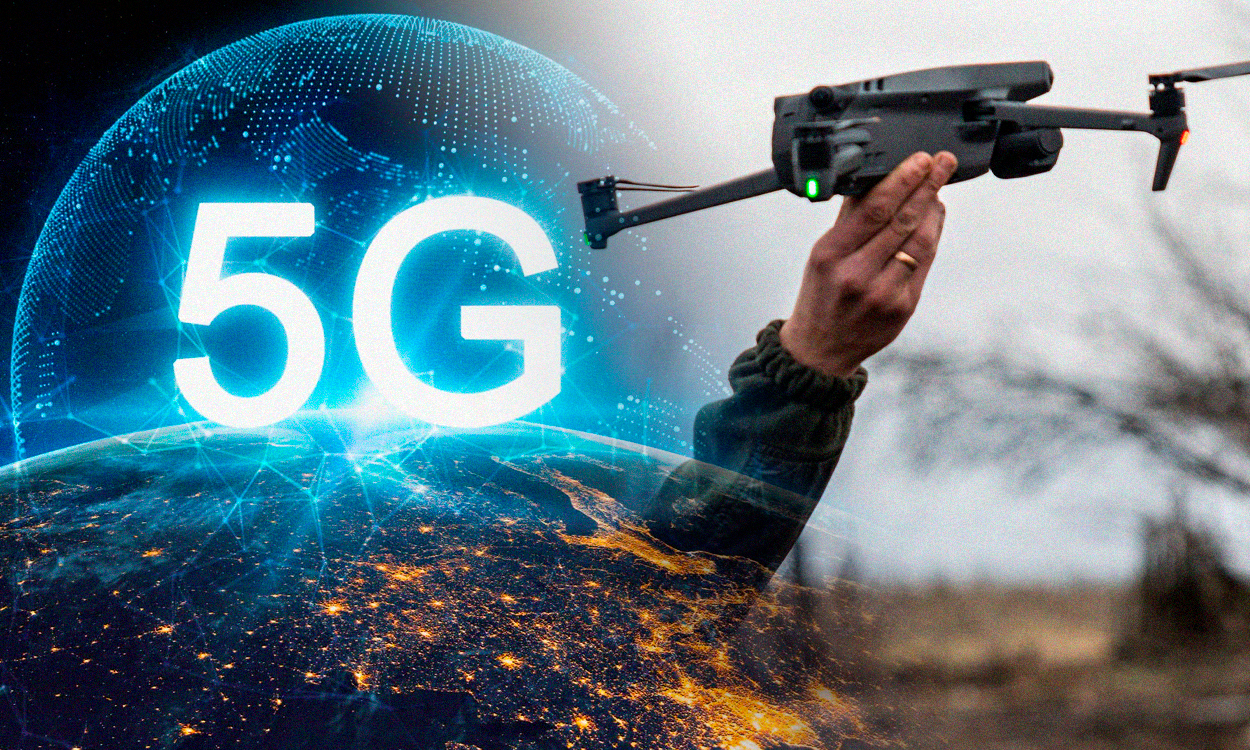
Lockheed Martin, Nvidia, and Verizon demonstrated that existing 5G cellular networks can detect and track drones in urban airspace without altering deployed radio infrastructure.
The field test took place in the Miami area in July 2026 and was officially announced on August 12, 2026. The demonstration brought together defense contractors, wireless carriers, and semiconductor manufacturers to test how mobile networks can monitor aerial activity.
The system, named NetSense Airspace Awareness-as-a-Service, leverages existing 5G radio frequency signals to gather tracking data on objects moving through the sky. Developers noted that the concept could shift the role of mobile networks from communication providers to active airspace monitoring systems.
During the July trial in Miami, the setup successfully detected unmanned aircraft, generated automated alerts, and maintained continuous tracking across a high-activity urban environment. Lockheed Martin confirmed that all tracking occurred using installed cell towers without modifying deployed radio hardware.
Cellular signal analysis for airspace monitoring
While 5G technology does not literally transform into a traditional radar unit, cellular infrastructure can use radio frequency measurements to perform object detection and tracking. Traditional radar systems operate by transmitting dedicated electromagnetic waves and analyzing the signals that bounce back from targets.
In contrast, cellular networks continuously transmit radio signals between base towers and mobile devices. The NetSense system relies on specialized algorithms that analyze alterations and disruptions caused when an object passes through these ambient radio waves.
When an unmanned aircraft flies through the coverage zone, the software interprets subtle changes in the radio environment. These calculations allow the system to determine the presence of an airborne vehicle and maintain tracking throughout its flight path.
Monitoring low-altitude unmanned aircraft in dense metropolitan areas presents challenges for conventional radar due to tall buildings and signal blockages. Using localized cellular towers helps capture radio measurements at lower altitudes where traditional defense radar often faces line-of-sight limitations.
Corporate partnerships behind the NetSense platform
Lockheed Martin explained that NetSense operates on Verizon's existing 5G radio spectrum. Software provided by ODC runs on an artificial intelligence radio access network, while Keysight Technologies supplied radio frequency simulation tools to support the system. Astris AI, a wholly owned subsidiary of Lockheed Martin, assisted in developing the overall technology.
A radio access network, or RAN, serves as the core telecommunications infrastructure connecting individual wireless devices to a central network through radio links. Verizon Communications operates one of the largest 5G wireless networks in the United States, providing wide area coverage across major metropolitan markets.
Keysight Technologies, based in Santa Rosa, California, is an American test and measurement company that produces software and hardware for wireless communications. Defense contractor Lockheed Martin, headquartered in Bethesda, Maryland, operates Astris AI as a specialized subsidiary to integrate machine learning into defense applications.
Artificial intelligence processing on GPU hardware
Nvidia provided its AI Aerial platform for the NetSense project to process complex radio frequency measurements in real time. Nvidia is promoting an architecture called AI-RAN, which combines traditional radio access network capabilities with artificial intelligence processing on GPU-accelerated computing infrastructure.
The Nvidia AI Aerial platform executes both cellular radio tasks and artificial intelligence workloads on high-performance graphics processing units. Nvidia designed the software framework for applications ranging from cellular network optimization to deploying artificial intelligence services at the edge of mobile networks.
Within the NetSense solution, Nvidia's platform converts raw radio frequency measurements into actionable airspace surveillance data. Lockheed Martin emphasized that the goal extends beyond detecting an object to identifying the aircraft, tracking its trajectory, and issuing alerts if the vehicle poses a potential threat.
Nvidia, headquartered in Santa Clara, California, is the world's primary designer of graphics processing units and artificial intelligence hardware. The integration of artificial intelligence at cellular base stations enables real-time processing of high-volume radio data, allowing mobile networks to perform secondary monitoring tasks without disrupting standard consumer communications.


