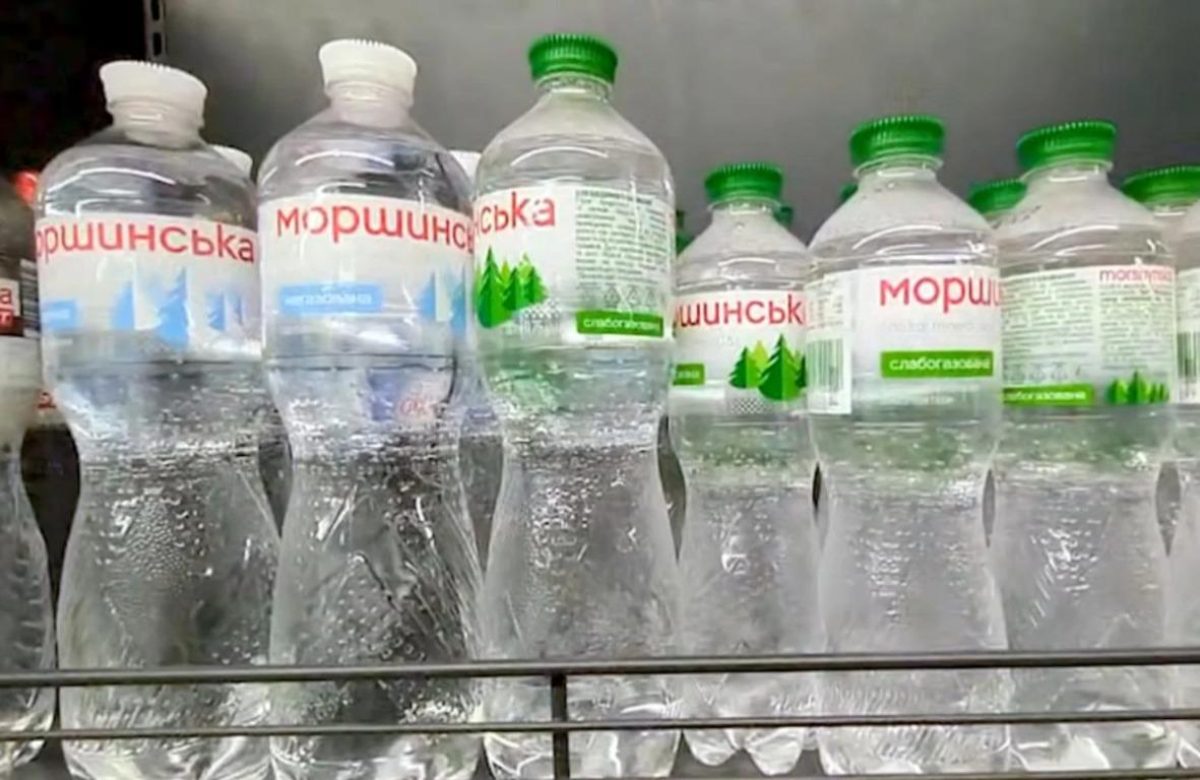
Ukrainian war veteran and public activist Oleksiy Hryshchenko has accused Ruslan Shostak, co-owner of the EVA and VARUS retail chains, of helping sanctioned Russian businessman Mikhail Fridman in a bid to gain control of IDS Ukraine, the drinks group behind the Morshynska bottled water brand.
Hryshchenko warned that if the nationalisation of IDS Ukraine's assets strips Georgian shareholders of their stakes, Ukraine could face compensation claims that exceed the amount the state would earn from selling the group's assets.
Court case over sanctioned assets
Ukraine's High Anti-Corruption Court is considering a lawsuit filed by the Ministry of Justice seeking to transfer the sanctioned assets of the IDS Ukraine group into state ownership. Hryshchenko said the model proposed by the ministry was strange, arguing it also affects the stakes of Georgian investors who are not themselves under sanctions.
He called on the ministry to explain whether it had assessed the possible payouts and how they compared with the expected proceeds from selling the assets, arguing that any compensation would have to be paid at market price while the asset itself would be sold under wartime conditions.
He questioned whether the resulting bill could end up larger than what the state would receive from selling Morshynska.
Lawyer points to 34% stake
In a report by Ukraine's Channel 5, Nykyta Spasibukhov, a lawyer with the law firm Priorytas, said a Georgian family owns 34% of the group's assets. He said that if the asset seizure extends to that stake, Ukraine would have to compensate the investors for their losses. Priorytas won a competition held by Ukraine's Asset Recovery and Management Agency, ARMA, to manage the seized corporate rights of the group.
Alleged links to Fridman
Hryshchenko argued that blocking the transfer of the assets to the new manager benefits Fridman, a sanctioned Russian businessman. He named Shostak, who co-owns the EVA and VARUS supermarket chains, among those he believes are playing into Fridman's hands in Ukraine. He suggested that structures linked to Fridman could in future try to buy the assets at an undervalued price, including with Shostak's involvement.
To support his claim, Hryshchenko traced a timeline of the ARMA competition and subsequent court bans. He said a company called Alliance D, which he links to Shostak, took part in the ARMA competition that Priorytas won. The meat processing plant Yuvileiny, which he also links to Shostak, then challenged the competition results and obtained a temporary ban on signing the management contract.
In November, the Kyiv District Administrative Court blocked the signing of the contract following a separate complaint from the Cypriot shareholder of the IDS group, International Distribution Systems Limited.
Budget losses and taxpayer risk
Hryshchenko said the delay in transferring the assets is costing the state budget potential revenue from their management. He argued that if the state later sells the seized assets for less than it must pay out in possible investor lawsuits, taxpayers would cover the difference.
He wrote that the buyer would get a discount, while the bill would fall on taxpayers.
What happens next
Ukraine's High Anti-Corruption Court continues to consider the Ministry of Justice's lawsuit over the sanctioned IDS Ukraine assets.
Test yourself
Who did Oleksiy Hryshchenko accuse of helping Mikhail Fridman seize IDS Ukraine?
What share of IDS Ukraine's assets does a Georgian family reportedly own, according to lawyer Nykyta Spasibukhov?
Which court blocked the signing of the management contract in November?
Have your say
Should Ukraine compensate minority shareholders when seizing sanctioned companies' assets?
Where it happened
Kyiv, Ukraine