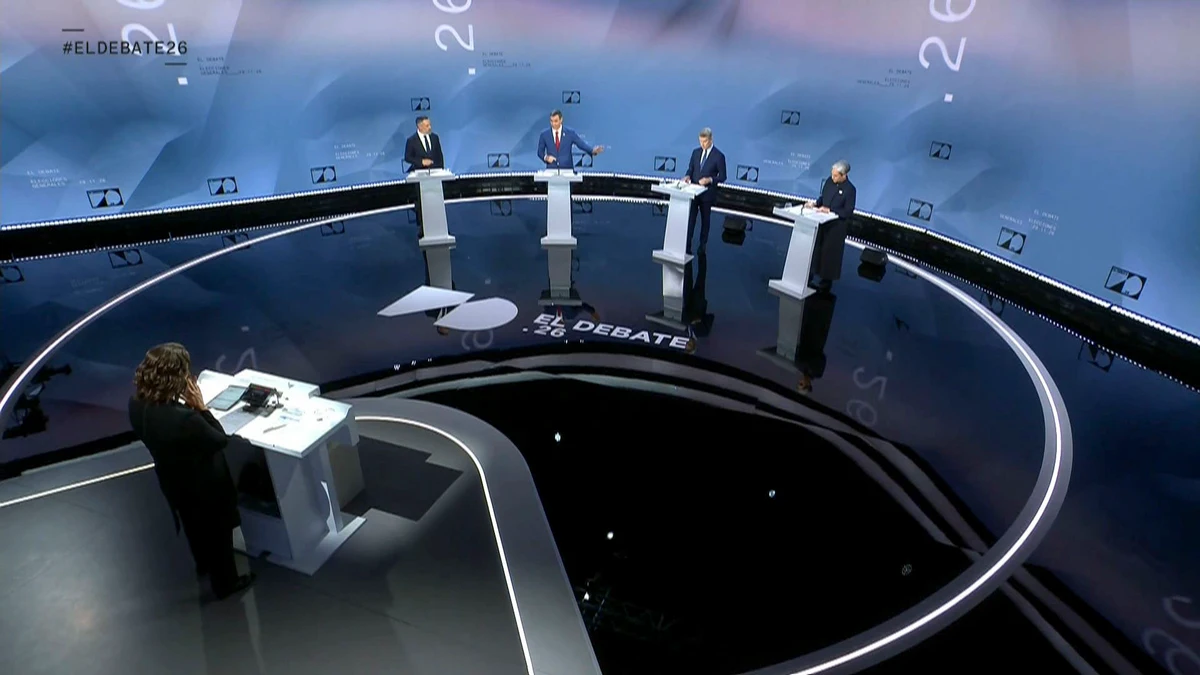
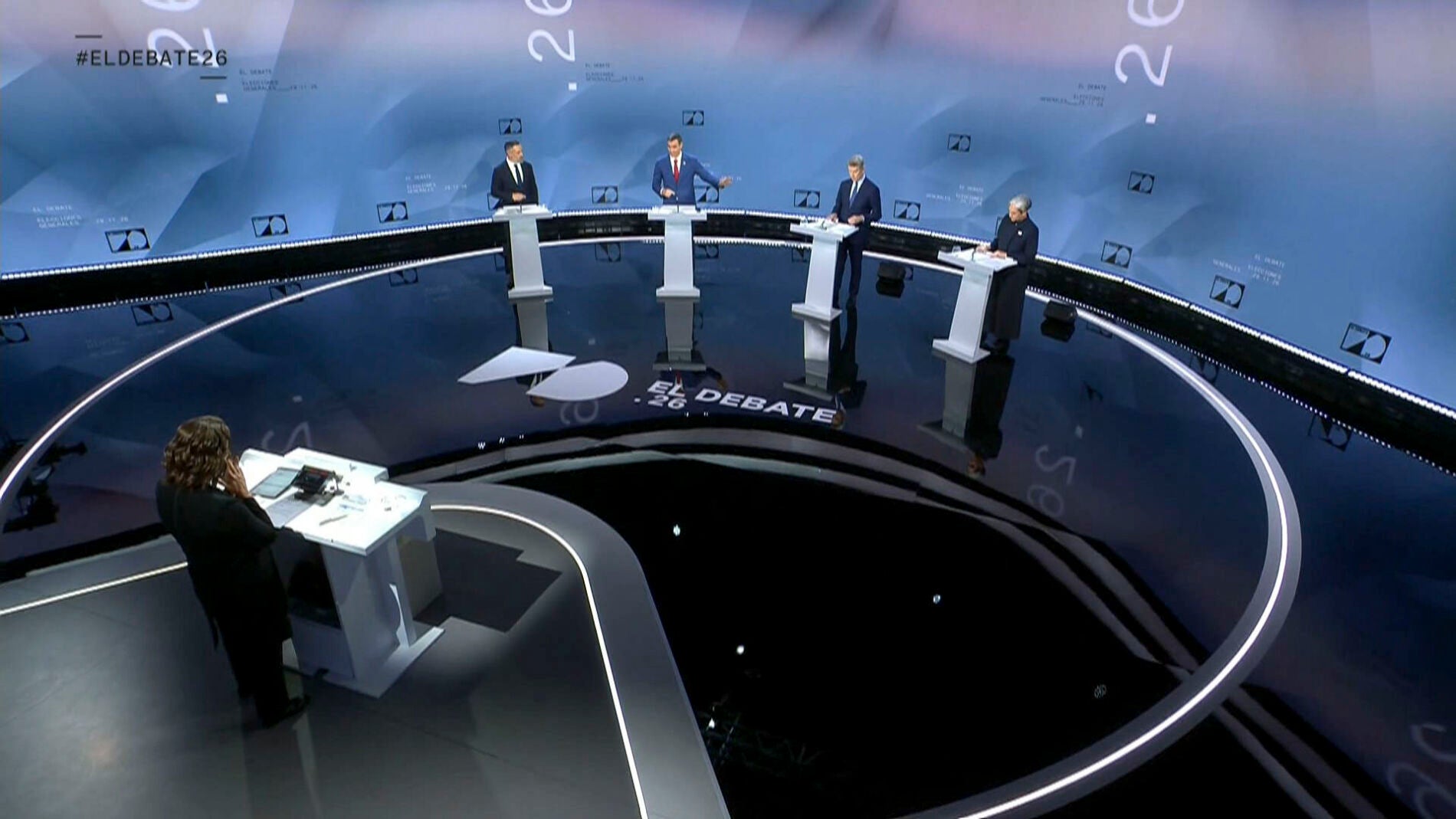
Alberto Núñez Feijóo was rated the winner of the last major televised clash before Spain's general election on Sunday, November 29, narrowly ahead of Prime Minister Pedro Sánchez, according to a flash poll conducted by NC Report for La Razón after Thursday night's four-way debate.
The survey found that 28.3% of those interviewed believed the Partido Popular (PP) leader won the debate, compared with 24.2% who gave the victory to Sánchez. The 4.1 percentage point gap puts Feijóo ahead, though the margin is narrow relative to the poll's margin of error.
Santiago Abascal, leader of Vox, placed third with 17.8% of responses, while Ada Colau, the Frente Amplio candidate, received 6.3%. The remaining 23.3% either declined to answer or fell into other non-applicable response categories. No single candidate secured the backing of even a third of those surveyed.
Party loyalty shapes perceptions
The poll, carried out on Thursday, November 26, shows how strongly party identification shaped viewers' reading of the debate. Among PP voters, 83.3% said Feijóo won. Among PSOE voters, 78.3% picked Sánchez. Support for Abascal reached 85.6% among Vox voters, while 72.2% of Frente Amplio voters credited Colau with the win.
The more notable findings come from voters who broke with their own party's view. Among PP voters, 11.8% said Abascal had won the debate, compared with just 0.7% who gave the victory to Sánchez. Among PSOE voters, 7.5% pointed to Feijóo and 6.7% to Colau. Among Frente Amplio supporters, 16.7% said Sánchez had come out on top, a higher share than either right-wing candidate received in that same group.
Feijóo also leads on trust to govern
Feijóo's advantage widened further when respondents were asked which candidate inspired the most confidence to govern Spain after watching the debate. Feijóo took 31% of responses against 22.5% for Sánchez, an 8.5 point gap, more than double the margin recorded on who won the debate itself.
The results point to a gap between how viewers judged the candidates' debate performance and how much trust they place in them as potential heads of government. Feijóo leads Sánchez on both measures, but his lead grows once the question shifts from debate performance to governing ability.
Political affiliation again proved decisive. Among PP voters, 90.3% named Feijóo as the leader who inspired most confidence to govern. Among Socialist voters, 75% chose Sánchez. Sánchez also picked up 11.1% support among Frente Amplio voters, while Feijóo drew 9.2% from PSOE voters.
Most voters say their decision is unchanged
The poll's most significant finding concerns the debate's real impact on voting decisions. Despite the sharp exchanges and the weight parties placed on the event, 83.2% of respondents said the debate had simply confirmed the voting choice they had already made.
Only 6.2% said the debate changed their vote, while 6.8% remained undecided and 3.8% either did not know, declined to answer or gave a non-applicable response. The findings suggest the debate mainly reinforced existing political preferences rather than shifting them for most of those surveyed.
That pattern was strongest among PP voters: 95.8% said the debate reaffirmed their prior decision, the highest share of any party's electorate, with just 0.7% saying they changed their vote and 1.4% still undecided. Among PSOE voters, 80.8% kept their choice, 7.5% said they changed it and 9.2% remained undecided.
Vox recorded the highest share of voters saying they changed their minds after the debate, at 10%, against 84.4% who reaffirmed their vote. Among Frente Amplio voters, 86.1% confirmed their earlier choice, 5.6% said they changed it and 2.8% remained undecided. These breakdowns by electorate should be read with caution, since they come from smaller subsamples within the overall 600 people interviewed.
The final stretch of the campaign
The debate took place at a decisive point in the campaign, with parties having largely exhausted their chances to confront each other directly before a television audience. Thursday's four-way debate was the last major event before campaigning formally closes on Friday and Saturday's day of reflection ahead of Sunday's vote.
Sánchez took a more combative approach than in his earlier head-to-head debate with Feijóo, focusing much of his argument on the risk of a parliamentary majority for the PP and Vox, whom he accused of wanting to cut back the welfare state. Feijóo, for his part, challenged the government's record in office and directed his criticism at corruption cases and explanations he said Sánchez still owed the public.
The NC Report poll offers an early snapshot of how viewers perceived the televised clash, but it cannot on its own predict what effect the debate will have on the distribution of votes and seats on Sunday. The survey measured declared reactions immediately after the debate, not a fresh estimate of voting intention or any actual movement of votes between parties.
Even so, the research points to two clear conclusions in the campaign's final days. Feijóo leads both on debate performance and on trust to govern, while a large majority of those surveyed say the event did not change their voting decision. With three days to go before the election, the main question is no longer who won the televised clash, but which voters will actually turn out.
What happens next
Spain's general election takes place on Sunday, November 29, following Friday's close of campaigning and Saturday's day of reflection.
Test yourself
According to the NC Report poll, who was seen as the winner of the four-way debate?
What share of respondents said the debate changed their voting decision?
When is Spain's general election being held, according to the article?
Have your say
Who do you think performed best in the four-way debate?
Where it happened
Madrid, Spain