

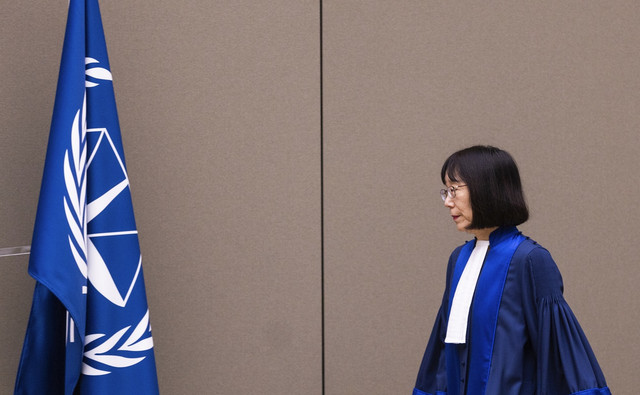
The United States has imposed sanctions on International Criminal Court President Tomoko Akane and Deputy Prosecutor Abdoulaye Seye, escalating diplomatic pressure on the institution after describing it as politicized.
US Secretary of State Marco Rubio said in a statement that the two officials had directly participated in efforts by the Hague-based tribunal to investigate, arrest, detain, or prosecute individuals whose governments have not accepted its jurisdiction. Rubio did not provide specific examples in the statement.
The penalties prohibit Akane, a Japanese judge, and Seye, a Senegalese prosecutor, from entering the United States. The measures also block any real estate or financial transactions involving the two officials within the American economy, the largest in the world.
The International Criminal Court was created as a permanent tribunal to prosecute individuals accused of war crimes, genocide, and crimes against humanity. Headquartered in The Hague, Netherlands, the court operates under the international treaty known as the Rome Statute. The United States is not a signatory to the agreement and does not recognize the court's authority over non-member nations.
The new sanctions stem primarily from tribunal investigations targeting US ally Israel. In 2024, the court issued arrest warrants for Israeli Prime Minister Benjamin Netanyahu in connection with the war in Gaza.
Diplomatic campaign and treaty withdrawals
Washington launched a major diplomatic offensive against the international court last month, accusing the tribunal of posing a threat to Americans and urging foreign partner nations to withdraw their membership.
Chad and Venezuela recently followed the American initiative by withdrawing from the tribunal. Venezuela has aligned more closely with Washington following the arrest of Venezuelan President Nicolas Maduro. Rubio stated he is convinced that additional countries will follow their example.
The tribunal stated that it noted the recent national departures with concern. Court officials warned that member states withdrawing from the treaty could jeopardize the collective global pursuit of justice.
Court response and rule of law
Responding directly to the measures targeting its leadership on Tuesday, the International Criminal Court said in an official statement sent to journalists that sanctions directed at its judges, prosecutors, and staff undermine the rule of law.
The tribunal added that when political pressure is exerted on judicial bodies to prevent them from enforcing the law, the international legal order itself is put at risk.
The court declared that it remains unwavering in its mission and will continue to firmly support its staff as well as victims of unimaginable atrocities around the world.


