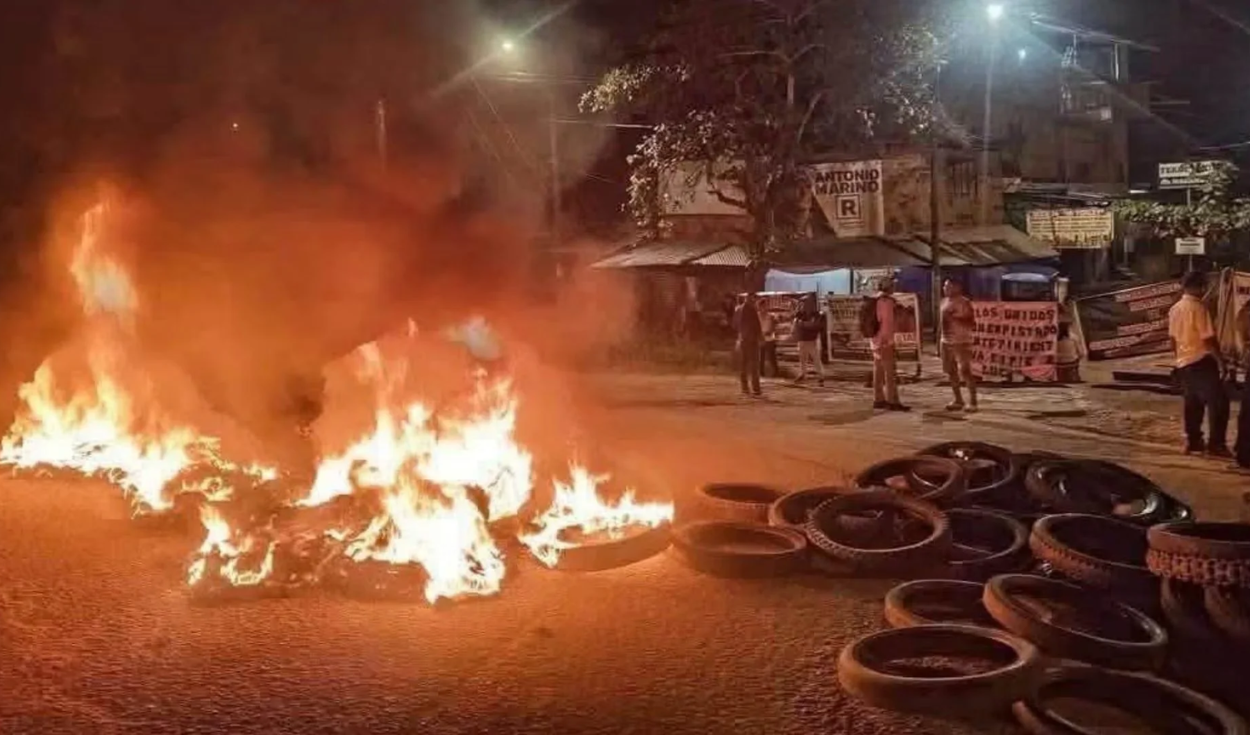
The general strike in Peru's Ucayali region continued on Saturday as social organizations denounced a unilateral agreement signed between the government and transport unions. Regional Governor Manuel Gambini signed the deal exclusively with transport sector representatives, excluding the other social groups that form the broader protest movement.
The protest movement began on Monday, August 10, 2026, when it was called by the Frente de Defensa de los Intereses de Ucayali (FREDEU) alongside unions representing transport workers, motocarristas, and various community organizations. On August 14, 2026, the executive branch announced a targeted subsidy for freight, passenger, river transport, and mototaxis. The measure covers between 15% and 20% of fuel prices for three months.
Following the government's announcement, river transport workers in Pucallpa agreed to lift their river blockades. However, leaders from FREDEU did not sign any agreement and maintained an indefinite strike, insisting that their broader demands regarding healthcare, education, and sanitation remain unaddressed.
Ombudsman document outlines regional demands
On August 12, 2026, the Ucayali Ombudsman's Office held a meeting with representatives from FREDEU, transport unions, and health and education organizations to compile an official document detailing demands sector by sector. In the transport sector, representatives presented data showing that fuel sold in the region contains 3,030 parts per million of sulfur, compared to the legal maximum of 50 parts per million. Transport leaders warned that the high sulfur level damages vehicles and threatens public health, and they requested a supreme decree declaring a regional emergency.
In the district of Campo Verde, community leaders highlighted severe infrastructure problems. A district hospital built with S/36 million in infrastructure funds and S/18 million in medical equipment has sat unused for years, causing equipment to deteriorate. Additionally, a drinking water project completed a decade ago was never formally delivered to the community, forcing residents to collect rainwater for daily consumption.
The Ombudsman's document also recorded that more than 85% of rural properties in Campo Verde lack legal land titles. This lack of physical and legal titling creates land insecurity for owners and prevents state investment in public health and education projects on untitled land.
Education complaints and university protests
Regarding education, representatives denounced alleged acts of corruption within the UGEL Coronel Portillo local education management unit and requested an evaluation of the director's tenure. Meanwhile, protests at the Universidad Nacional de Ucayali reached more than 78 consecutive days. Students and faculty demanded the removal of the university rector and academic vice-rector, despite intervention by the National Superintendency of Higher University Education.
Clashes in Campo Verde leave officers injured
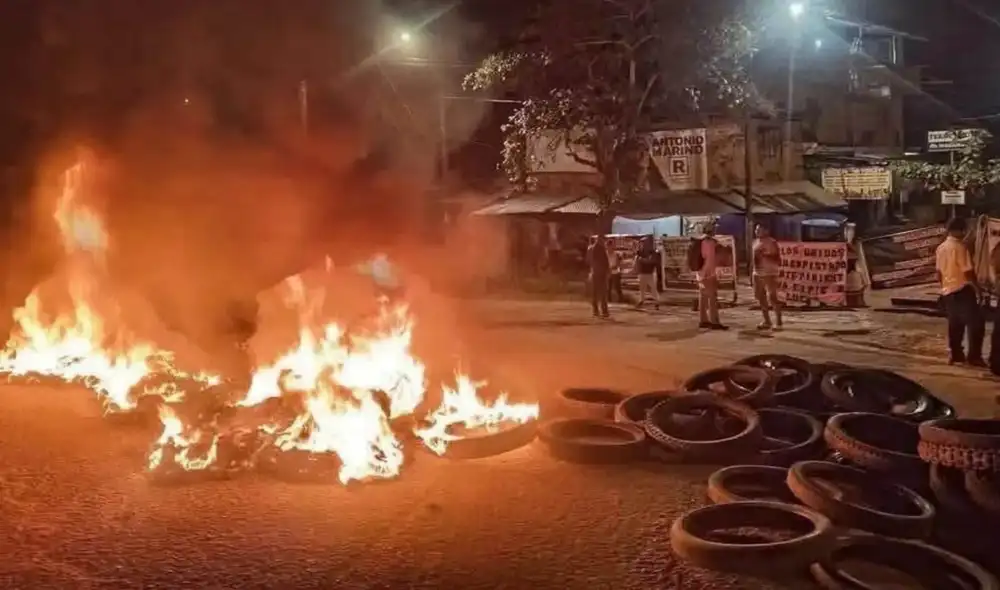
Opposition to the deal signed by Gambini led to violent clashes on the Federico Basadre highway at kilometer 34, located in Campo Verde district. Demonstrators refused to clear the roadway despite the announced agreement, prompting intervention by the National Police of Peru to reopen the route. Protesters set a police pickup truck on fire and attacked officers with stones and pyrotechnic flares.
The Ucayali Ombudsman's Office monitored the incident and initially reported that 11 people were detained and taken to the Dirincri police facility in Pucallpa. The initial report also stated that five police officers were injured and 10 individuals received medical treatment for tear gas inhalation before being discharged.
The Ombudsman's Office later updated its report, confirming that 13 people were detained, including 10 adults and three minors, while the number of injured police officers rose to 15. Human rights officials made contact with Liz García, head of the Campo Verde Micro Health Network, and the local police station chief to check on the condition of those involved. Relatives of the detained individuals requested formal guarantees to ensure due legal process is followed.