

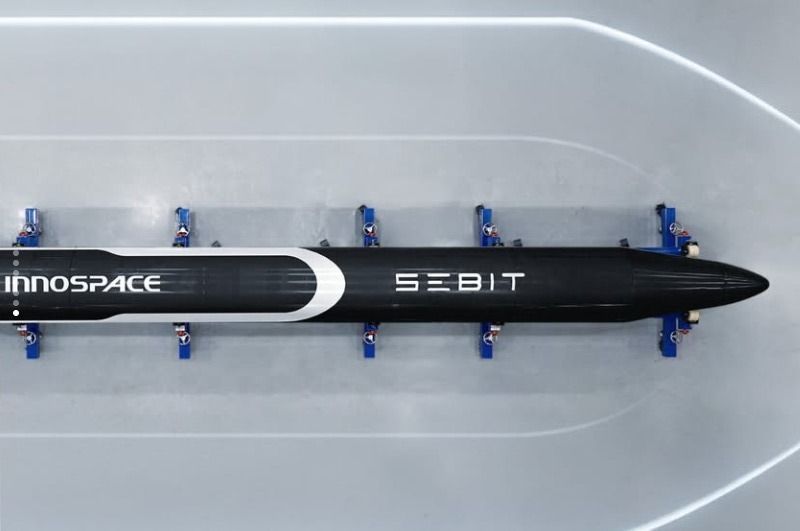
A South Korean rocket called SEBIT crashed into the sea after veering off its planned flight path during its first test launch on Wednesday from the Alcantara Space Center in the Brazilian state of Maranhao. Innospace, the South Korean company behind the vehicle, said the flight had to be cut short before its planned duration for safety reasons.
The suborbital rocket lifted off at 4:30 p.m. local time and left the launch pad normally, according to the company. During the flight, an anomaly was detected that caused the rocket to drift from its intended trajectory.
In response, Brazil's Air Force activated the Flight Termination System, a mechanism used to halt a mission when a vehicle poses a risk by straying from its established route.
Termination came earlier than expected
According to reporting by CNN Brasil, the termination happened earlier than initially expected, which may point to problems with the vehicle.
After the system was triggered, the rocket fell inside a maritime safety zone that had been designated in advance off the Brazilian coast. No injuries or property damage were reported. The exact cause of the deviation has not yet been identified, and the company said it is analyzing the data collected during the mission to determine what caused the change in trajectory.
SEBIT is a single-stage rocket equipped with a three-ton-class hybrid engine.
Data collected despite early shutdown
Despite the early termination, the company said it was able to gather information from several of the rocket's systems, including propulsion, guidance, navigation, control and tracking. The vehicle was designed to carry customer payloads to altitudes of up to 100 kilometers.
This was the rocket's first test flight. Unlike rockets built to place satellites into orbit, SEBIT was designed for suborbital missions, including technology testing and scientific research carried out in conditions of high altitude and microgravity.
Background on Alcantara launches
The Alcantara Space Center, located near the equator in Maranhao state, has been used by Brazil to attract foreign aerospace companies seeking favorable launch conditions. Innospace had previously announced plans to launch two rockets from the site this year.


