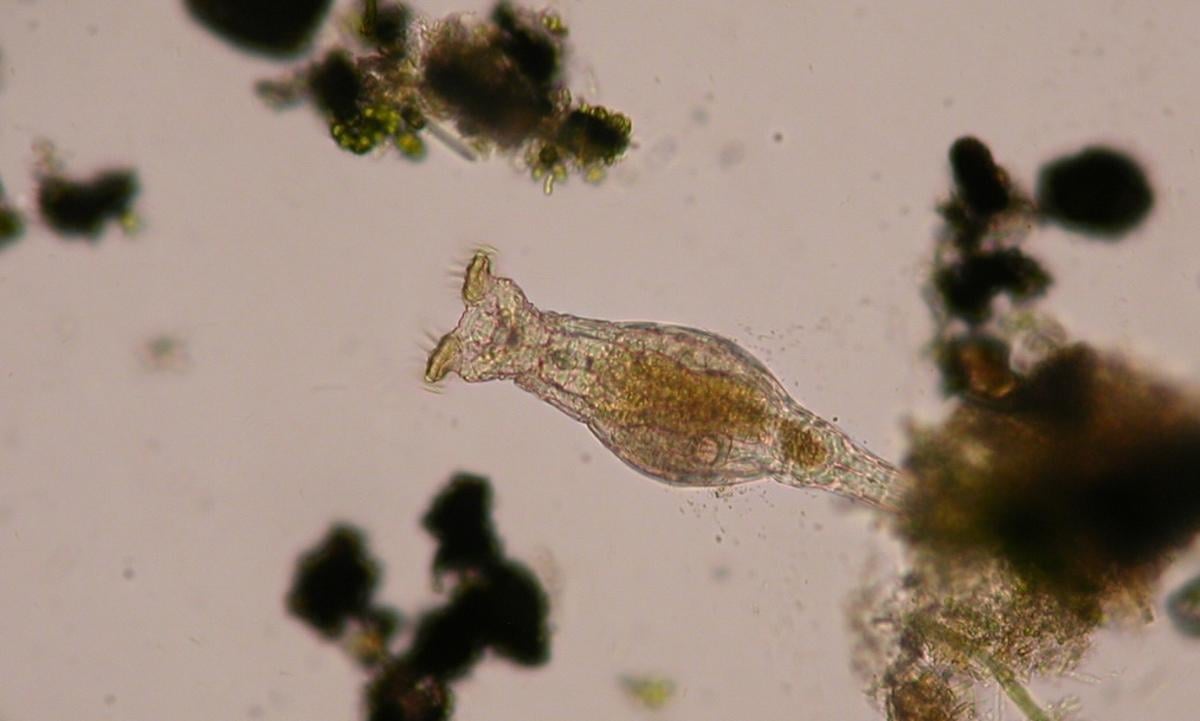
Scientists have revived a bdelloid rotifer that had lain frozen in Siberian permafrost for almost 24,000 years, with the tiny animal resuming its biological activity and reproducing once researchers brought it back to room temperature, according to a report by the Italian newspaper La Stampa.
The case was first documented in 2021, but new research carried out in 2026 has allowed scientists to study more closely the molecular mechanisms that make these animals so resilient, the report said.
Researchers stressed that the creature is not a bacterium, a spore or a single-celled microorganism. It is a genuine animal, with a digestive tract, muscles, a nervous system and specialized organs, despite measuring only a few tenths of a millimetre, according to the publication.
Pulled From Siberian Permafrost
The specimen belongs to the bdelloid group of rotifers and was extracted from a permafrost sample in northeastern Siberia. Radiocarbon dating placed its age at between 23,960 and 24,485 years, researchers said. Once the sample was thawed in the laboratory, the animal regained its biological activity.
The rotifer then began reproducing through parthenogenesis, a process that allows females to produce offspring without fertilization. Scientists said the finding demonstrated that these animals can survive in a frozen state for far longer than previously believed.
A State Called Cryptobiosis
Researchers explained that rotifers do not simply enter a deep sleep. Instead, they can reach a state known as cryptobiosis, in which metabolic processes drop to a level so low it is almost impossible to detect.
In these conditions, the organism almost completely halts its life functions and can withstand surroundings that would otherwise be incompatible with life, including dehydration, freezing temperatures, lack of oxygen and even certain types of radiation, according to the publication. The main danger, researchers noted, comes when water inside the cells freezes and forms ice crystals.
Rehydration and Recovery
When conditions become favorable again, the animals can rehydrate their tissues and gradually resume their vital functions, the report said. This does not mean the organism remains entirely unchanged across thousands of years. Survival depends on a range of biological processes that protect cellular structures and allow the animal to repair some of the damage it has accumulated over time.
Test yourself
How long had the rotifer been frozen in Siberian permafrost?
How did the rotifer reproduce after being thawed?
What is the biological state that let the rotifer survive extreme conditions?
Have your say
Does reviving organisms frozen for tens of thousands of years interest you?
Where it happened
Siberia, Russia