


Thieves have stolen all 66 prehistoric artifacts of the Treasure of Villena after tearing out a window at the museum in Alicante, Spain.
The break-in occurred during the early hours of August 27 at the Museo de Villena, known as MUVI, where robbers emptied the primary display showcase in the municipal facility's new headquarters.
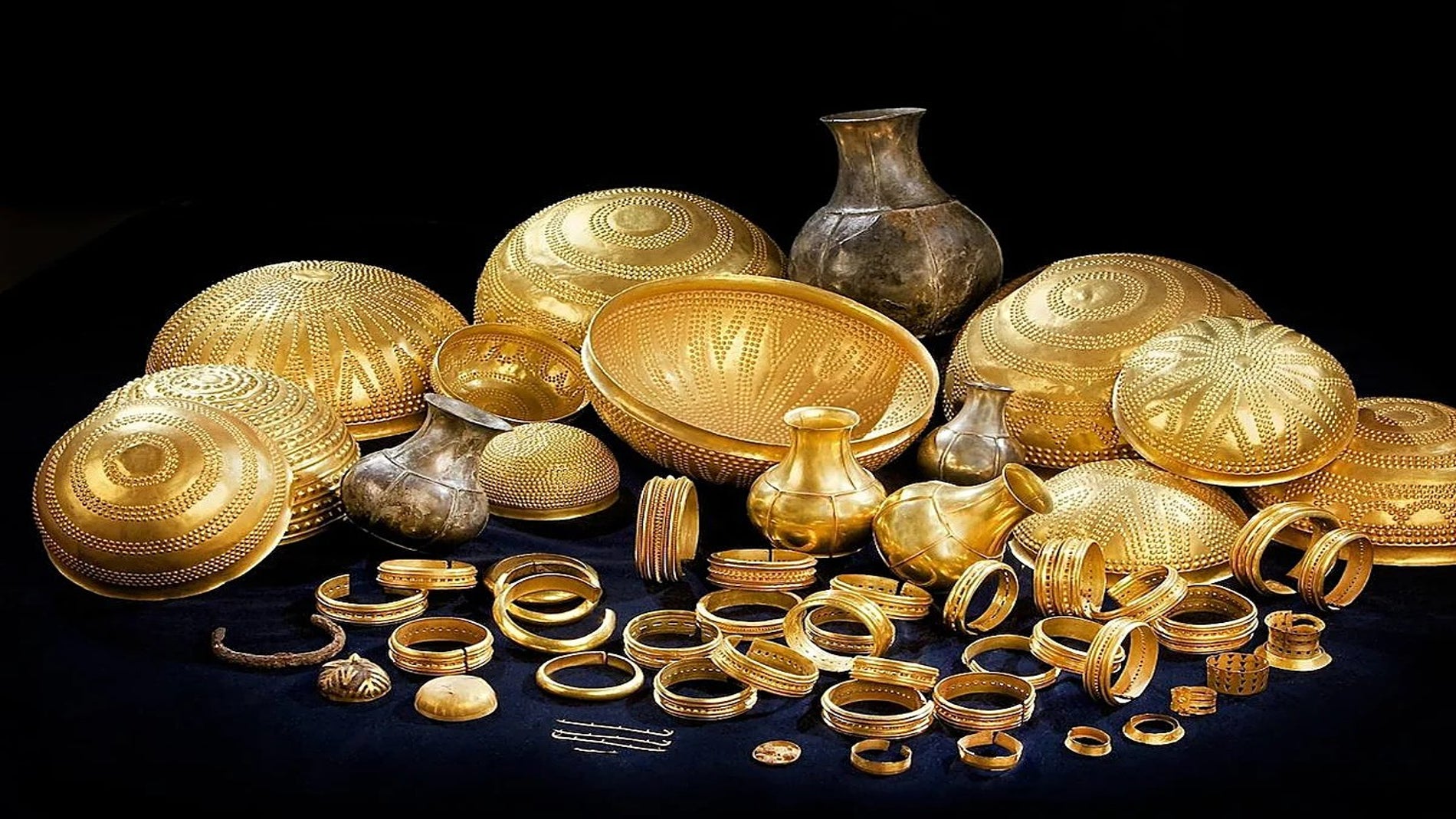
Officers from the Local Police and the Civil Guard cordoned off the building on Thursday morning to gather evidence and reconstruct how the intruders gained access. Authorities confirmed that no arrests have been made and the investigation remains open.
The stolen collection represents one of the most significant prehistoric hoards in Europe, gathering nearly 10 kilograms of precious metal whose scientific value far exceeds the market price of its gold and silver.
Museum Heist Under Investigation
Perpetrators entered through a side of the building after ripping away one of the window frames and executed the robbery with speed, according to Spanish news outlet Cadena SER.
Investigators are examining whether a false alarm reported minutes earlier at the municipal sports centre was deliberately triggered to distract law enforcement officers and delay their response.
The timing has led detectives to evaluate whether the heist was prepared in advance and whether it shares connections with other recent museum attacks across the region.
Police are also analyzing the potential involvement of specialists in historical heritage crime, though officials emphasized that none of these working hypotheses have been confirmed.
Villena is a municipality located in the inland province of Alicante in southeastern Spain. The MUVI serves as the town's principal institution for preserving regional archaeology, while Spain's Civil Guard operates dedicated crime units focused on cultural heritage protection.
Extraterrestrial Metal and Rare Gold Hoard
Detailed figures provided by the University of Alicante confirm that the stolen lot consists of 60 gold objects weighing 9.754 kilograms, three silver vessels weighing more than 600 grams, two iron items, and fragments identified as amber.
The gold pieces include 11 bowls, 28 bracelets, and three bottles. Archaeologists note that the variety of items is as critical as their combined weight, providing unique evidence about prehistoric metalworking techniques, object functions, and social hierarchies.
Two of the stolen artifacts hold extraordinary scientific interest. A study published in 2023 in the academic journal Trabajos de Prehistoria revealed that a hollow hemisphere and an iron bracelet were manufactured from meteoritic iron derived from fallen meteorites.
Scientific measurements date the meteoric objects to the Late Bronze Age, long before terrestrial iron smelting became widespread across the Iberian Peninsula. Similar discoveries among ancient Mediterranean rings underscore the extreme rarity and prestige associated with extraterrestrial metals in prehistory.
Discovery and Context of the Hoard
Spanish archaeologist Jose Maria Soler and his team discovered the assemblage on December 1, 1963, buried inside a ceramic vessel in the Rambla del Panadero dry riverbed near Villena.
Unlike an intact dolmen burial site, the discovery location contained no nearby human remains or architectural ruins to clarify who gathered the objects or why they were buried.
This lack of surrounding context makes the complete unity of the 66 original pieces an even more critical source for archaeological research.
Exhibition History and Urgent Search
The MUVI opened its current municipal facilities in 2024, restoring the original artifacts to public exhibition after years in which replicas were displayed while the originals remained in protected storage.
Physical custody is essential because new analytical techniques frequently allow researchers to re-examine historical finds. For example, re-analyzing the Devon coins helped historians identify an ancient shipwreck centuries after it sank.
Digital reconstructions can aid in public outreach, as shown by a recent initiative at the National Archaeological Museum in Madrid, but virtual tools cannot replace the physical information preserved inside genuine artifacts.
Archaeologists warn that with the collection removed from public control, every passing day complicates intact recovery and future scientific testing. Law enforcement officers face a race against time to recover all 66 unique items together so the historic discovery retains its full story.


