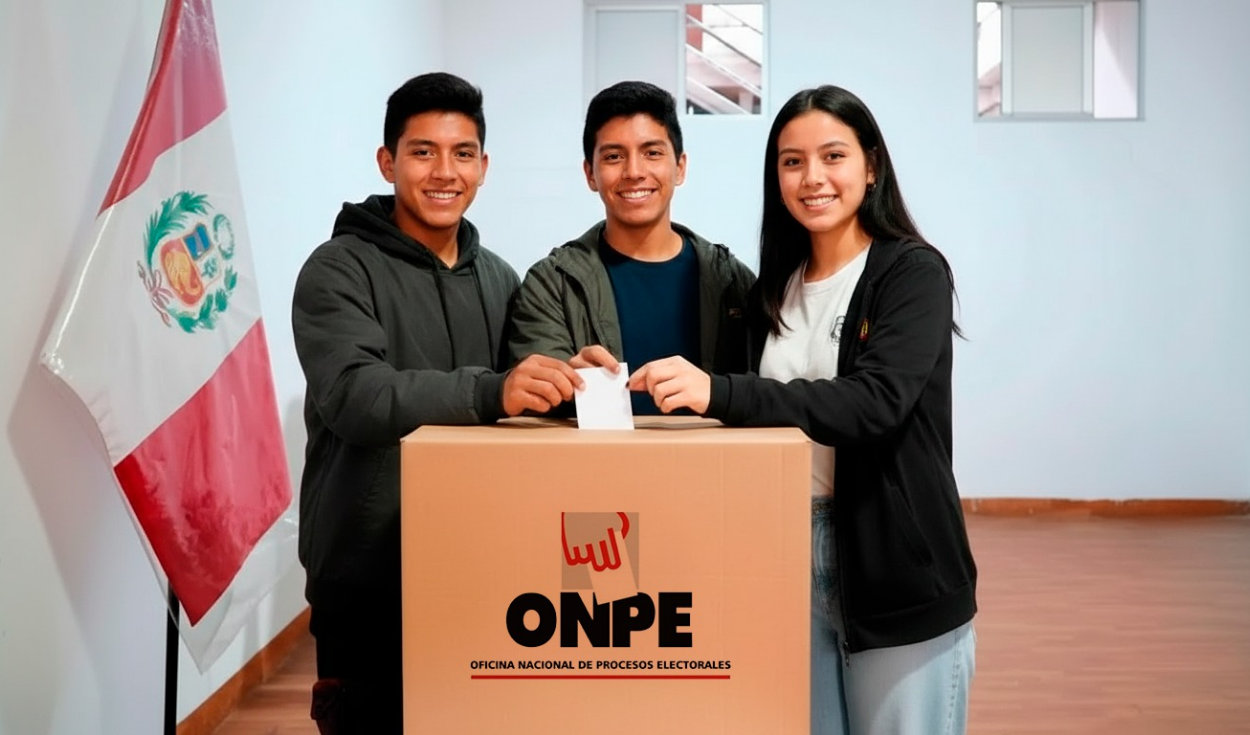
Young voters aged 18 to 29 have become the largest age group on Peru's electoral roll for the upcoming regional and municipal elections on October 4, 2026.
Data approved by the National Registry of Identification and Civil Status (RENIEC), the autonomous state agency responsible for maintaining civil records and official voter lists, places this young demographic at 6,727,000 eligible voters. They make up nearly one-quarter of the total 26,314,648 Peruvian citizens registered to vote in the nationwide contests.
The second largest voting bloc consists of citizens between 30 and 39 years old, totaling 5.6 million electors. Voters aged 60 and older represent the third largest group with 5.32 million electors, followed by the 40 to 49 age bracket with 4.8 million voters.
Electors aged 50 to 59 rank last among all age categories, comprising 3.86 million citizens. The substantial numerical gap between young adults and older demographics underscores a pronounced generational divide that will shape choices for regional governors, provincial mayors, and municipal council members across all 25 Peruvian regions.
Demographics and Identification Requirements for New Voters
The prominent weight of the youth vote is driven in part by nearly 2.4 million new electors who were added to the voter registry for this election cycle. Electoral authorities issued a specific notice to young citizens who are currently 17 years old but will turn 18 on or before election day on October 4, confirming that they are fully included on the official voter roll.
Manuel Chuquillanqui, subdirector of electoral procedure and georeferencing at RENIEC, called on these upcoming legal adults to review the status of their identity documents. He noted that many citizens turning 18 still carry National Identity Documents (DNI) that feature childhood photographs taken when they were minors.
Chuquillanqui explained that carrying an identity card with a childhood photo can create confusion and cause difficulties for poll workers trying to reliably verify a voter's identity on election day. To ensure smooth identification at voting stations, RENIEC recommended that young adults process their adult identity cards prior to the October 4 polls.
Rules for Expired and Uncollected Identity Cards
Data released by RENIEC indicates that 7.31 percent of the national voter roll, amounting to nearly two million citizens, hold identity cards that have expired as of the registry closing date. However, electoral officials confirmed that an expired identity document will not prevent any registered citizen from exercising their right to vote.
Chuquillanqui stated that RENIEC issued a head resolution authorizing the use of expired identity cards, as well as documents set to expire on election day. This measure applies to both the traditional blue identity card and the electronic DNI, provided the document remains legible enough for election workers to verify voter details without trouble.
In addition to expired documents, RENIEC reported that more than 500,000 printed identity cards remain uncollected at agency branches across Peru. Chuquillanqui urged citizens to visit local RENIEC offices before election day to pick up their finished identity cards rather than leaving them uncollected.
He also noted that voters whose current identity cards have been lost or stolen are permitted to cast their ballot using an older version of their DNI, provided the older document remains in good physical condition.
Physical Electoral Lists Deployed to Remote Districts
Public verification of the voter roll faced logistical challenges in remote areas of Peru. While citizens normally review their registration details and lodge formal appeals or corrections online through the RENIEC portal, online access is unavailable in regions lacking internet connectivity.
Chuquillanqui acknowledged that telecommunications gaps represent a broader structural challenge that exceeds what RENIEC can solve as an individual institution. To bridge the digital divide, the agency deployed specialized field teams carrying printed paper voter rolls directly to isolated communities.
RENIEC staff reached 404 districts without internet connectivity by posting physical voter lists in heavily frequented public places. Deployed personnel provided direct assistance to citizens, taking inquiries, recording address complaints, and collecting formal voter challenges in the field to update the final voter database.
Address Audits and Foreign Resident Registration
Finalizing the electoral roll also required extensive residential verifications across the country. RENIEC conducted more than 66,000 door-to-door field visits in 59 districts to confirm whether citizens actually resided at the physical addresses listed on their identity cards.
Following the audit, inspectors were unable to locate 38,000 individuals at their registered addresses. As a result, RENIEC transferred their electoral registration records back to their previously registered home addresses.
Chuquillanqui clarified that an unverified address does not automatically prove electoral crime or illegal voter migration, known in Peru as "votos golondrinos." He emphasized that establishing voter migration fraud requires broader investigations by competent judicial authorities, while reminding citizens of their legal duty to update their DNI address within 30 days of moving.
The voter registry also includes resident foreign nationals. Only 76 foreign citizens, predominantly Venezuelan nationals, registered to vote in the upcoming municipal elections, which are the only contests foreign residents are legally eligible to join in Peru. This figure aligns with historical trends, where foreign voter registration has never exceeded 130 people.