

Peru's professional wrestling companies are working to turn a decade of steady growth into a sustainable business. The sector has produced training academies, regular shows and wrestlers with international reach, yet many still see it as a niche.
One local promotion once invested S/500,000 in a single event and produced a television program. Even so, the industry has struggled to reach the scale needed to become a profitable business.
Charlie Navarro, promoter of Generaxion Lucha Libre (GLL), told Gestion that modern wrestling should be understood as an entertainment industry rather than a traditional sport. He said the sector does not compete with football or volleyball, but with any other form of entertainment, because people consume stories and experiences.
That view is shared at Gladiadores, another wrestling company active in Lima. Cesar Mansilla, the group's head trainer, told Gestion that wrestling combines physical demand with character building. He said wrestlers train hard, get hurt and have to eat well, but they also have to sell a story so the audience gets hooked. The goal, he added, is to build an emotional connection and turn casual spectators into regular followers.
An attempt at a Peruvian WWE
Before GLL and Gladiadores settled into their current models, another project tried to take Peruvian wrestling to a new scale. Imperio Lucha, founded by Juan Victor Saenz, aimed to build a South American platform inspired by major international promotions.
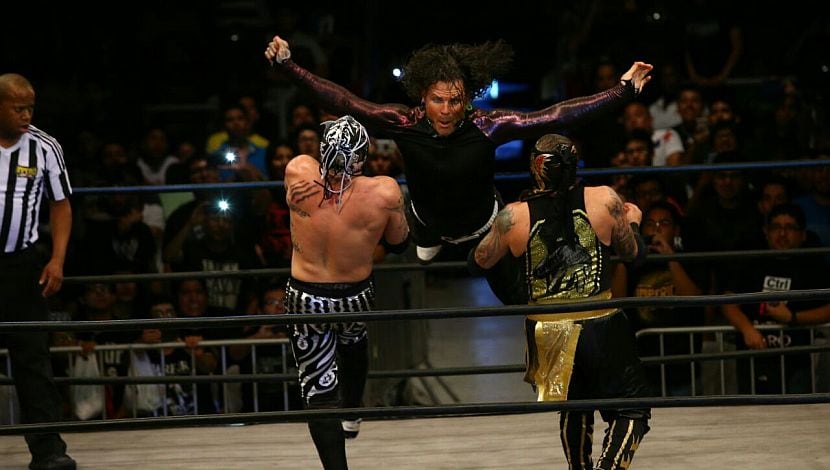
Saenz said the company invested close to S/500,000 to launch Imperio Lucha in 2016 with a show at the Coliseo Eduardo Dibos, which drew about 4,000 people. Across four events, it brought in international names such as Matt and Jeff Hardy, Alberto Del Rio, Chavo Guerrero, Carlito and Zack Sabre Jr.
According to Saenz, the first show recovered around S/450,000, while later events, held in a smaller venue, drew between 1,000 and 2,000 people each. The return did not cover the full initial investment, but he said the aim was not to make money from a single event, it was to build a brand.
The strategy included large events, original characters and a television presence. Imperio produced a program that aired on CMD, now Movistar Deportes, and held talks with open-signal channels. Saenz said the company reached the pre-sale stage with America Television and was close to closing several deals, but the pandemic arrived.
The health emergency stopped its expansion plans and hurt a model that depended mainly on in-person events. The project lasted two years and left a lesson shared across the sector: there is an audience for wrestling in Peru, but turning that interest into a profitable industry takes much more than staging shows.
Beyond ticket sales
Those interviewed agreed the business cannot rely only on ticket sales. Gladiadores holds monthly events at a venue in Surquillo with capacity for about 150 people. Mansilla said attendance usually runs between 100 and 150, with presale tickets from S/40 to S/60 and packages that include interaction with wrestlers going above S/80.
Both Gladiadores and GLL take part in brand activations, themed festivals and events run by public and private institutions. Gladiadores has joined activities linked to the Embassy of Mexico and international television productions, while GLL has found space at pop culture fairs, private events and municipal activities.
Financing remains a main barrier. Navarro said many brands still see wrestling as too small a niche to justify major advertising spending, and that the sector still has to prove it has a big enough audience to attract more sponsors. As a result, many projects rely on their own resources, constant reinvestment and strategic partnerships. He said interested companies usually weigh attendance, digital reach and engagement before signing on, and in return GLL offers brand presence at events, activations with wrestlers and social media content.
Training new talent
One of the clearest changes in recent years has been the rise of specialized academies. Both GLL and Gladiadores see training as key to keeping the business going and raising its level. At Gladiadores, the monthly fee is around S/150, and training covers safety techniques, character building and stage work. Mansilla said only about half of those who start go on to compete professionally, because many expect to learn a few acrobatics and step into the ring, then find the work far harder than they imagined.
Mansilla said that for years there were few places to develop new wrestlers. He said wrestlers used to move from one group to another, but now each group is building its own feeder system. Ten years ago, he said, people wrestled as a hobby and were not paid.
The challenge of growing
Promoters still see positive signs. Gladiadores says it has wrestlers now competing in Spain, Italy, Australia and Japan, and Mansilla noted that three Peruvians took part in a WWE tryout in Chile. Navarro pointed to Rayo, whom he called the first Peruvian to compete in NXT, WWE's development brand, and who has also appeared in AEW and Ring of Honor.
Even so, going abroad does not always mean better pay. Mansilla and Navarro agreed that very few wrestlers live only from the sport, and that even in more developed markets such as Mexico, most take on other work. The challenge now, they said, is to prove the growth can draw enough investment and audiences for wrestling to stop being a niche and finally become an industry.


