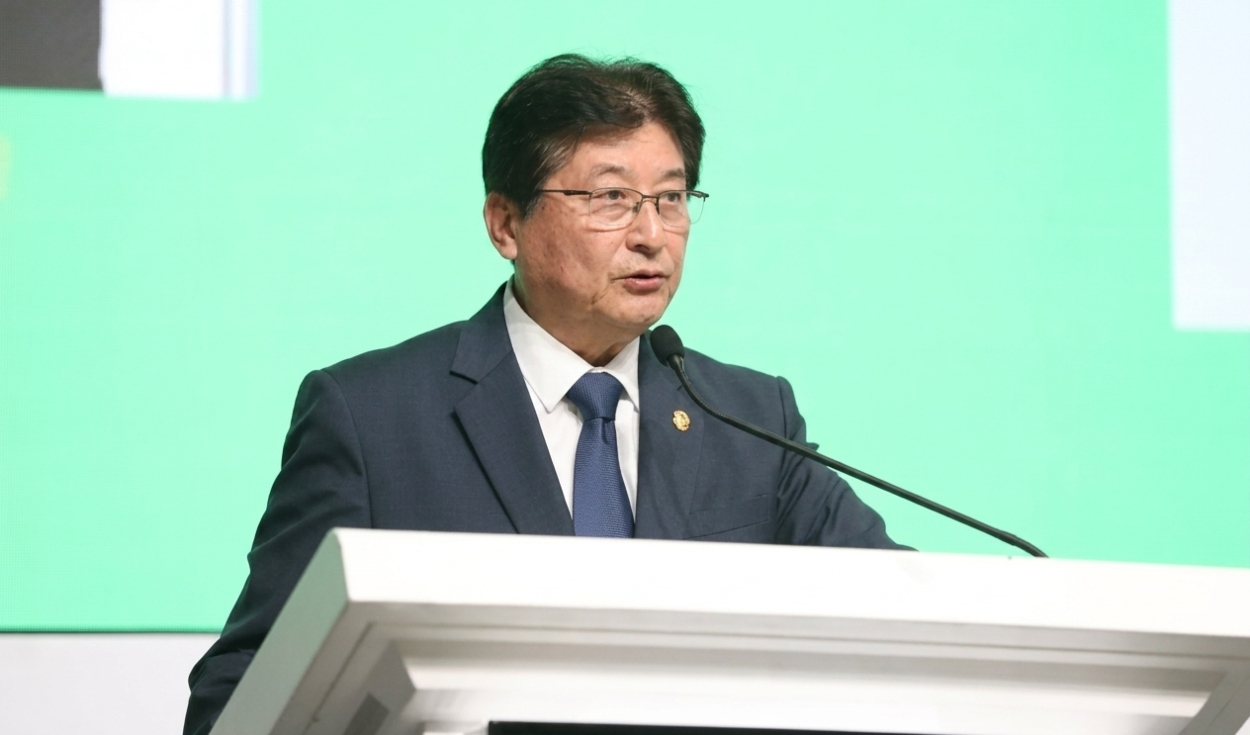
Peru Energy and Mines Minister Guillermo Shinno announced that the government aims to accelerate progress on up to $40 billion in mining projects over the next five years during an industry conference in Lima.
The targeted investment represents a major segment of Peru's national mining portfolio, which is currently valued at $64.075 billion. Shinno emphasized that while several projects could start operations within the five-year period, the government does not expect the entire $40 billion sum to be fully spent during this timeframe.
Speaking at the opening of the International Social Management and Sustainability Meeting, known as GESS 2026, Shinno explained that his ministry has completed an initial evaluation of every project in the mining portfolio. The event, held from August 18 to August 20 at the Lima Convention Center in the San Borja district of Lima, brings together mining executives, government officials, and community leaders.
As part of the initiative, the Ministry of Energy and Mines, which formulates national resource policies and grants extraction concessions, plans to contact mining companies directly to review the technical, environmental, and social status of each project. Peru is the world's second-largest copper producer and a major exporter of gold, silver, and zinc, making mineral extraction a vital driver of national export revenue and fiscal income.
Shinno stated that he personally knows the portfolio and has reviewed each of the projects, adding that his office will contact different companies knowing that several could achieve significant progress and potentially begin operations during this five-year term. Minem aims to identify initiatives capable of advancing through various development stages over the quinquennium.
Early intervention to prevent social conflicts
Accelerating capital expenditure will not be the sole metric used to evaluate extractive sector development, according to Shinno. The minister emphasized that local populations living in regions where natural resources are located must perceive tangible benefits from mining activities.
Shinno affirmed that true wealth is measured in the well-being, social peace, and human development of the populations living in the territories where mineral resources are located. To achieve this, the government is proposing a fundamental shift in how the state addresses social tensions surrounding mining projects.
Under the proposed framework, government agencies will intervene before conflicts escalate into protests or work stoppages by identifying territorial needs in advance. The strategy calls for coordinated action involving mining companies, local authorities, native and rural peasant communities, and the central government.
Decisions regarding regional development should no longer be taken solely by the central government or based on corporate interests, Shinno said. He maintained that people need to tangibly see the benefit that extractive activity brings to their local area, describing this collaborative policy as territorial governance.
Combating illegal mining across Amazon and Andean regions
In addition to managing formal mining projects, Shinno highlighted the expansion of illegal mining as a major threat to the sector. The spread of unauthorized extraction has severely impacted ecosystems across the Peruvian Amazon and the Andean mountains, where hard-rock and alluvial mining operations occur.
Illegal mining activities have damaged natural environments, affected native and peasant communities, and fueled criminal economies in remote areas. Shinno stated that protecting the sustainability of the country obligatorily implies eradicating illegality.
The Peruvian government has positioned the fight against illegal mining as a primary challenge for the sector in the coming years. Officials aim to eradicate illicit extraction while establishing stable social conditions that allow formal, licensed mining projects to develop.
Industry leaders call for territorial consensus
Mining sector leaders participating in the conference expressed support for proactive community engagement. Juan Carlos Ortiz, president of the Institute of Mining Engineers of Peru, agreed that the viability of new projects will depend on the capacity of companies, authorities, and communities to build lasting agreements in project territories.
The Institute of Mining Engineers of Peru, founded in 1943, is a major professional organization that promotes technical and sustainable development in Peru's mining sector. The organization hosts GESS 2026 at the Lima Convention Center to address social management and environmental governance.
Tamiko Hasegawa, president of GESS 2026, noted that constructive relationships must also be built with new authorities who will take office after upcoming regional and municipal elections. Subnational elections in Peru determine regional governors and municipal mayors, who serve four-year terms and manage local development funds derived from mining tax royalties.
The primary challenge for the government will be ensuring that advancing mining projects find favorable social and territorial conditions while tackling illegal mining and responding to the needs of local communities across Peru.