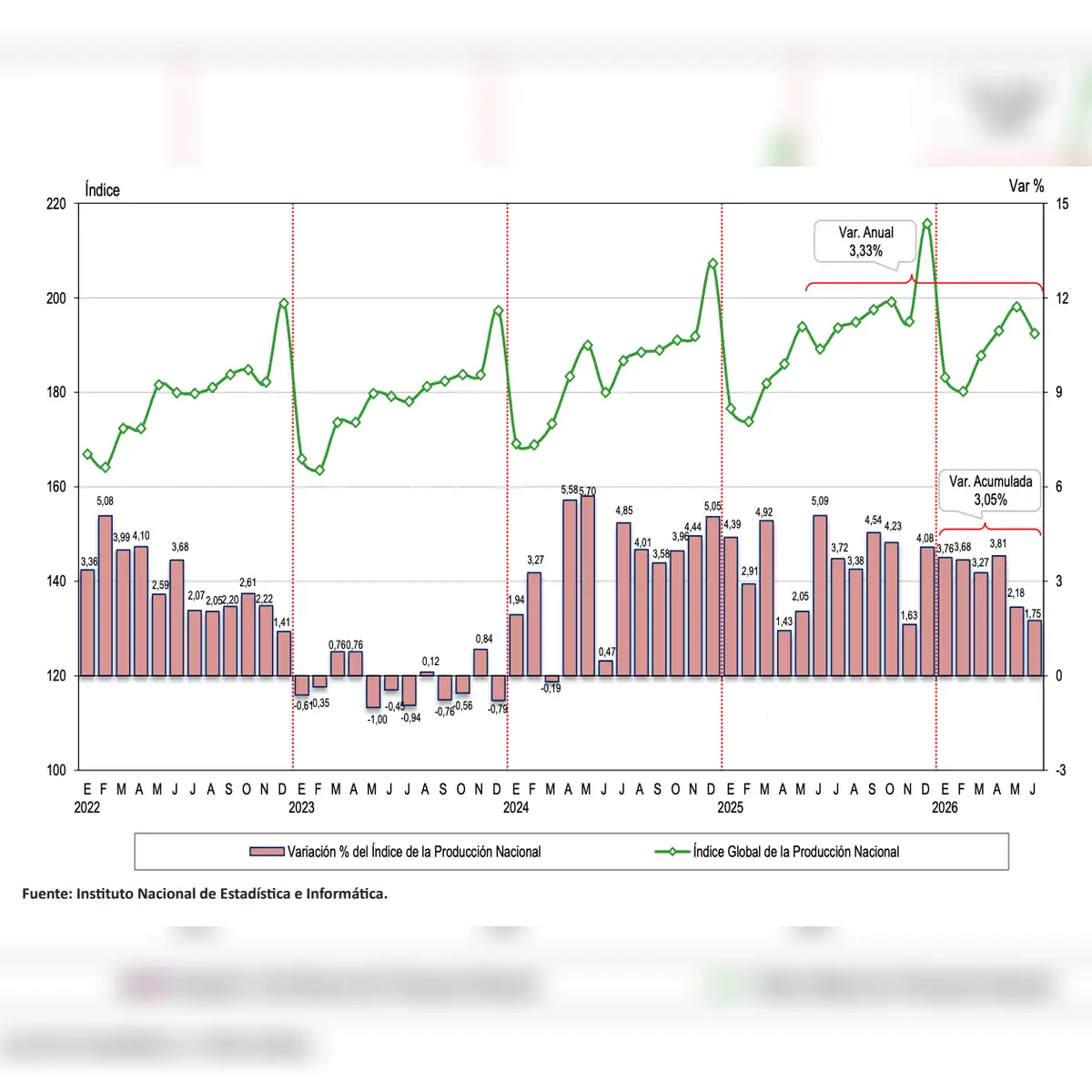
Peru's economy expanded by 3.05 percent in the first half of 2026 compared to the same period last year, despite a noticeable loss of momentum in June when national production grew by just 1.75 percent, according to figures released by the National Institute of Statistics and Informatics (INEI).
The national statistics agency reported that while the economy maintained a 3.33 percent growth rate over the 12-month period from July 2025 to June 2026, monthly activity slowed sharply during the second quarter, dropping from 3.81 percent in April to 2.18 percent in May and 1.75 percent in June.
INEI is Peru's official state statistics bureau, responsible for tracking monthly gross domestic product and sector performance across the South American nation's mining, agricultural, and industrial bases.
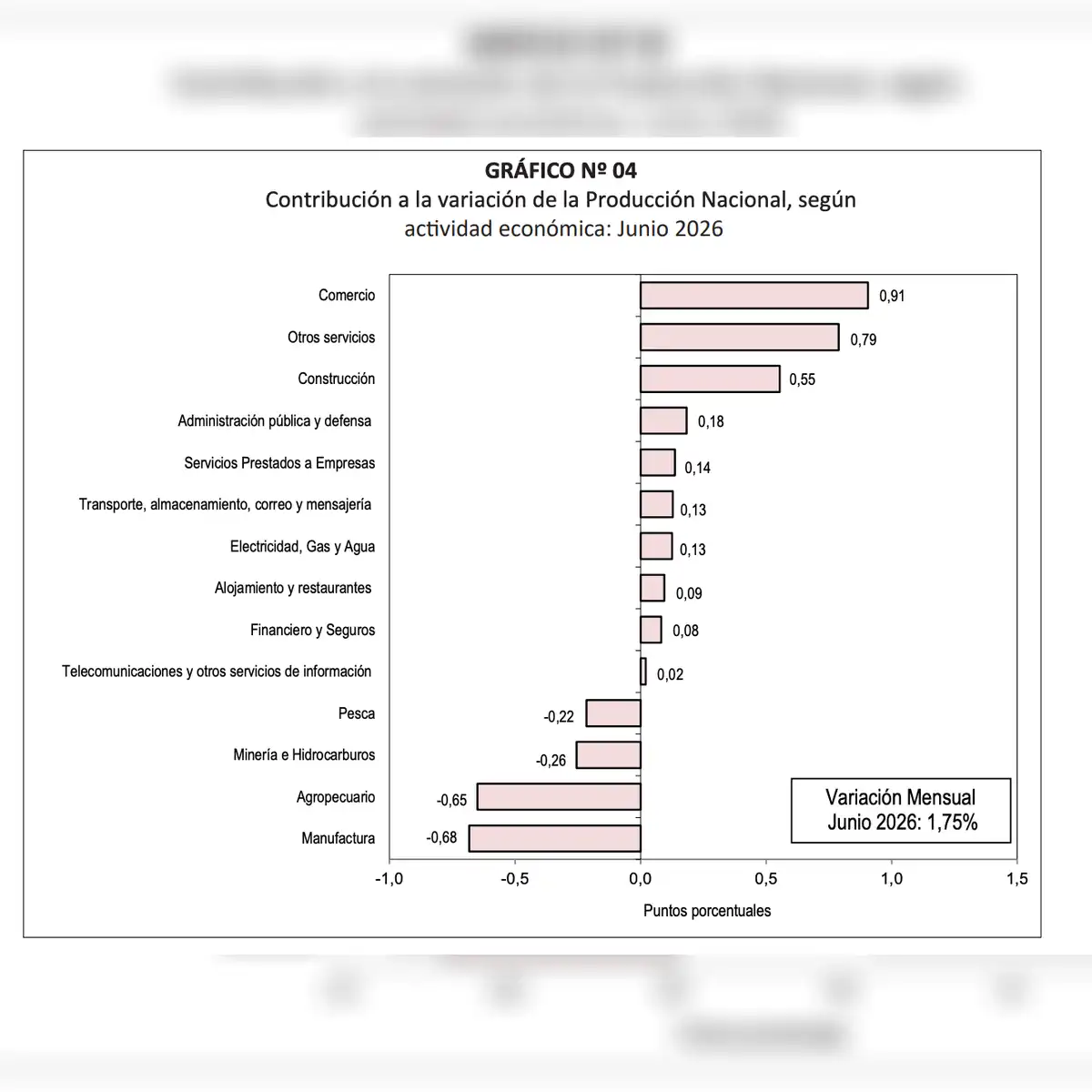
The June performance reflected a sharply divided economy. Robust gains in construction and commercial activity kept overall growth in positive territory, offsetting severe contractions in fishing, agriculture, and manufacturing.
Manufacturing recorded a 6.19 percent decline in June, making it the single largest drag on overall economic growth for the month due to its substantial weight in the national economy and its close dependence on raw material processing.
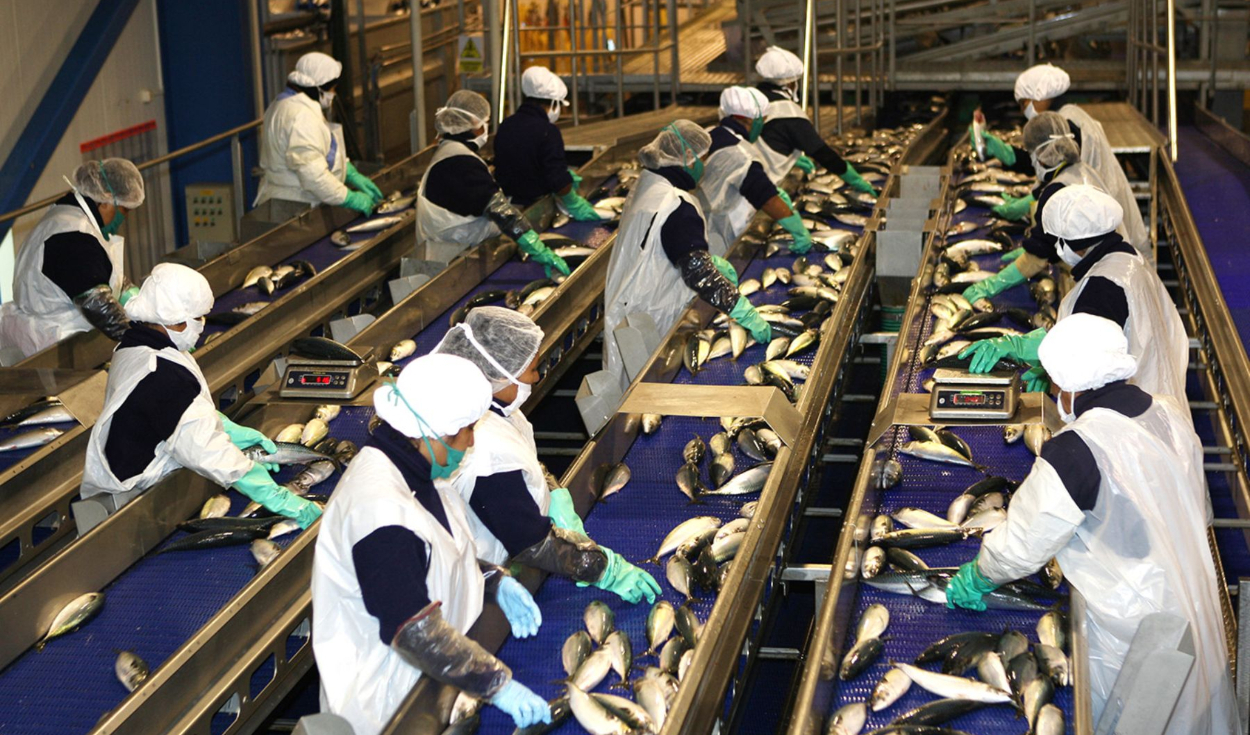
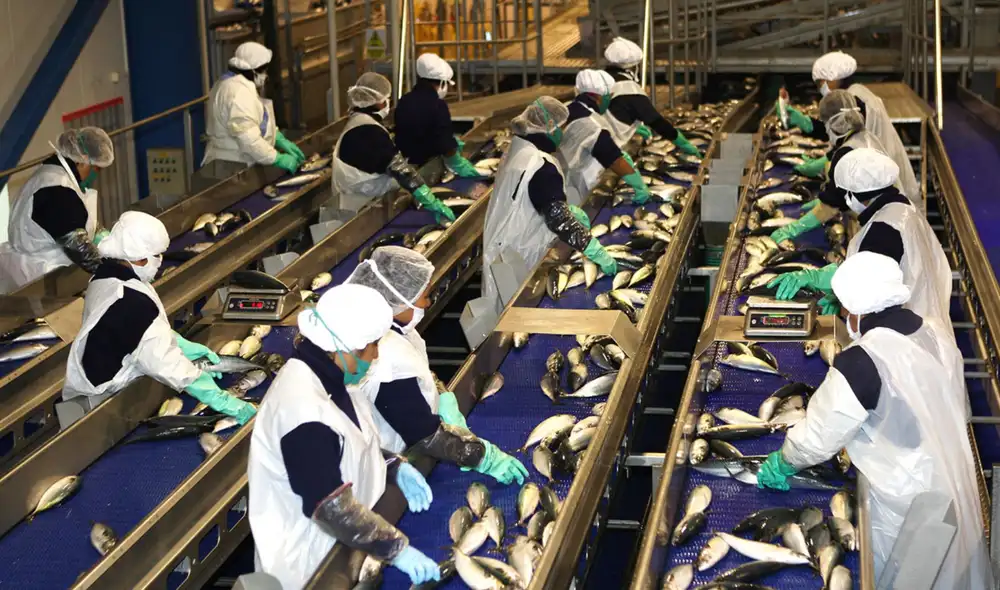
Peru's manufacturing sector relies heavily on primary industrial processing, particularly the transformation of landed marine catches into fishmeal and fish oil for export to global markets.
Construction and retail drive economic growth
Construction surged by 9.04 percent in June, confirming its role as one of the primary growth engines for the Peruvian economy. The sector was bolstered by a 12.54 percent increase in domestic cement consumption, driven by private sector investments including manufacturing plant expansions, electrification projects, mining infrastructure, and residential housing developments.
Physical execution of public works grew at a more modest rate of 1.18 percent, supported by capital expenditure from local and regional governments. INEI highlighted specific public projects that contributed to the expansion, including upgrades to Camaná Hospital in the southern region of Arequipa and construction on the Santa María to Santa Teresa to Machu Picchu Hydroelectric Plant highway in the Cusco region.
Arequipa and Cusco are key economic and tourism hubs in southern Peru, where public infrastructure investments serve to connect agricultural valleys and Andean mining corridors with coastal shipping routes.
Commercial activity grew by 7.81 percent in June, finding its strongest momentum in the automotive branch, which rose by 30.97 percent through increased sales of light vehicles, heavy trucks, and motorcycles. Wholesale trade was further supported by strong demand for fuels, heavy machinery, and construction materials.
The accommodation and restaurant sector grew by 5.04 percent during the month. Within that category, beverage services saw an 8.22 percent jump, driven in part by public screenings and customer gatherings for the 2026 FIFA World Cup matches.
Anchovy collapse triggers severe fishing drop
The sharpest contraction in June occurred in the fishing sector, which plunged by 51.94 percent compared to the same month in 2025. Although fishing holds a relatively small weight in Peru's overall gross domestic product calculation, the magnitude of the drop contributed significantly to the broader industrial slowdown.
The fishing collapse was caused almost entirely by a steep decline in catches intended for indirect human consumption, specifically anchovy used to produce fishmeal and fish oil. Anchovy landings plummeted from 462,302 metric tons in June 2025 to just 629 metric tons in June 2026, marking a 99.9 percent reduction after the Ministry of Production temporarily suspended fishing operations to protect biological biomass.
While fishing for direct human consumption grew by 9.49 percent in June, the gain was far too small to offset the loss of anchovy volume. Because anchovy processing forms a core component of industrial manufacturing, the reduced catch directly dragged down factory output across the country.
The Ministry of Production regulates Peru's marine resources, periodically enforcing biological closures along the Pacific coastline to prevent overfishing of anchovy stocks, which represent one of the country's most valuable commercial marine species.
El Nino weather and mining weakness drag on activity
Peru's agricultural sector contracted by 8.12 percent in June, pulled down primarily by a decline in crop farming. Agricultural output was severely impacted by unfavorable weather conditions associated with a Coastal El Niño warning, with olives, paddy rice, and onions suffering the steepest harvest reductions.
The livestock subsector grew by 1.69 percent in June, providing a partial buffer against crop losses. Coastal El Niño events bring abnormal sea surface warming along the South American coast, disrupting seasonal rainfall patterns and damaging agricultural yields across coastal valleys.
Mining and hydrocarbons output contracted by 2.18 percent in June as production slowed across key extractive industries. INEI reported lower output volumes for copper, zinc, silver, lead, and gold during the month.
Peru is one of the world's leading producers of copper, silver, and zinc, making its mining and extraction sector a critical source of export revenue and fiscal income for the national government.
Services show modest gains as financial sector expands
Telecommunications and other information services recorded a minimal overall increase of 0.38 percent in June. However, television and radio programming and broadcasting surged by 15.49 percent, driven by extensive media coverage of the 2026 World Cup and the second round of Peru's presidential elections.
The financial sector grew by 1.52 percent in June, marking its third consecutive month of expansion. Growth within the sector was propelled by an 8.74 percent increase in consumer loans from commercial banks, while the Central Reserve Bank of Peru maintained its benchmark interest rate at 4.25 percent throughout the month.
Despite the clear loss of momentum in May and June, independent analysts surveyed by the Central Reserve Bank maintain a growth projection of 3.3 percent for Peru's economy for full-year 2026. However, economists warn that if declines in fishing, agriculture, and manufacturing persist into the second half of the year, they could pose an ongoing drag on the country's economic recovery.