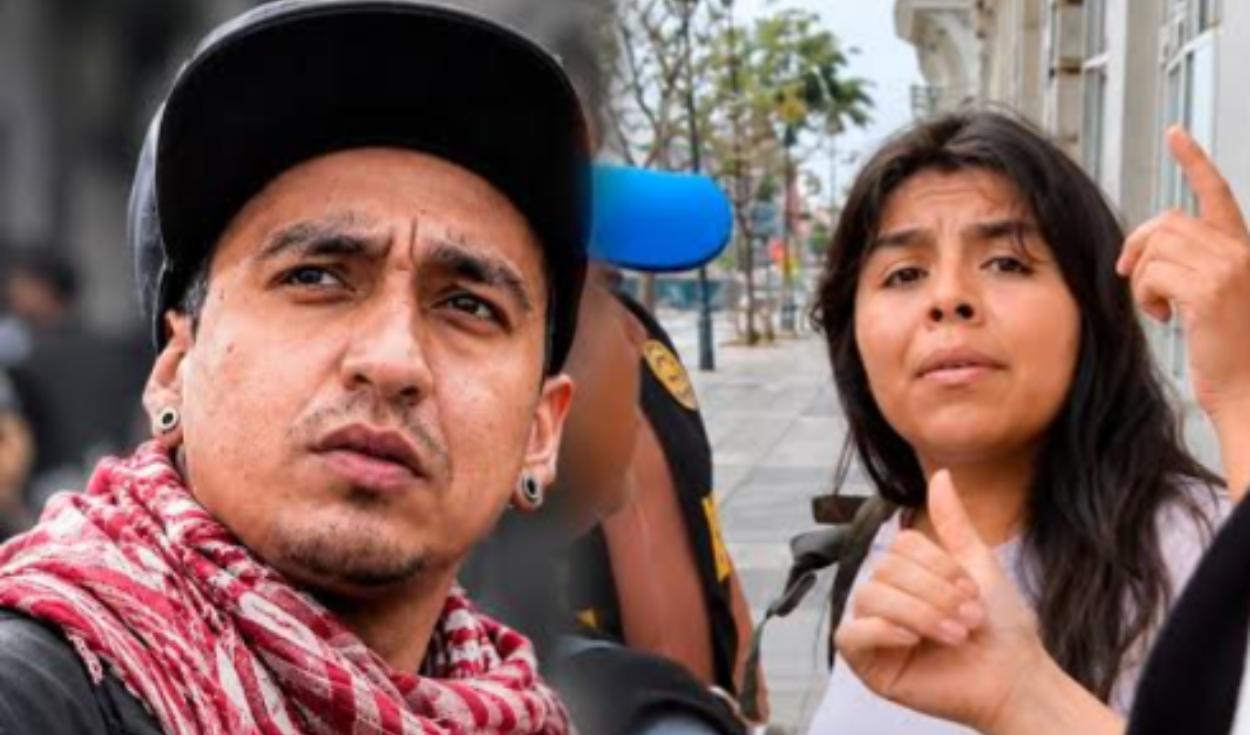
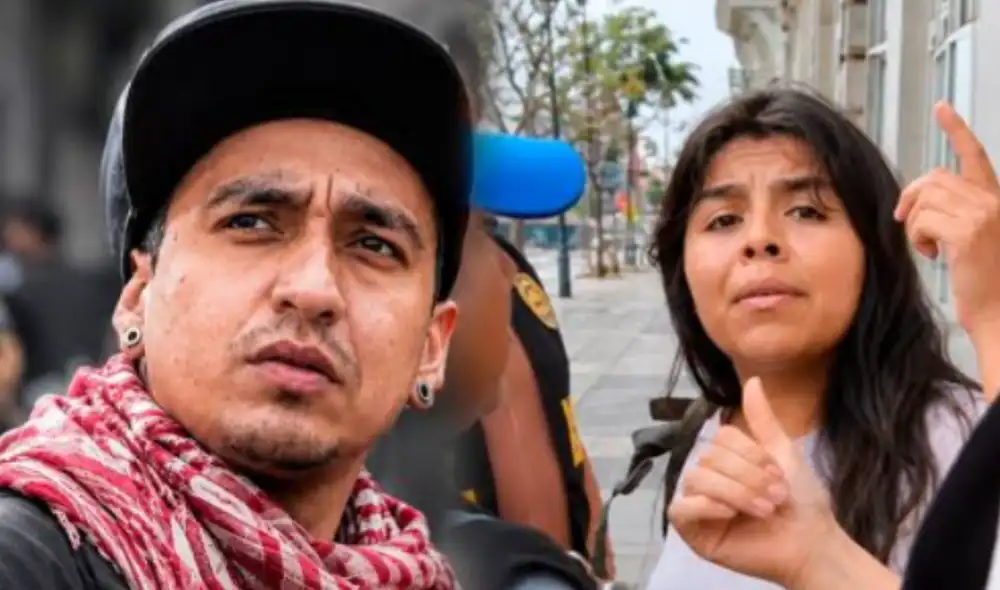
Peruvian prosecutors' terrorism case against musician Pedro Mosqueira, known as Pedro Mo, and three co-defendants relies on evidence that has never been forensically tested, according to a joint appeal filed by their defense team.
Evidence presented by Peru's Anti-Terrorism Directorate, known as Dircote, against Mosqueira, Libia Arcila, Brenda Mejía (known as Brenda Jah), and brothers David and Polidoro Tapullima was not corroborated by the Public Prosecutor's Office. Even so, the Superior Court of Justice ordered their preliminary detention for 15 days over alleged affiliation with a terrorist organization called Túpac Amaru.
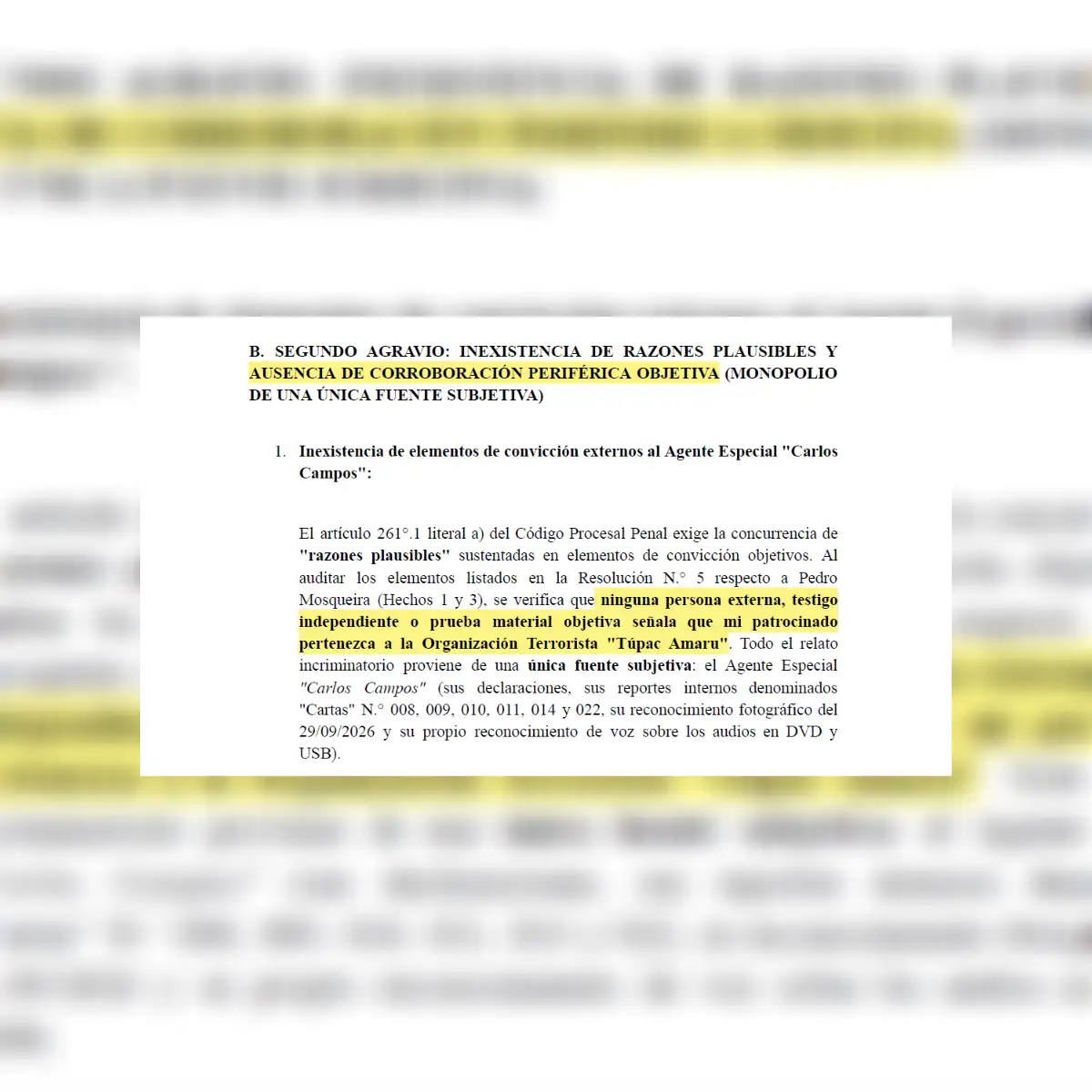
The defense appeal states that the prosecution's case rests heavily on information supplied by a special agent identified only as "Carlos Campos," and that the audio recordings, videos and letters he provided were never subjected to the minimum forensic examinations needed to confirm any defendant's involvement.
No corroboration or forensic testing
In Mosqueira's case, the court itself acknowledged that some of the acts attributed to him lack external corroboration. Prosecutors allege he traveled to Tarapoto, but the appeal says there is no police verification record, hotel registry, transport ticket, satellite geolocation or police surveillance showing he was there.
Dircote also submitted audio recordings discussing a bomb and its detonation, attributed to Pedro Mo because the special agent said he recognized the voice. Prosecutors accepted the recordings without ordering an acoustic or forensic voice comparison to confirm they belonged to the artist.
A video circulated on Facebook showing masked, armed individuals was likewise never subjected to biometric or anthropometric analysis to identify anyone involved. The only basis was the special agent's claim that he recognized Pedro Mo.
Similar inconsistencies appear in the cases against the other defendants. Polidoro Tapullima, who has been blind for several years, is accused of handling weapons. Indira Rodríguez, a member of the defense legal team, said Dircote claims to have investigated the case for two years, which she called absurd, noting that police did not even realize Tapullima was blind because they never provided him with braille materials. She said it was illogical to accuse a blind man of firing weapons in a training camp.
Rodríguez added that David Tapullima's right to honor and reputation was violated after he was taken from his brother's house, handcuffed and dressed in a detainee's vest in front of his neighbors. The Tapullima brothers were flown from the San Martín region to Lima, while Mosqueira was transported by land without his lawyers or family being informed. Rodríguez said they expected him to travel by air and spent hours unable to reach him, noting that after eight hours without information a person is legally considered missing, and that the family endured a tense and uncertain wait before receiving news the next day.
No proof of terrorist affiliation
The same lack of objective evidence applies to the charge of terrorist affiliation itself. In Mosqueira's case, the court ruled out any concrete act of terrorism yet still attributed to him the crime of belonging to a terrorist organization.
No firearm, explosive or other war material has been seized from Mosqueira or from the cultural groups he takes part in, Yachay Punku and the Escuela Rebelde Saturnino Huillca. The appeal says the Public Prosecutor's Office inferred that Mosqueira holds a subversive ideology simply because political texts, social analysis or critical commentary circulate in WhatsApp groups and cultural activities linked to him.
The defense cites a 2019 ruling by Peru's Supreme Court in the Ortiz Ramos case, which established that possessing or sharing political or Marxist documents, or material linked to subversive groups, does not by itself prove membership in a terrorist organization.
Defense says informant may be an undercover officer
Rodríguez told La República that the special agent may in fact be an undercover police officer rather than an ordinary civilian informant. She argued that if the source were a civilian, authorities would not have accepted his statement without corroboration, but that treating him as a police infiltrator gave his account the weight that led to the defendants' preliminary detention.
She described this as a recurring pattern in terrorism or affiliation cases, saying that in the absence of an actual crime, investigators create disconnected situations and link them together without any corroborating evidence, when normally a claim that someone killed another person would require a weapon, a crime scene and other proof. She said a single uncorroborated statement cannot support a criminal charge and that several principles of criminal law were violated, since testimony alone is not sufficient grounds for pretrial detention. Rodríguez said the prosecution's filing amounted to a copy of Dircote's original complaint, since none of its elements were independently verified.
Case has stalled, defense says
Rodríguez said the process is moving slowly and the evidence has still not been sent for the relevant forensic analysis. So far only an identity check, a toxicology test and a psychological evaluation have been carried out. She said the proceedings are not advancing and that investigators are focused only on pursuing the case. The defense has written to the court asking for the date and time of the hearing at which the appeal against the preventive detention order will be reviewed.
Calls to repeal anti-terrorism law
Rodríguez said Law No. 25475, enacted during Peru's internal armed conflict, should be repealed or reformed. She argued that continuing to apply it more than 30 years after that period violates international standards, pointing to a United Nations report stating the law infringes on freedom of opinion and thought. She warned that as long as the law remains in force, operations like this one will continue, in which she said evidence is effectively invented, calling them "terruqueo" operations.
She listed earlier operations of the same kind: Operativo Perseo in 2014, Operativo Olimpo in 2020, Operativo Huánuco in 2022, an operation targeting the Confederación Campesina del Perú in 2022, and Operativo Ayacucho in 2023. The current case stems from an operation called Operativo Centinela.
Former prosecutor questions evidence
Delia Espinoza, Peru's former Attorney General, told the program Epicentro that relying on a special agent's testimony as the main piece of evidence was insufficient, calling it a very basic indicator. She said it is dangerous to rely solely on what an agent claims to recognize, recalling that in the 1990s some people accused of terrorism, acting out of desperation, falsely implicated others out of revenge or hatred.
Espinoza said an agent's testimony must be clear and not based on assumption, adding that without a video showing suspects removing their hoods and being identified, authorities cannot rely only on an agent's claimed recognition. She said a special agent should be a civilian recruited as an infiltrator, not a police officer, and that without phonetic forensic analysis, an agent's identification of a voice on an audio recording is only an initial lead, not proof. She said she had seen no evidence in the judicial order authorizing the raid and preliminary detentions that any forensic testing had been carried out despite the claimed two-year investigation, calling reliance on the agent's word alone unserious and speculative, since none of the situations he described had been corroborated.
What happens next
The defense has written to the court requesting the date and time of the hearing at which the appeal against the preventive detention order will be reviewed.
Test yourself
What alleged terrorist organization are the defendants accused of belonging to?
What disability does defendant Polidoro Tapullima have, according to his lawyer?
According to the defense, what has not been done with the audio and video evidence against the defendants?
Where it happened
Lima, Peru