Dominican artist Pedro A. Medina will open his new printmaking exhibition, Manuales de permanencia, at the Alianza Francesa of Santo Domingo on August 13.

The free-admission exhibition will run through September 3, bringing together 13 works produced using linocut, silkscreen, and drypoint techniques. The Alianza Francesa, located in the Dominican capital of Santo Domingo, is an international French cultural institute that regularly hosts visual arts showcases and cultural exchanges.
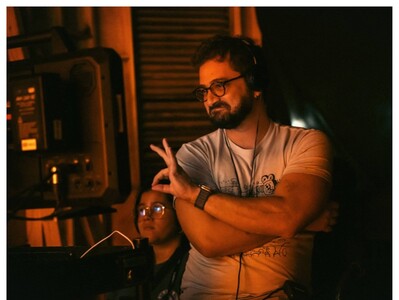
Medina, a 30-year-old artist trained as an illustrator at the Universidad Autónoma de Santo Domingo, explained that printmaking serves as an antidote to the immediacy of the digital era. He noted that the discipline demands time and patience, requiring artists to engage in an active pause before producing a final image in a visual landscape that has grown increasingly saturated and homogenized. The Universidad Autónoma de Santo Domingo, founded in the 16th century, is the country's public university system and the oldest university in the Americas.
The exhibition explores themes ranging from political critique and popular spirituality to memory and unresolved social questions. Medina said the title, which translates to Manuals of Permanence, functions as a gateway to personal inquiries rather than a statement of certainty, marking the first time he has expressed these questions publicly.
Exhibition themes and creative process
Medina said the connecting thread across the 13 artworks lies in the physical and reflective process of printmaking itself rather than the individual subjects depicted. He described intentional repetition, making errors, making corrections, and exercising patience as a central metaphor for life.
Printmaking techniques such as linocut, silkscreen, and drypoint involve physical carving, stencil pressure, and scratching into plates. These manual methods create layered textures and subtle variations, setting printmaking apart from digital reproduction.
According to the artist, the exhibition does not intend to instruct viewers on what to think. Instead, Medina hopes visitors will reflect on their own certainties, examining which rituals, beliefs, relationships, and routines they choose to maintain to give meaning to their lives.
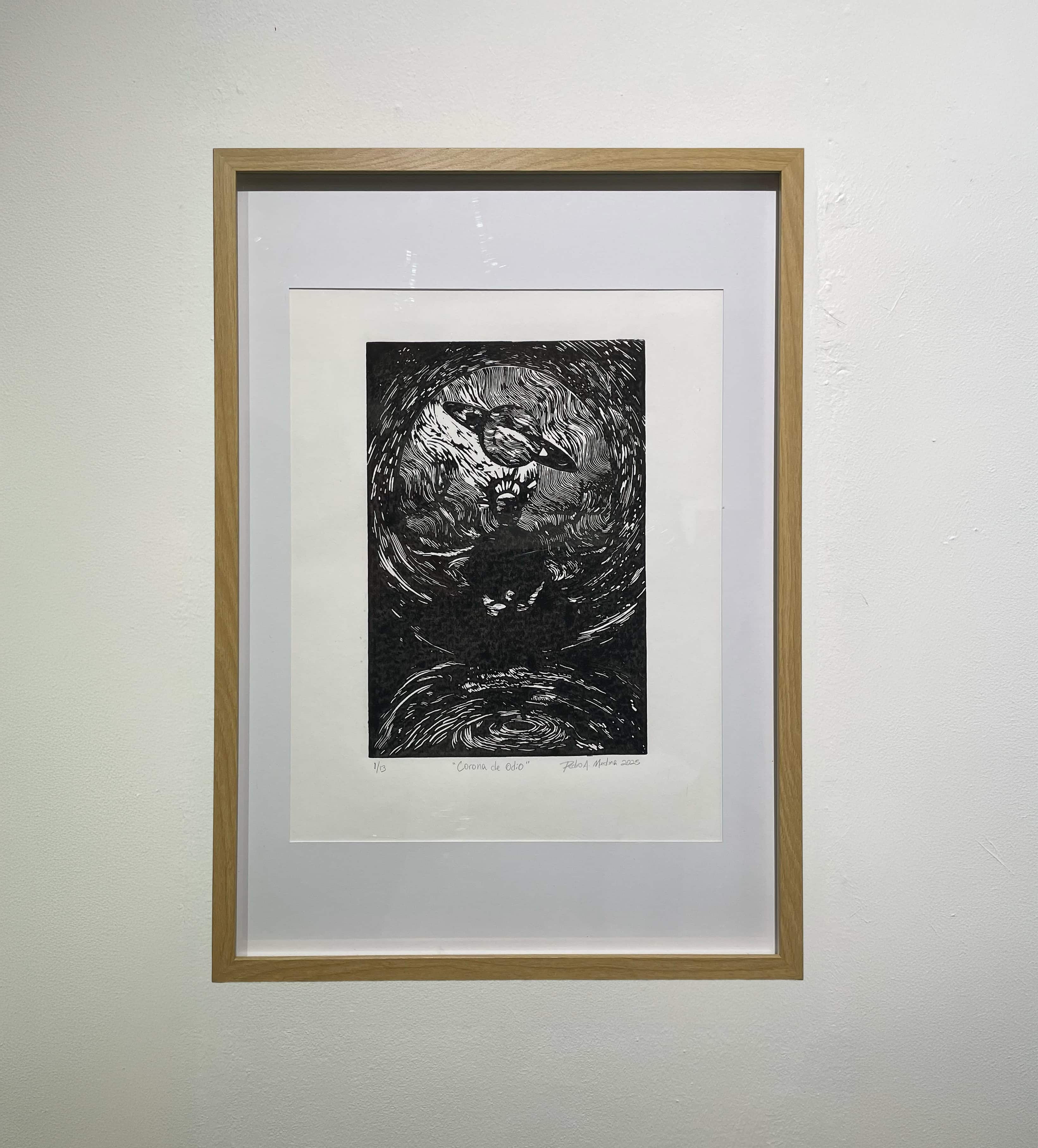
The artwork Corona de odio forms part of the selection presented in the showcase. Medina noted that while the images address collective social issues, they ultimately prompt viewers toward individual introspections.
Tribute to Jet Set nightclub tragedy
Among the featured pieces is Entre escombros, a work previously presented at the 2025 Visual Arts Biennial. The print addresses the tragedy of April 2024, when the roof of the Jet Set nightclub collapsed in Santo Domingo. The National Biennial of Visual Arts is the Dominican Republic's primary contemporary art showcase, held at the Museum of Modern Art in Santo Domingo.
Rather than depicting the moment of destruction, Medina chose to capture the venue prior to the collapse when it was filled with everyday human activity. He explained that before the disaster, the structure held hundreds of overlapping lives, including workers, dancers, people conversing, exchanging messages, laughing, or waiting to return home. The Jet Set nightclub, located on Avenida Independencia in Santo Domingo, has long been a prominent music venue in the Caribbean nation.
Medina said that after the roof collapsed, those distinct individual experiences were largely reduced to a single statistical death toll. He created the piece to symbolically recover the fragmented stories and shared memories of the victims behind the figure.
Redefining Dominican artistic identity
Medina belongs to an emerging generation of Dominican creators who are redefining how artists approach national identity. He stated that younger creators are moving away from traditional folklore and conventional national symbols, focusing instead on untold stories, societal contradictions, and overlooked cultural codes.
His prints address how modern society evaluates personal worth based on material possessions rather than individual character. Medina described this dynamic as a secularized version of religious ideas surrounding merit and divine blessing.
The artist emphasized that his work is not intended as a definitive academic thesis on Dominican society. Rather, he described it as an honest examination of a body shaped by historical, racial, and religious codes who is choosing to confront those influences directly rather than accepting them by inheritance.