

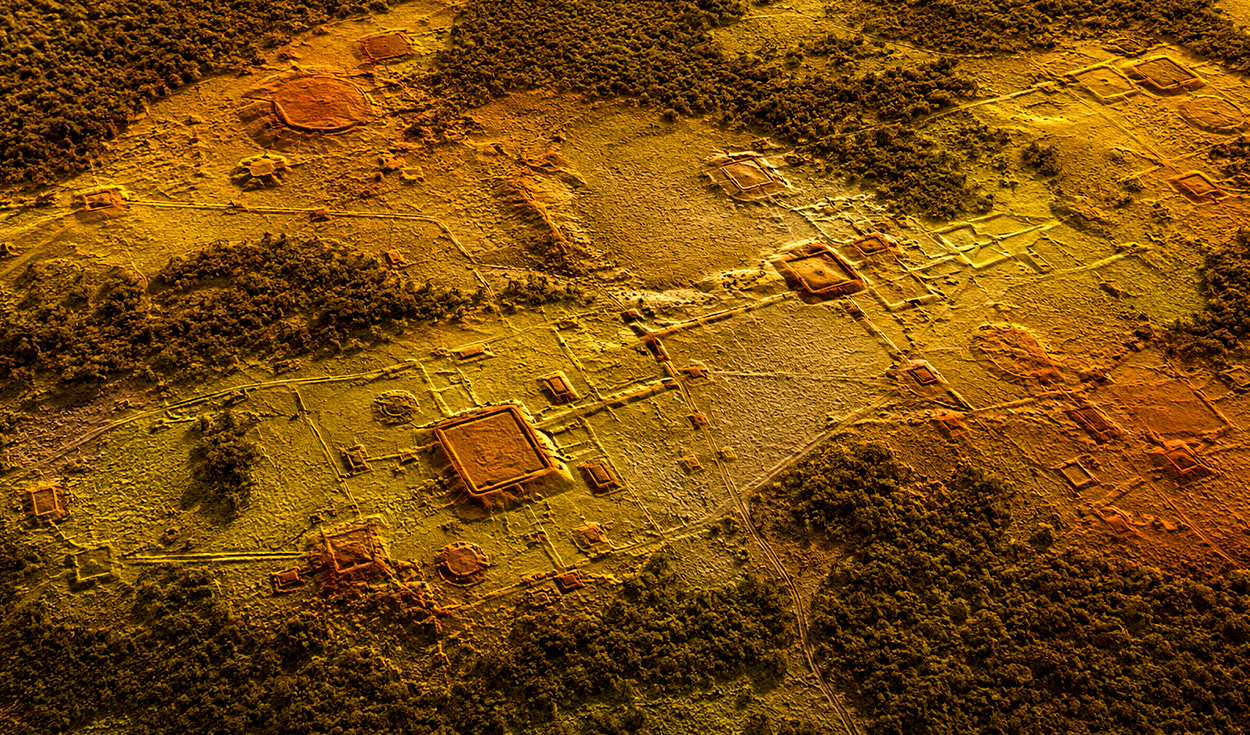
Scientists have found more than 400 pre-Hispanic ceremonial centers hidden beneath the Amazon rainforest, rewriting the history of human settlement in the region. The discovery, published in the journal Nature, was led by the University of Helsinki in partnership with international institutions.
Using LiDAR, an airborne laser system that maps ground surfaces through dense vegetation, researchers flew 4,430 kilometres of survey lines over the Brazilian state of Acre and surrounding areas. Co-author Juha Hyyppä, a specialist at the Finnish Geospatial Research Institute, said the team flew long, straight stretches of around 450 kilometres, mapping a strip roughly one kilometre wide every ten kilometres.
The scans revealed geoglyphs, monumental ditches and straight causeways spread across 183,000 square kilometres, an area three times larger than the previously known range of the Aquiry culture. Statistical projections suggest between 24,000 and 30,000 additional earthworks likely exist in the zone, with two-thirds potentially linked to that pre-Columbian tradition.
A dense, decentralised society
The excavated enclosures were not walled cities but spaces used for rituals, political assemblies and community gatherings. Archaeoanthropologist Martti Pärssinen, who led the study, said the findings overturn what was known about the Amazonian past. He told Science Alert that the extraordinary number of geoglyphs and earthworks was found in an area representing less than three percent of the broader Amazon.
Professor Pirjo Kristiina Virtanen added that the Aquiry were not a single kingdom but a network of many different communities, pointing to a decentralised social model with strong regional integration.
Combined analysis of LiDAR data, excavations, satellite records and ethnographic sources produced a new population estimate: between 1.25 and 3 million people lived within the Aquiry culture between roughly 100 and 300 AD.
Environmental legacy
Those societies reshaped their surroundings through maize, cassava and squash farming, managed burning, and the encouragement of native species such as the Brazil nut. Pärssinen said the human impact on the Amazonian environment was far greater than previously believed and argued that the changes should be factored into future climate models.
Questions remain about the language, self-identity and eventual disappearance of this people around 850 to 1000 AD. Researchers note, however, that their botanical imprint persists in the Amazon today.


