

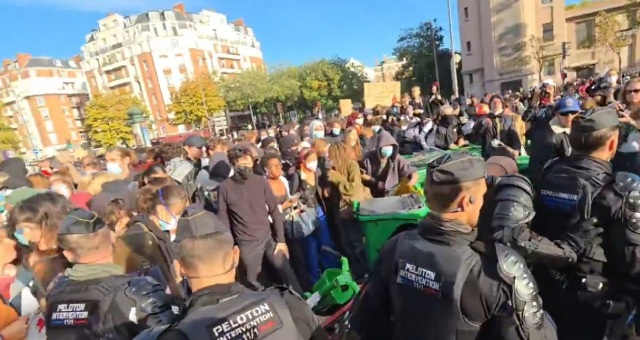
Thousands of high school and university students demonstrated across more than 30 cities in France on Tuesday, blockading secondary schools and university faculties in an escalating nationwide protest over educational conditions.
High school student union Union Syndicale Lycéenne reported that approximately 1,800 secondary schools were under blockade or closed across the country. The union added that blockades had affected 90 percent of French universities, describing the participation figures as a new record.
The French Ministry of Education confirmed on Tuesday afternoon that 891 educational institutions had completely or partially suspended classes due to actions linked to the ongoing mobilizations.
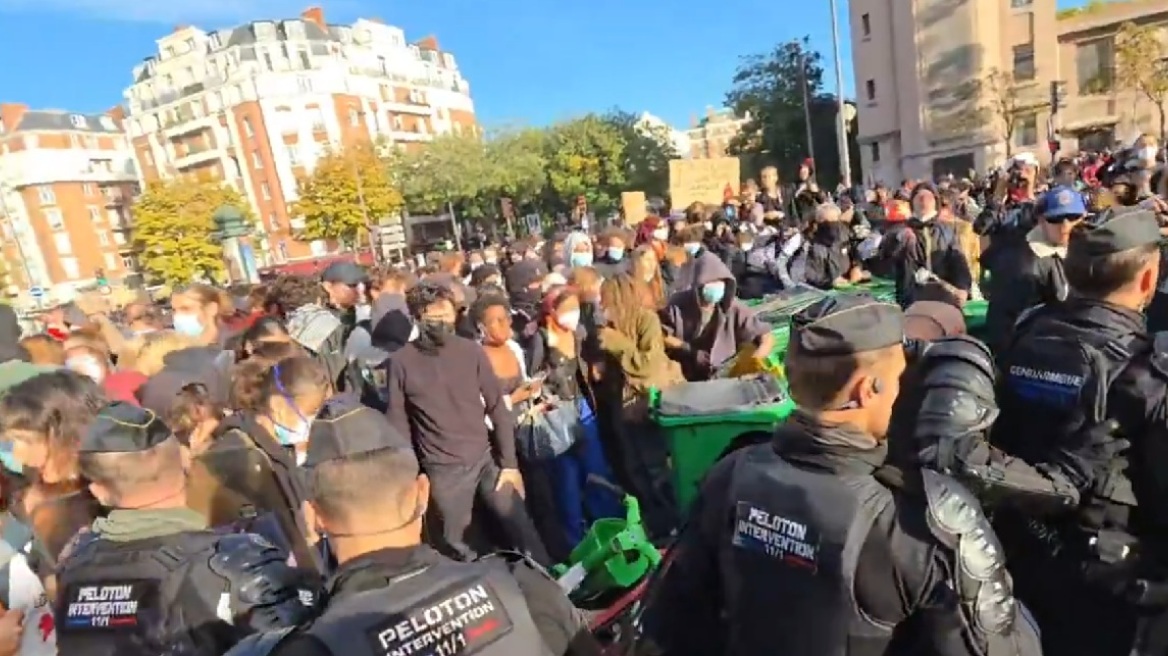
Street clashes across French cities
The nationwide movement, co-organized by higher education student union L'Union Étudiante, expanded rapidly from secondary schools into university faculties and attracted support from teachers and labor unions.
Marches took place in major urban centers including Paris, Marseille, Lyon, Nice and Nantes. In Paris, rally organizers stated that they expected up to 40,000 demonstrators to take to the streets.
Demonstrations turned violent in several regional hubs as protesters clashed with security forces. In Strasbourg, located in northeastern France, demonstrators threw firecrackers at police officers, according to news agency reports.
Clashes were also recorded in Lyon and Marseille, where riot police deployed tear gas to disperse crowds near Place Guichard and major thoroughfares. In Lyon, high school students marched alongside teachers and labor organization members through the city center.
Protest numbers have grown substantially since last week. Union Syndicale Lycéenne stated that more than 600 high schools and over 30 university sites were blockaded last Friday, demonstrating the continued expansion of the movement.
Authorities have arrested more than 5,000 people since the student movement began. In earlier actions connected to the educational protests, a 15-year-old demonstrator suffered a severe injury, losing a hand during clashes over school conditions.
Student demands for educational reform
Protesting students cited long-standing structural problems within the national education system as the primary driver of their mobilization. Discontent has focused on chronic shortages of teaching staff, frequent unreplaced teacher absences, overcrowded classrooms and dilapidated school buildings.
Students also raised concerns over grueling daily schedules, noting that timetables in some secondary schools reach up to 10 hours a day with brief midday breaks.
To address structural deficiencies, student organizations demanded 10 billion euros in immediate government funding for urgent building maintenance and reconstruction across aging facilities.
Demonstrators also called for the creation of 150,000 additional places in higher education institutions and a massive recruitment campaign to hire new teachers across all academic levels.
Union Syndicale Lycéenne stated that blockades and public marches became necessary after petitions and peaceful demonstrations failed to generate any response from political leaders.
Government measures and political debate
In response to the expanding movement, Prime Minister Sébastien Lecornu instructed cabinet ministers to evaluate core student demands to de-escalate tension across the nation.
Lecornu directed officials to consider measures to accelerate the replacement of absent teachers, shorten maximum school day lengths and extend lunch breaks for secondary students.
The prime minister also committed to evaluating dilapidated school infrastructure and ordered responsible ministers to present initial proposals for building renovations by the end of October.
On Monday, the Ministry of Education initiated a national consultation with high school students, inviting them to submit recommendations to improve daily school environments.
Education Minister Édouard Geffray acknowledged last month that several student concerns were justified. Geffray stated that government policy needed to account for diverse student experiences so that ministers could listen to proposals and build joint solutions together with students.
Other government officials took a harder stance against the unrest. Justice Minister Gérald Darmanin referred last week to a violent minority participating in the movement and questioned whether all individuals involved in clashes were actually high school students.
Politicians from across the political spectrum condemned the violent incidents accompanying the demonstrations.
Despite government consultation efforts and ministerial reviews, student unions continued blockades on Tuesday, prolonging one of the most intense periods of educational disruption in recent French history.


