


The European Space Agency's Euclid space telescope has captured light from two of the most distant and brightest objects in the cosmos, emitted when the universe was just 670 million years old, equal to 5% of its current age.
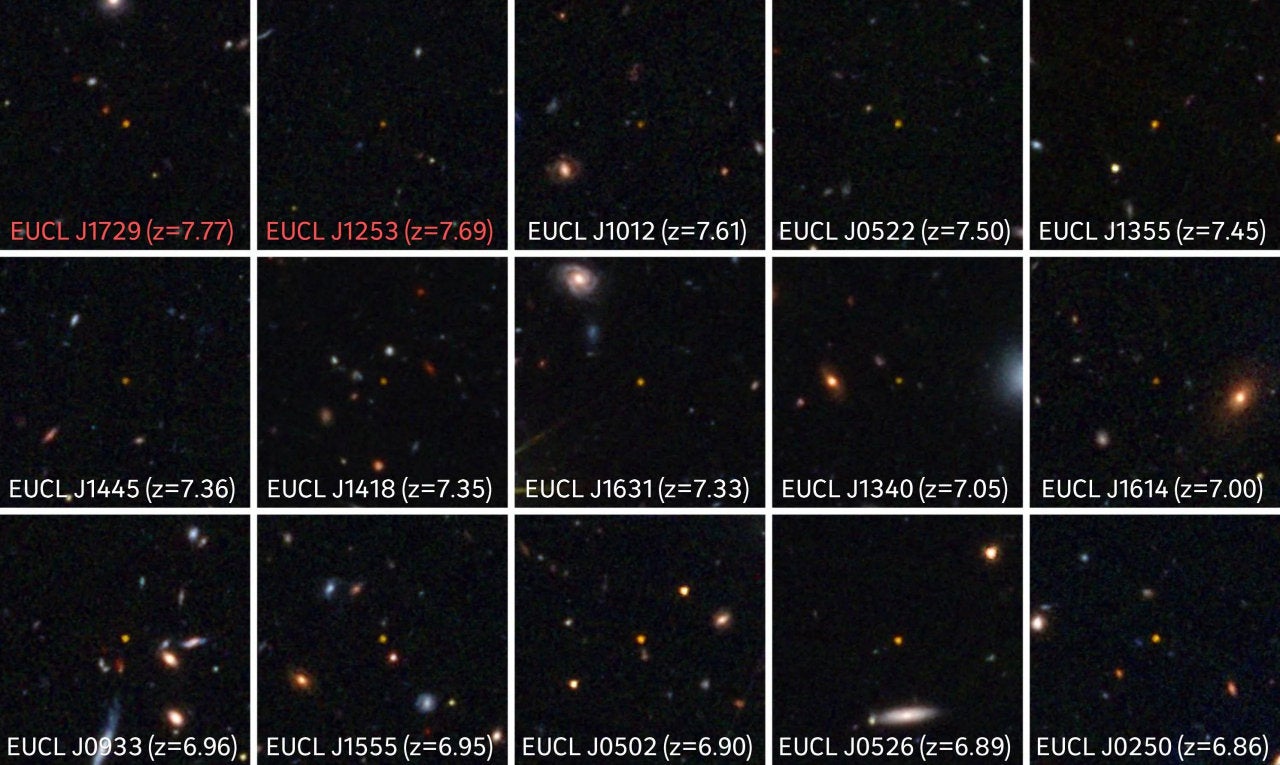
These objects are quasars, intensely bright galactic nuclei powered by supermassive black holes that devour the matter around them, shining with the power of roughly a trillion suns. Both belong to a group of 31 ancient quasars recently identified by the mission, making them the most distant and earliest ever observed.
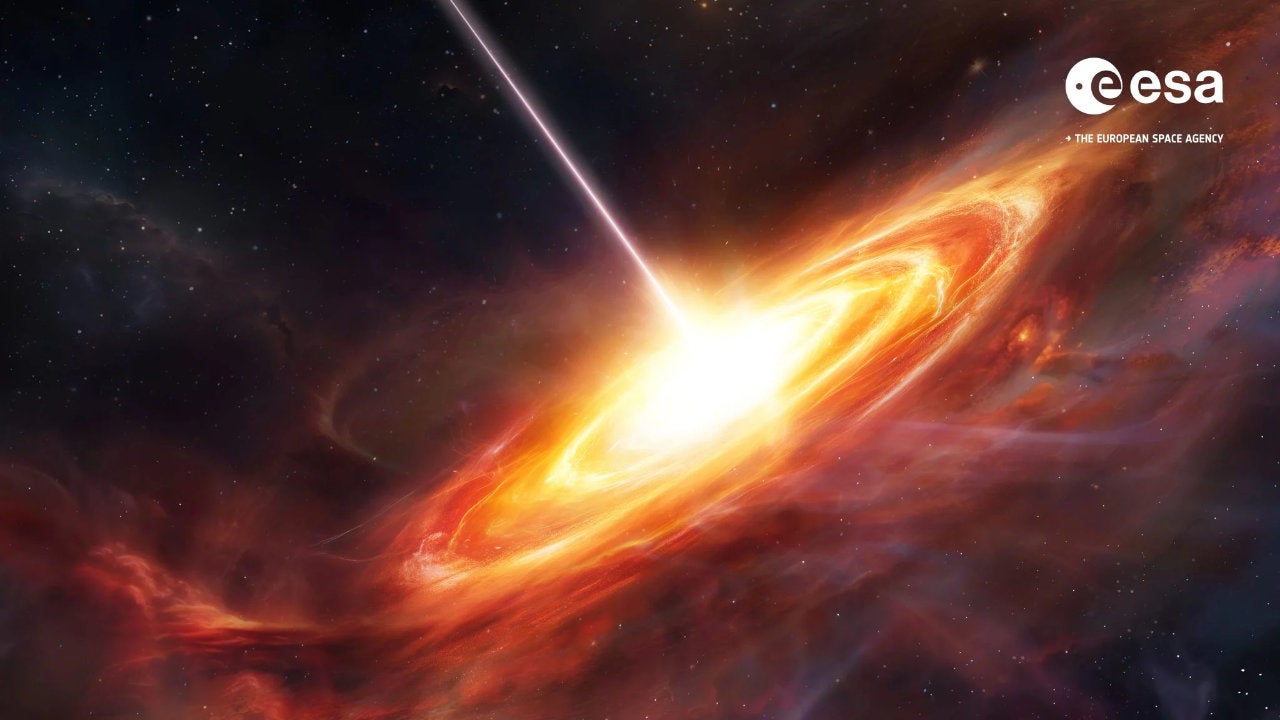
A quasar appears during a relatively brief stage of a galaxy's development, when gas and other material spiral into the central supermassive black hole, forming a hot, fast-moving disc that releases enormous amounts of energy. This glow can be hundreds or thousands of times brighter than all the stars in the galaxy combined. Finding these early quasars has been a scientific goal for decades because they preserve evidence of a formative period in cosmic history that could explain how galaxies and their black holes grew so large so quickly. The search is extremely difficult because such quasars are rare, because their light has traveled more than 13 billion light years and become very faint, and because they can be mistaken for much closer stars.
How Euclid found the quasars
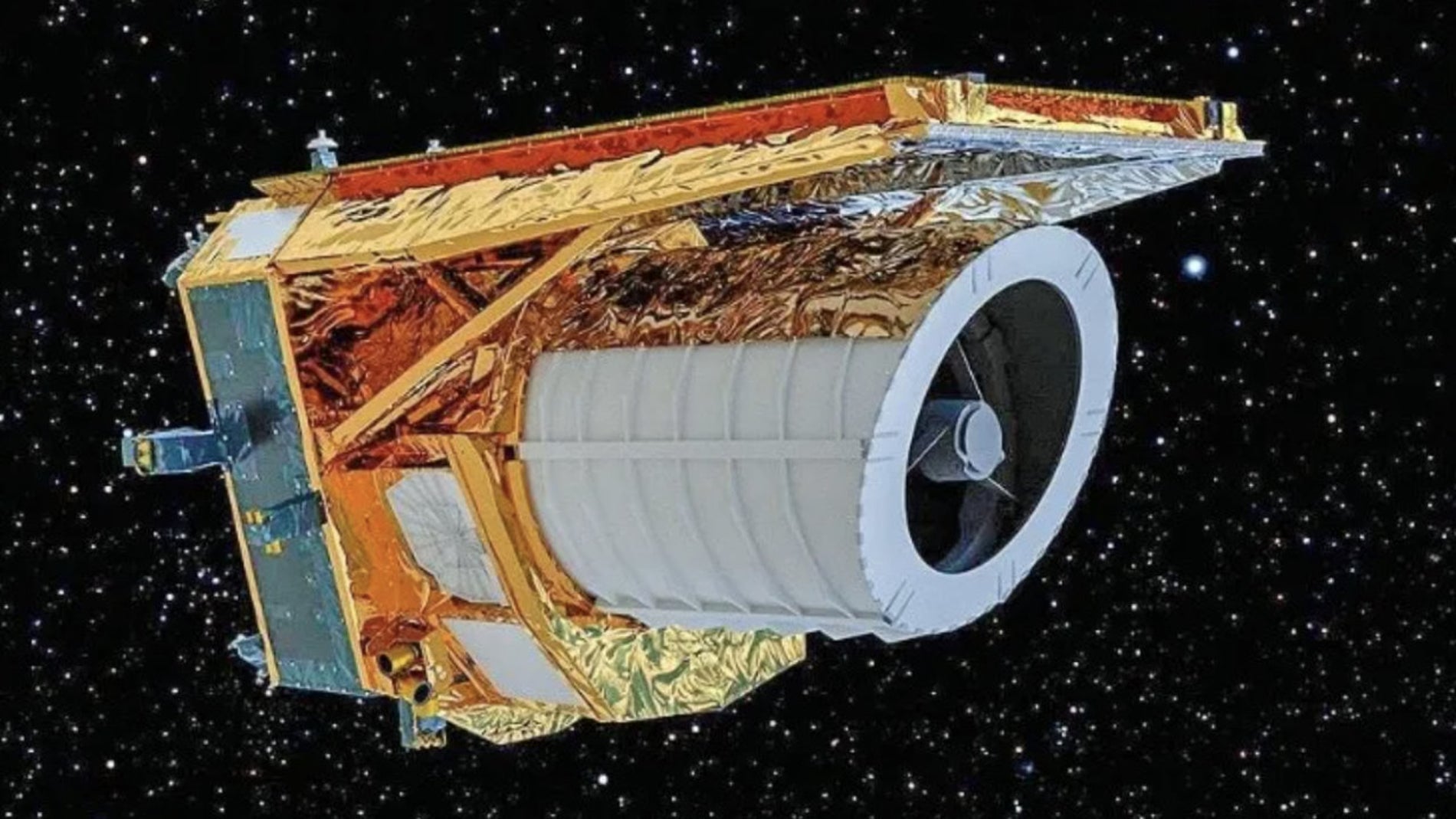
Launched in 2023, Euclid marked a major step forward in this research thanks to its ability to scan wide regions of sky and detect faint infrared light.
Unlike earlier searches, which only found brighter, rarer examples and left an incomplete sample, Euclid can study a more representative group by detecting fainter objects. Daming Yang of Leiden University, lead author of the paper describing the discovery, said finding and studying these quasars from the universe's infancy helps explain how these systems formed and grew so fast, one of the biggest mysteries in astrophysics.
The two oldest quasars found
Among the 31 quasars discovered, 12 show a redshift of 7 or higher, a measure of how the universe's expansion stretches light toward longer, redder wavelengths, indicating they date to the first 770 million years of the cosmos. The two oldest objects in the group are EUCL J172902.75+641018.1 and EUCL J125308.55+705432.3, with redshifts of 7.77 and 7.69 respectively, located just over 13 billion light years away.
Antonio La Marca, an ESA researcher on the Euclid team, said the finding doubles the number of known quasars of that age. He said it took astronomers more than a decade to locate the first ten quasars with a redshift of 7 or higher, while Euclid surpassed that number in just one year of observations, calling it the first real census of quasars at the cosmic dawn.
A galaxy rich in gas and dust
A more detailed analysis by Silvia Belladitta and collaborators of the second-oldest quasar found that it sits inside a galaxy rich in gas and dust with an intense rate of star formation. That environment offers clues to how the supermassive black hole and its host galaxy grew together, with the black hole requiring a large supply of matter while the galaxy converted gas into new stars.
These objects appeared during the epoch of reionization, a transitional period when energetic light from stars, galaxies and quasars ionized the cold, neutral hydrogen gas left over from the cosmic dark ages, stripping electrons from atoms and helping create the transparent, structured universe observed today. Valeria Pettorino, a scientist on the Euclid project at ESA, said these rare discoveries act as time machines for exploring the early universe and understanding the origin of the first generation of galaxies.
Mapping a third of the sky
Euclid's capabilities are unmatched, combining a wide field of view, depth, sharp imaging and infrared vision from space, together with the work of thousands of scientists and engineers from the Euclid Consortium who process huge volumes of data to identify these distant objects. The 31 quasars come from the Euclid Wide Survey, which will eventually cover more than a third of the sky. As the telescope continues mapping billions of galaxies, scientists expect it to find more quasars and provide evidence about the composition, history, evolution and large-scale structure of the dark universe.


