

The European Union is moving forward with a new action plan to protect its external borders and respond more rapidly to sudden, large scale irregular migrant arrivals.
The European Commission presented the five point framework, which focuses on prevention, early warning, enhanced border surveillance, tackling human smuggling networks and accelerating deportations.
According to the Commission, illegal crossings along the external borders of the bloc are currently at their lowest level since 2021. However, European officials emphasized that recent incidents, ranging from the eastern borders of the Union to the Mediterranean, demonstrate how quickly new migration crises can erupt.
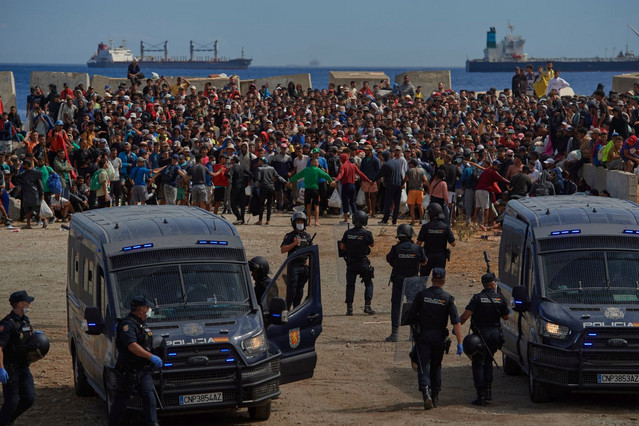
The Commission highlighted the recent border crisis in Ceuta as a key example of how rapidly emergency situations can materialize along European frontiers.
Ceuta is a Spanish autonomous city situated on the North African coast, sharing a land border with Morocco. As one of only two European Union territory borders on the African continent, the enclave has long served as a focal point for migrants attempting to reach European territory.
Partnering with countries of origin and transit
The initial pillar of the proposal centers on expanding cooperation with nations outside the European Union. The Commission aims to strengthen ties with countries of origin and transit to gain timely intelligence on potential population movements and disrupt unauthorized routes before migrants reach European soil.
Under this pillar, the plan outlines expanded information sharing, improved tracking of migration routes and closer coordination between European agencies and partner governments. The Commission also proposed establishing coordination hubs for the European Border Surveillance System, known as EUROSUR, within non-EU countries.
EUROSUR is an operational framework established by the bloc to facilitate data sharing and real time surveillance among national border control authorities across Europe.
Expanded role and rapid deployment for Frontex
The second pillar focuses on reinforcing physical border security and establishing a new European crisis response mechanism for situations where mass movements of people are used as geopolitical leverage.
Frontex, the European Border and Coast Guard Agency, sits at the heart of this strategy. The Commission proposed expanding the agency's standing corps, enabling faster deployment of personnel and equipment to high pressure border zones, increasing its involvement in deportation operations and boosting overall border surveillance.
Headquartered in Warsaw, Frontex was created to assist EU member states and Schengen associated countries in managing their external boundaries and maintaining security across the Schengen common travel area.
Early detection and social media monitoring
The third axis shifts the strategy from reactive crisis management to early prediction. The Commission requested that member states submit operational data to EUROSUR more quickly to maintain an accurate, shared picture of border movements.
The proposal also calls for monitoring online platforms and social media channels to identify organized movements, new smuggling routes and disinformation campaigns that encourage irregular migration. To support these efforts, the Commission intends to set up digital cooperation protocols with major internet search engines and online platforms.
Targeting smuggling networks and illegal finance
The fourth pillar targets criminal syndicates that organize illegal border crossings. The Commission called for faster adoption of targeted sanctions against human smugglers and tighter cooperation with online service providers.
To dismantle the financial structures supporting these networks, the Commission urged closer collaboration with commercial banks and digital payment providers to track illicit money flows. Additionally, the Commission called on the European Parliament to advance revisions to EU legislation governing the facilitation of illegal entry and stay.
The European Commission serves as the executive branch of the European Union, holding responsibility for proposing new legislation and overseeing the enforcement of EU policy.
Accelerating deportation procedures for rejected applicants
The final pillar addresses the return of individuals who have no legal right to remain in the European Union. The Commission proposed closer cooperation with third countries on readmission agreements, greater Frontex participation in deportations and the digitization of administrative procedures to reduce processing delays.
Commission officials described effective return policies as an essential component of a comprehensive European migration management structure.
Ministerial review and long term strategy
Overall, the initiative marks a fundamental transition toward a preventive model built on enhanced surveillance, rapid response capabilities and stronger EU agency involvement.
The proposal will be formally presented to national justice and interior ministers during the upcoming Justice and Home Affairs Council meeting on October 1 and October 2.
The Justice and Home Affairs Council brings together interior and justice ministers from across member states to coordinate joint policies on border management, security and judicial cooperation.
European Commissioner for Internal Affairs and Migration Magnus Brunner said the ultimate objective was to establish a stable, fair and adaptable European system supported by robust external borders and effective international partnerships.


