


The Community of Madrid launches its inaugural Escena Escorial international performing arts festival this Friday at the Teatro Auditorio de San Lorenzo de El Escorial under the direction of conductor Alondra de la Parra.
The new festival features a broad roster combining young talent, contemporary creations, and classical repertoire. Major international figures headline the event, including pianist Grigory Sokolov, who performed an inaugural preamble on August 15, and conductor Daniel Barenboim, who directs the closing performance.
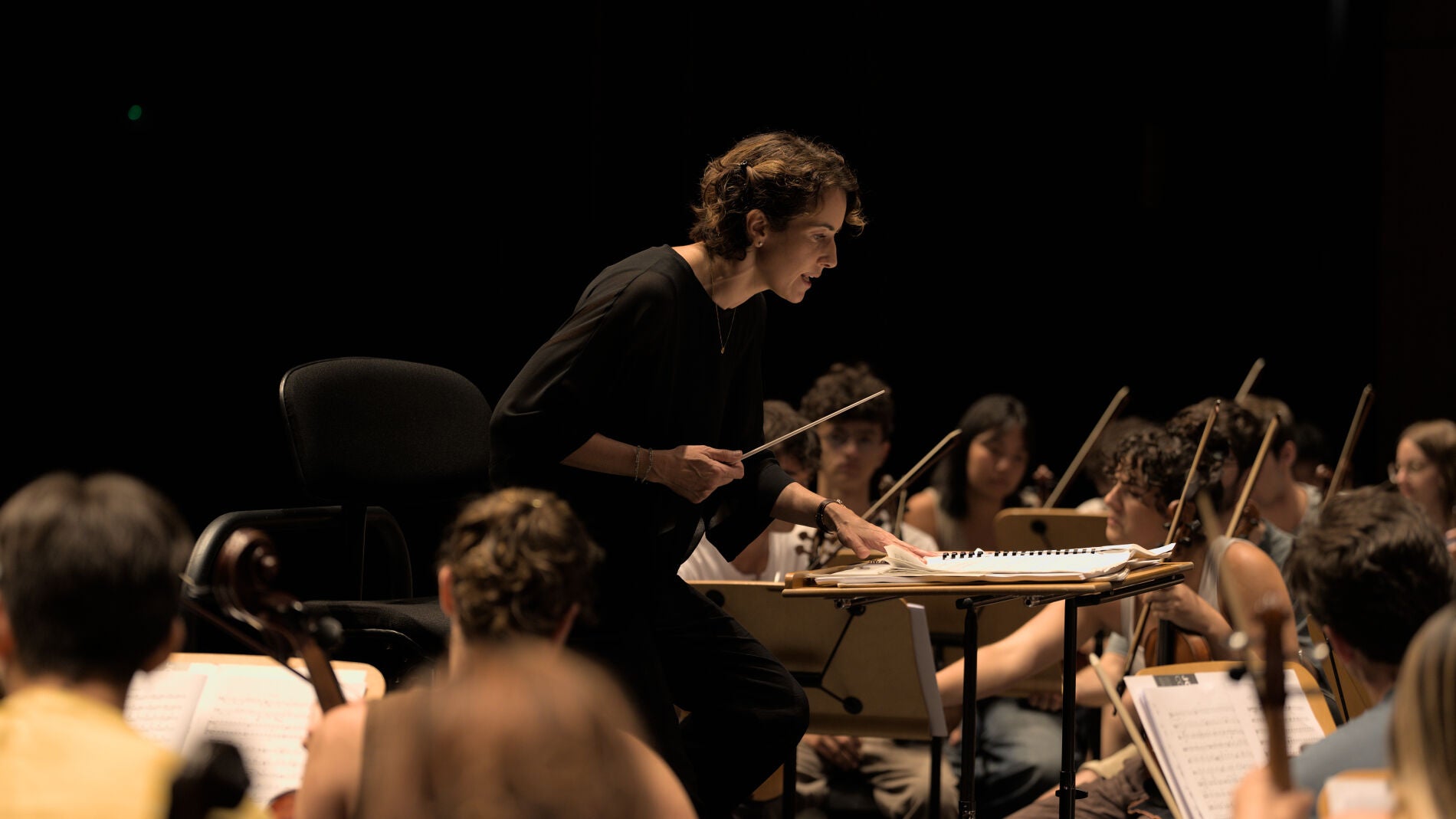
De la Parra, who was born in New York in 1970, explained in response to an emailed questionnaire that major international names alone will not consolidate the venue. The auditorium opened twenty years ago with the ambition of transforming the municipality into the Salzburg of Madrid. She said that achieving that status requires a solid and sustained schedule over time rather than relying solely on marquee performers.
Building a permanent identity for the auditorium
De la Parra noted that a festival should function as a living meeting space between artists, disciplines, generations, and the audience. She stated that her goal is to build a new era for the venue so that visitors attracted by a familiar performer might discover unfamiliar art forms across symphonic music, chamber music, dance, theatre, and cross-disciplinary projects.
Welcoming world class artists such as Sokolov and Barenboim represents an important statement that places the venue where it belongs, according to de la Parra. However, she emphasized that long term success depends on creating a distinct identity that makes audiences return and encourages artists to perform throughout the year.
Blending classical tradition with contemporary work
Addressing her goal of breaking away from traditional classical festival formats, de la Parra stated that updating the concept does not mean abandoning artistic excellence or traditional masterworks. She said it would be absurd to set aside composers such as Ludwig van Beethoven or Franz Schubert, or performers like Sokolov and Barenboim, simply to demonstrate contemporary credentials.
Instead, the festival places classical masterworks alongside diverse contemporary programming. The schedule pairs classical performances with appearances by musician Yamandu Costa, compositions by Astor Piazzolla, dance, theatre, and modern stage adaptations.
Opening with the colors of America
The festival opens with a program titled Los colores de America, performed by the Youth Orchestra and Choir of the Community of Madrid, known as JORCAM. De la Parra chose the theme because the Americas form a deep part of her personal and musical identity, and because she wanted the festival to begin with a celebration of cultural encounter and diversity.
The opening concert features works by John Adams, George Gershwin, Camargo Guarnieri, Astor Piazzolla, and Arturo Marquez. De la Parra noted that these pieces originate from vastly different traditions yet engage in a natural dialogue on stage.
The prominent inclusion of Latin American composers throughout the festival is a deliberate choice. De la Parra said Latin America possesses extraordinary musical wealth that deserves a natural place on major European stages alongside classical repertoire, such as pairing Piazzolla with Gershwin, Marquez with Adams, or Yamandu Costa with a chamber orchestra performing Antonio Vivaldi. Having grown up between different cultures, she explained that her programming philosophy focuses on building bridges rather than setting boundaries.
Integrating the host municipality
De la Parra emphasized that the character of San Lorenzo de El Escorial is inseparable from the identity of the festival. She pointed to the relationship between the town's architecture, history, nature, and local rhythm, noting that the festival experience extends beyond the auditorium into the surrounding streets and public spaces.
She expressed her hope that Escena Escorial will develop the same deep bond with its host location that defines the world's major cultural festivals, encouraging visitors to walk through, explore, and stay in the municipality.
Modernizing Carmen for the social media era
Among the festival highlights is a new stage production titled @Carmen, the reel story, directed by Barbara Lluch. The staging reimagines Georges Bizet's 150 year old opera within the world of social media, where personal intimacy is continuously exposed to the public.
De la Parra stated that the themes of Carmen, including desire, freedom, possession, violence, and identity, remain highly relevant today. She clarified that the production does not simplify the opera for younger audiences, but demonstrates how a classic work can transform while continuing to address essential human questions.
Youth representation and the social role of music
Young musicians from JORCAM play a central role throughout Escena Escorial. In addition to performing the opening concert, the ensemble collaborates on multiple festival projects alongside established artists. De la Parra stressed that young musicians carry real artistic responsibility and that performing alongside veteran artists is essential to their professional development.
Regarding the relationship between music and politics, de la Parra said that artists should decide freely whether to take political stands, noting there is no moral requirement for musicians to act as spokespersons for societal issues.
However, she highlighted the social power of music as demonstrated by the West-Eastern Divan Orchestra, which was founded by Daniel Barenboim and Edward Said to close the festival. She noted that the orchestra brings together musicians from areas affected by conflict, proving that people from opposing backgrounds can listen to one another and collaborate to create something meaningful.


