A university professor of language and literature argues that Christopher Columbus's departure from Spain on August 3 marks not only the start of a historic crossing but the birth of a new dialect, American Spanish.
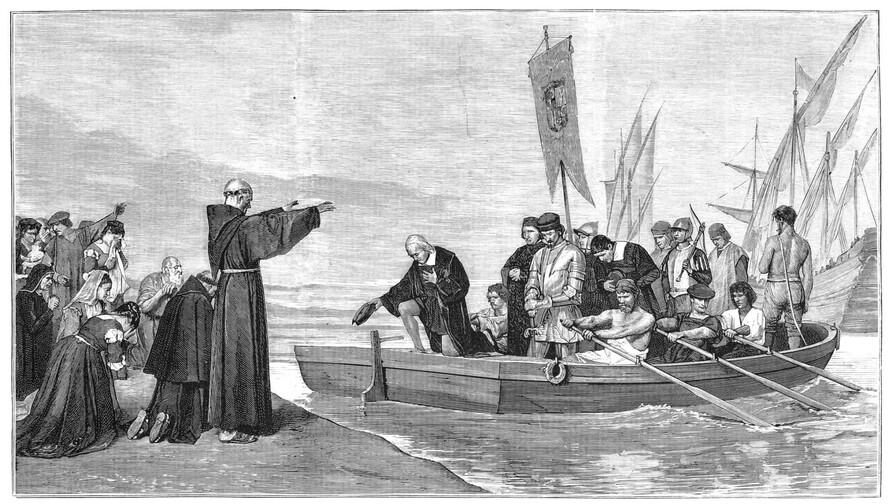
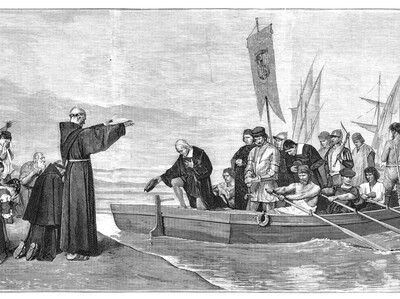
On that date in 1492, Columbus (1451-1506) set sail from the port of Palos de Moguer commanding an expedition on behalf of the Catholic Monarchs. Three ships carried the party across the Atlantic to an island in the Caribbean known as Guanahaní, where they landed on October 12, 1492, in one of the most consequential events in human history. The 16th-century historian Francisco López de Gómara described it as the greatest thing since the creation of the world, setting aside only the incarnation and death of its creator.
The column, written by Domingo Caba Ramos and published ahead of the August 3 anniversary, opens with lines from Pablo Neruda evoking the luminous words the Spanish brought to the Americas, words that remained shining in the new lands even after the colonizers departed with the gold.
Caba Ramos draws on the work of Cuban scholar and linguist José Juan Arrom, who gave Columbus's achievement a new name in a 1979 essay: "the other feat of Columbus." Arrom argued that from an American perspective, the voyage was above all the voyage of the language, a framing that placed linguistic inheritance alongside geographical discovery as the lasting result of October 12.
That argument rests on how Columbus kept his own records. Arrom noted that Columbus wrote his impressions of the landscape and people not in Genoese, the dialect of his childhood, nor in Portuguese, the language of his youth, but in Spanish, acquired during his long years in Castile and Andalusia. The crews of all three ships also spoke Spanish, and the first word cried out in the early hours of October 12 was a Spanish one: Tierra, meaning land.
What followed, according to Dominican linguist Dr. Celso Benavides, was the gradual formation of a new linguistic variety. Writing in a 1986 study of the history of the Spanish language, Benavides argued that American Spanish began taking shape from 1492 onward as a direct result of colonization, a blend of Spanish with the indigenous languages of the continent and, in some cases, with African languages. The variant shared the central features of Castilian, Benavides said, but diverged from it in each country in marginal traits.
Arrom traced that divergence to Columbus's encounter with the Taino people. As Columbus grew to understand more of the Taino language, which he described as sweet, gentle and always accompanied by laughter, he found ways to express the realities of the American world in European speech. Through that process, Arrom argued, Columbus laid the groundwork for a richer tongue, one carrying the scent of flowers, the flavor of fruit and the names of trees he had longed to know.
That language, Arrom concluded, refined and shaped artistically over nearly five centuries, is what we now call American Spanish.