
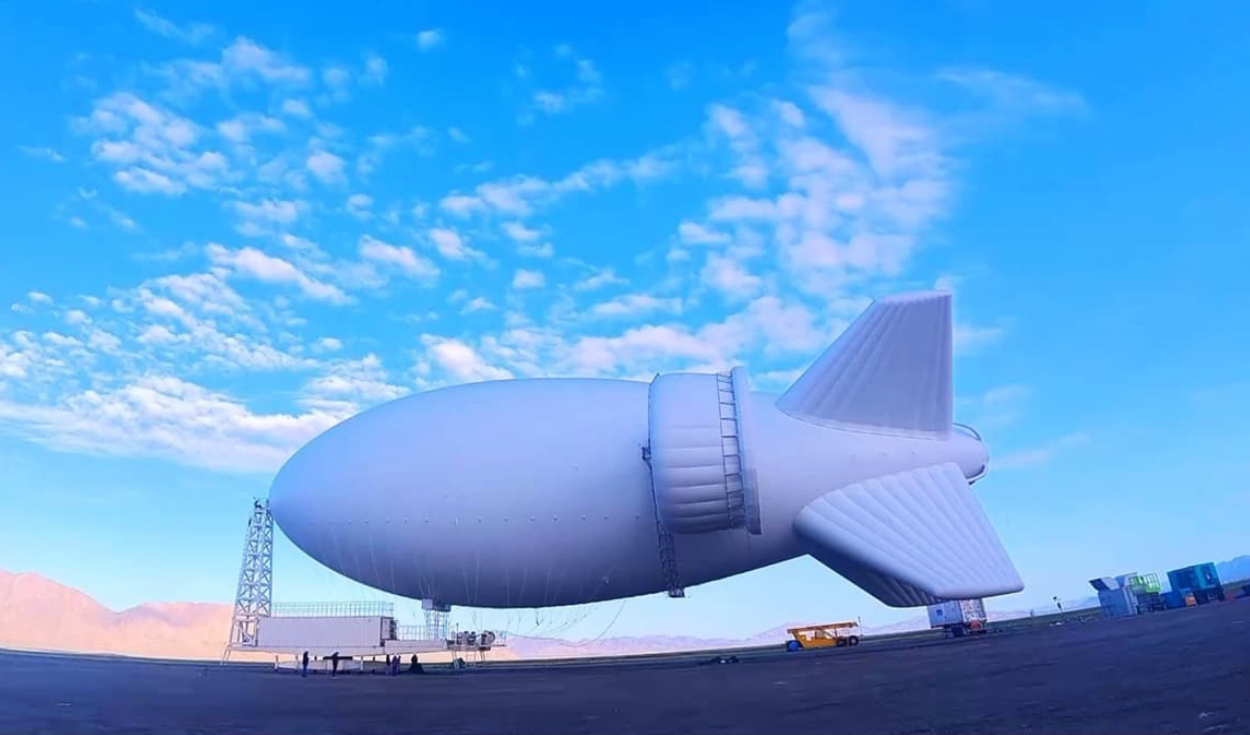
China has successfully tested a massive helium-filled wind turbine airship called the S4000, which ascended to an altitude of 4,000 meters to generate electricity from high-altitude winds.
The aircraft, which measures approximately the same length as a Boeing 747 commercial jetliner, completed a full flight test where it harvested power at high altitude before returning safely to the ground.
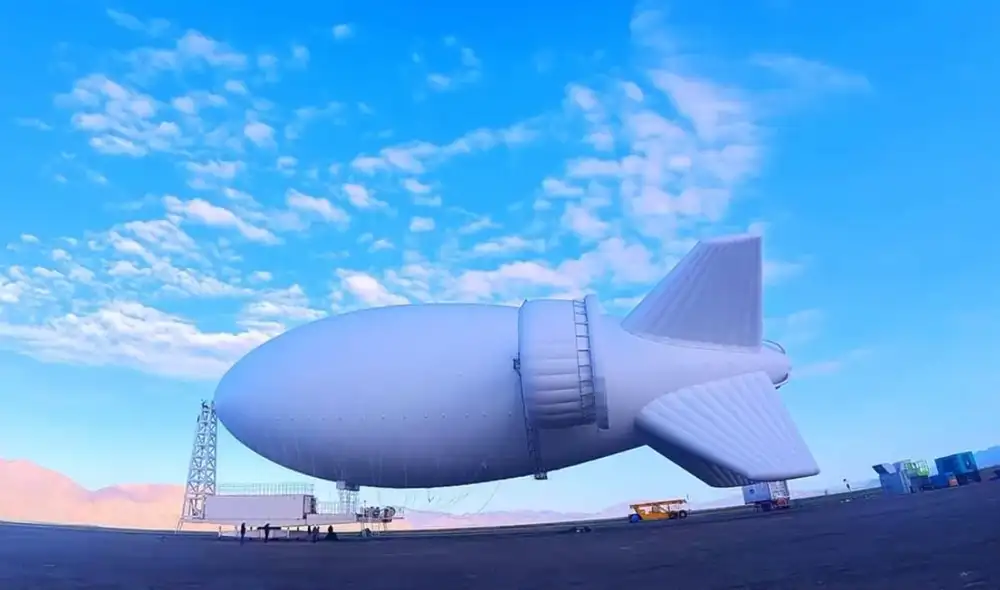
State television network CCTV broadcast footage of the test flight, which was later reported by the South China Morning Post. The airborne system utilizes electric turbines installed on both sides of its hull to transform the force of high-altitude wind currents into electrical energy.
Power generated during flight is sent directly down to a ground station through a long tethering cable that maintains the airship in position. Engineers targeted the 4,000-meter altitude because wind currents at high elevations are significantly stronger and more consistent than those near the earth surface.
Design and technical advantages
The Boeing 747 is a wide-body passenger jetliner that measures roughly 70 meters in length, giving the S4000 a similar physical footprint in the sky. By using helium gas for buoyancy, the airship can float continuously in upper atmospheric layers that conventional ground-mounted wind turbines cannot reach.
Developers said the airborne system offers substantial advantages over conventional land-based wind farms. Because the S4000 does not require permanent ground foundations or heavy concrete towers, it occupies minimal land space and can be relocated to regions with superior wind conditions.
The mobility of the airship also allows operators to transport power generation directly to areas experiencing electricity shortages or remote locations lacking traditional power grid infrastructure.
Development team and commercial orders
The S4000 airship was developed by Chinese firm Sawes Energy Technology in partnership with Tsinghua University and the Aerospace Information Research Institute, a research body within the Chinese Academy of Sciences.
Tsinghua University, located in Beijing, is one of China's leading academic institutions, while the Chinese Academy of Sciences serves as the national institute for natural sciences and technological research in the country.
Prior to building the S4000 model, the development team produced two smaller prototype airships, designated the S1500 and S2000. Sawes Energy Technology and its research partners received joint commercial orders for those earlier models totaling 500 million yuan, equivalent to approximately 74.3 million US dollars.
The success of the 4,000-meter flight test demonstrates a novel concept in renewable energy technology: moving power-generating equipment to where strong winds blow, rather than waiting for air currents to reach fixed installations built on the ground.


