
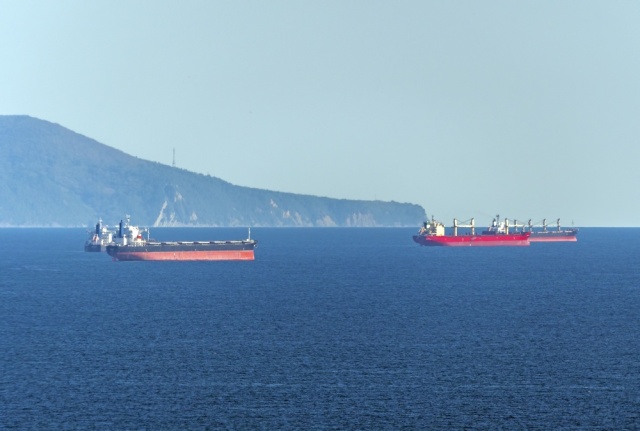
Commercial vessels approaching Novorossiysk and ports in the Odesa region remain at the maximum level five risk rating, risk analysis firm EOS warned on August 28.
The risk analysis firm advised shipping companies with scheduled calls at Novorossiysk to postpone their arrivals, adding that a meaningful recovery of maritime traffic across the Black Sea over the next week is extremely unlikely.
Novorossiysk is Russia's main commercial port and naval hub on the Black Sea, while Odesa serves as Ukraine's primary deep-water port complex for grain and container shipments.
Novorossiysk naval drills
The security warning follows military activity at Novorossiysk harbor, where the local naval base conducted exercises on August 27 from 21:00 to 23:00 local time. The scenario focused on harbor defense against uncrewed surface vessels and aerial drones using live artillery fire.
EOS confirmed two additional exercise periods for August 28, scheduled from 11:00 to 13:00 and from 21:00 to 21:30 local time.
Sea drones and unmanned aerial craft have frequently targeted naval assets and port infrastructure in the Black Sea during the ongoing conflict between Russia and Ukraine.
Caspian Pipeline Consortium operations
EOS emphasized that the heightened risk level should not be confused with a confirmed new operational shutdown at the Caspian Pipeline Consortium oil terminal, located about 13 kilometers southwest of the Novorossiysk commercial port.
The Caspian Pipeline Consortium transports crude oil from major Kazakhstan fields across southern Russia to the Black Sea coast for global export by sea tankers.
As of the August 28 update, Kazakh officials had made no new announcement regarding a temporary suspension of operations. The SPM-2 offshore single point mooring loading buoy remains undergoing tests and has not resumed regular operations.
Scheduled crude exports through the terminal for September stand at 1.5 million barrels per day, down from 1.6 million barrels per day. EOS attributed the drop to planned maintenance at Kazakhstan's Karachaganak field rather than recent attacks near the terminal, a maintenance schedule also recorded in an Investing.com report.
Danube River transit congestion
Shipping disruption extends to the Danube River, where severe traffic congestion has restricted transit to about two to three vessels per day.
The Danube River is a crucial alternative shipping corridor for grain exports moving between Eastern Europe and Black Sea ports.
Shortages of maritime pilots, priority passage granted to specific cargoes, and work stoppages caused by air raid alarms at Ukrainian Danube ports have compounded delays.
EOS clarified that there is no indication that Romania's Sulina Channel has closed. However, the firm warned ship managers to expect delays and potential short-notice traffic halts for up to a month.
For shipping companies, the central challenge extends beyond whether sea channels or oil terminals remain open to whether port calls can be completed safely and on schedule.