

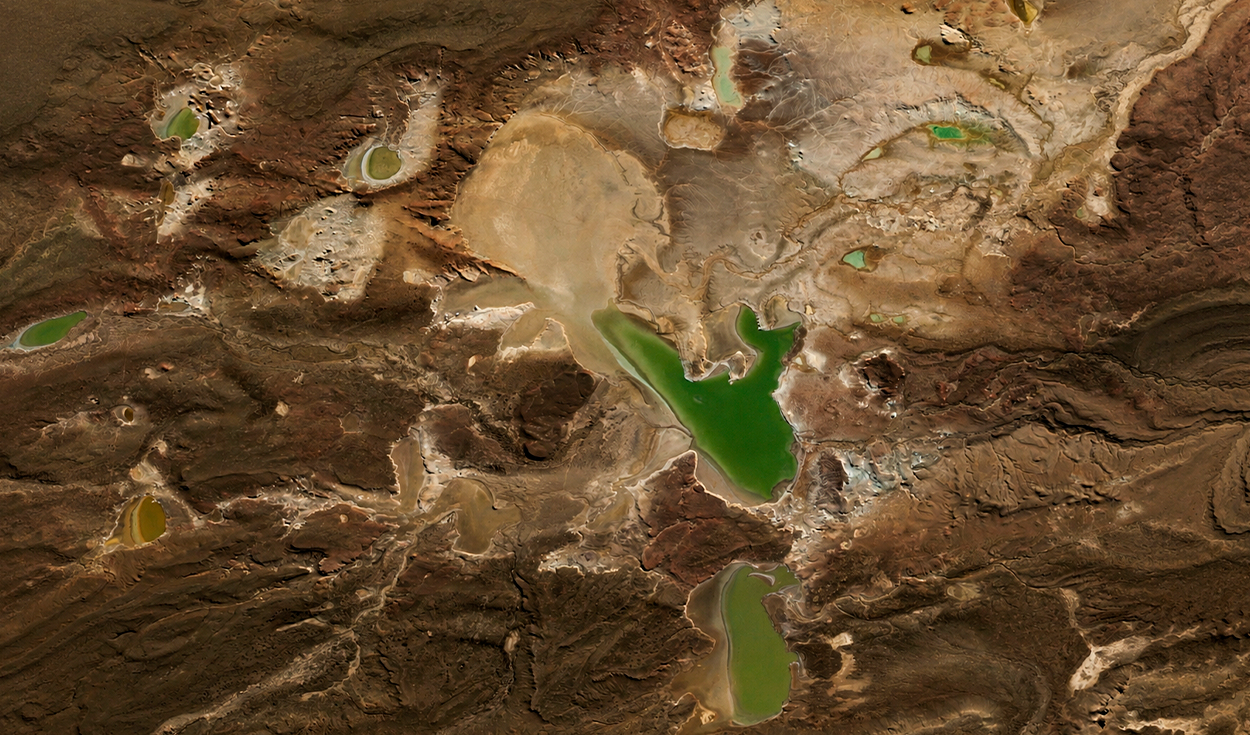
A salt lake in Argentine Patagonia holds the lowest point in the entire Western and Southern hemispheres, sitting 105 metres below sea level without any connection to the ocean.
Laguna del Carbón lies within the Gran Bajo de San Julián, in the province of Santa Cruz, about 48 kilometres from Puerto San Julián. The Argentine Naval Hydrographic Service and local geological studies have confirmed its depth, and the Argentine Geological Mining Service (SEGEMAR) has stated that the Gran Bajo de San Julián contains the most depressed point on the American continent.
The lake sits inside a closed basin, known as an endorheic basin, where water has no outlet to rivers or the sea. Surrounding topography blocks any flow toward the Atlantic, so rainfall and runoff collect in the depression until they evaporate in the arid climate and Patagonian winds. That process concentrates salt across the surface, giving the formation a crust-like appearance distinct from a conventional body of water.
A Laboratory for Science
The landscape is dominated by vast salt flats, mineral-rich whitish soils, low-growing vegetation and constant gusts typical of the Patagonian steppe. The remote location has helped preserve the original ecosystem.
Research published in the journal Geoacta described the site as one of the most representative examples of endorheic basins in South America. Scientists are drawn there because the formation's relief allows them to reconstruct the evolution of Patagonia and understand how other closed basins in the region formed, shaped over millions of years by tectonic, climatic and erosive processes.
Experts from CONICET and IANIGLA have discovered fossils, Jurassic flora and petrified forests at the site. Those sediments allow researchers to reconstruct ecosystems more than 150 million years old, explaining the steady presence of geologists, palaeontologists and environmental scientists in the area.


