


The fifth edition of the Al Andalus Innovation Venture event opened at the Navigation Pavilion in Seville with more than 1,000 business meetings between companies, investment funds, startups, scaleups, institutions, and other agents of the innovation ecosystem. Over 3,000 people attended the first day of the event across its various areas of activity.
Diego Vargas, the coordinator of Al Andalus Innovation Venture, said the gathering focuses on a close format where entrepreneurs can sit directly with decision makers rather than competing in size with larger national forums. He highlighted the international growth of the event, noting participation from Portugal, a business mission from Brazil, and Estonia as the guest country.
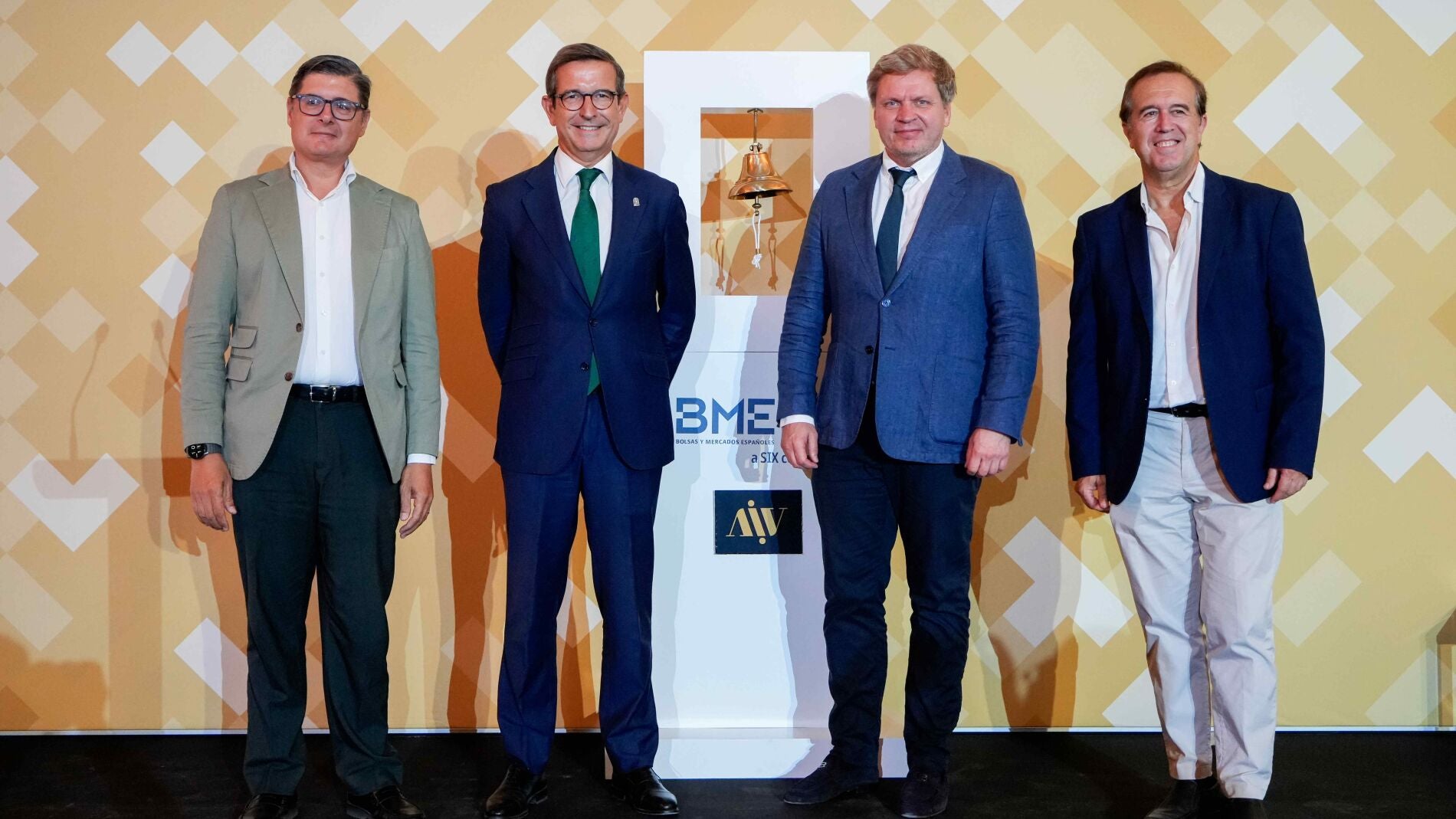
Jorge Paradela, the Regional Minister of University, Industry, Energy and Innovation for the Junta de Andalucía, said the event has consolidated as a meeting point for international entrepreneurship in southern Europe to give visibility to Andalusian talent and connect it with market access. He said the regional administration has aligned its entrepreneurship support instruments for the first time, using tools for capitalization, loans, research and development aid, digitalization, and internationalization to connect business initiatives with market opportunities.
Álvaro Pimentel, the Economy Delegate of the Seville City Council, said the main value of the event lies in the connections created between entrepreneurs, startups, companies, and investors. He said the municipal government aims to position Seville among the best cities for investment, adding that innovating means turning ideas into opportunities and solutions for society.
Lembit Uibo, the Estonian Ambassador to Spain, marked his country's third consecutive year at the event with its largest representation to date. He said the goal is to generate alliances and joint projects, exploring what Estonia and Andalusia can build together in business.
The opening also featured César Augusto Souza de Andrade, the Director of Innovation for the Secretariat of Science, Technology and Innovation of the Regional Government of Pernambuco in Brazil. He attended with a business delegation of 11 selected startups as part of an internationalization mission in Andalusia.
Business leadership and public markets
A session on business leadership featured Alejandro Costa Jiménez, the founder, chief executive and president of the Seville based company Éxxita. Costa discussed the firm's recent listing on the Euronext Paris exchange as the culmination of more than two decades of work. He said he could explain how to take a company public in six months, but he prepared for 22 years for his company to compete on the stock market. He said he chose the French market because countries like France, the Netherlands, and Sweden have greater maturity in the circular economy and second chance products.
Costa also outlined his distributed management model, which focuses on the environmental impact of extending product lifespans and the social goal of employing vulnerable people in digital and green jobs. He noted this purpose helps attract new generations of professionals.
Adrián García Aranyos, the former global president of Endeavor, spoke about developing the company Thune Eureka from Galicia. He advocated for a management style away from ego and focused on team building, saying the best thing his father left him was a great team. He detailed Thune Eureka's early growth through acquisitions, own product development, and new markets, but warned of the difficulty of recruiting technical and vocational training professionals outside large urban centres.
The Estonian digital model
A dedicated session explored Estonia's digital entrepreneurship model and its e-Residency program. Spain currently ranks fourth globally for companies incorporated in Estonia through the initiative, with around 8,200 Spanish e-residents and more than 3,600 founded companies.
Guillermo Chávez, the head of Spanish and Portuguese markets for the e-Residency program, said the large base of Spanish companies reflects the international focus of their founders, adding that the program seeks to support them expanding across Europe by reducing administrative barriers.
Martin Henk, the co-founder of Pipedrive, said artificial intelligence creates opportunities to build global businesses, though he cautioned that a good product needs commercial capacity and distribution channels to grow.
Louis Williams, the co-founder of Entre Trámites, discussed the tax, legal, and administrative barriers companies face during international expansion. Mario Paladini, the founder and chief executive of Globals, also participated in the analysis of new collaborative opportunities between Estonia, Andalusia, and the Spanish business fabric.
European venture capital challenges
Discussions on European venture capital highlighted funding gaps for growing companies. Stephan de Moraes, the co-founder and managing general partner of Indico Capital Partners, identified a lack of capital for large growth rounds and the absence of a true single market. He said while Europe has early stage funding, companies struggle to secure rounds of 100 million, 200 million, or 500 million euros, leaving them dependent on United States capital as they grow.
Beth Faus, the vice president of Cathay Innovation, and Javier de Pro Rueda, the general manager of Fundalogy, pointed to improvements in the Spanish and European ecosystems driven by talent quality and the arrival of foreign capital. De Pro said projects must scale fast, strong, and consistently, supported by billing, results, and efficiency.
Jesús González Nieto-Márquez, the managing director of the BME Growth stock exchange, highlighted progress in European regulatory harmonization and capital market access for small and medium enterprises. In Spain, he noted that more than 110 capital increases took place last year, capturing around 650 million euros.
Investing and public administration
In a session on moving from entrepreneur to investor, Enrique Linares, the co-founder of Plus Partners, said early stage investors provide value beyond capital by offering perspective, experience, and contacts. Hugo Arévalo, the co-founder and executive chairman of ThePowerMBA, said he began investing at age 24 with almost no resources. He stressed the importance of learning through experience, noting that real feedback comes from customers. Yago Arbeloa, the president of MIO Group, advised new investors to start alongside experienced people and utilize a highly developed fund ecosystem.
Another debate examined how public administration accompanies companies from birth to scaling. Pedro Pardo of the Aragón Development Institute and Aragón Emprende Foundation cited a network of 56 entrepreneurship centres, with 70 percent in rural areas. Javier González, the director general of Andalucía Emprende, said his entity attends to around 16,000 entrepreneurial projects a year and must base its policies on territorial needs.
Covadonga Toca, the director general of the Galician Institute for Economic Promotion, said business realities must dictate program design. Eva Sainero of the Canary Islands Special Zone Consortium said attracting companies is only the first step, and the challenge is helping them establish, grow, and project internationally.
Virginia Blanco of the Madrid City Council presented an urban experimentation model testing 20 technology projects to identify regulatory barriers. Pilar González of the CDTI emphasized bringing national instruments to the territory so companies can identify the support they need in their growth strategy.
Scaling outside home markets
A panel hosted by the export agency ICEX addressed international expansion. Miguel Arias of Endeavor said Europe is experiencing a moment of opportunity with increased investment, demand for continental technology, and growing networks. He said trust networks are fundamental for entering markets like London, Paris, or Berlin.
Sergio Furio, the founder and chief executive of Creditas, said global talent and artificial intelligence reduce traditional barriers, allowing companies to internationalize from the start. Based on his success in Brazil, he recommended decisive market entries with direct customer knowledge rather than trusting expansion entirely to remote management.
Luis Garrido of the Huelva based company Alfalite explained a strategy of using international fairs, local integrator agreements, and specialization in demanding technology segments to compete globally from Spain. Carlos Pérez Fernández, the co-founder of CoverManager in Seville, detailed a strategy of inorganic growth through acquisitions in Germany and France to rapidly incorporate clients where organic growth was slower.
Industrial innovation in Seville
A panel promoted by the Seville City Council examined local innovation with global impact. Wesley Palma, the director of the Horse factory in Seville, highlighted the plant's 1,000 employees and 85 years of experience. He said the main challenge is understanding information by combining purpose, analytical rigor, and adaptability.
Rafael Romay, the co-founder of Anafocus and president of Teledyne Vision Solutions, noted his company's international focus since 2001. He recalled that in 2011, 97 percent of its billing came from Japan before integrating into the American multinational Teledyne, stressing the need for a sincere analysis of capabilities in a changing technological and geopolitical scenario.
Eugenio Barroso, a counselor at MP Corporación, said there is no progress without industry, as factories generate professional capacities that strengthen the territory. He outlined four elements for managing uncertainty: analysis, vision, execution, and institutionalization.
The event received backing from multiple entities, led by the Junta de Andalucía as Main Partner through the Andalucía Emprende Foundation, Misión Andalucía, and the Digital Agency of Andalusia. Gold Partners included the Seville City Council, ICEX Spain Export and Investment, and the Aragón Development Institute. Silver Partners featured Cervezas Victoria, Trenlab Renfe, the Estonian Government, Fundalogy Unicaja, the Canary Islands Government, Enisa, CDTI, Madrid Innovation, the Galician Institute for Economic Promotion, and Keepintax. Bronze Partners included Acciona, Santander, Growers, Red.es, and Hélice.app, alongside collaborators such as WordPress, Bolsas y Mercados Españoles, BBVA, Sabadell Startup, Enagas, Santalucía Impulsa, Endeavor, Garantia, Vector Horizonte, Leyton, Anta, DeVirtus, and Gobo.


