

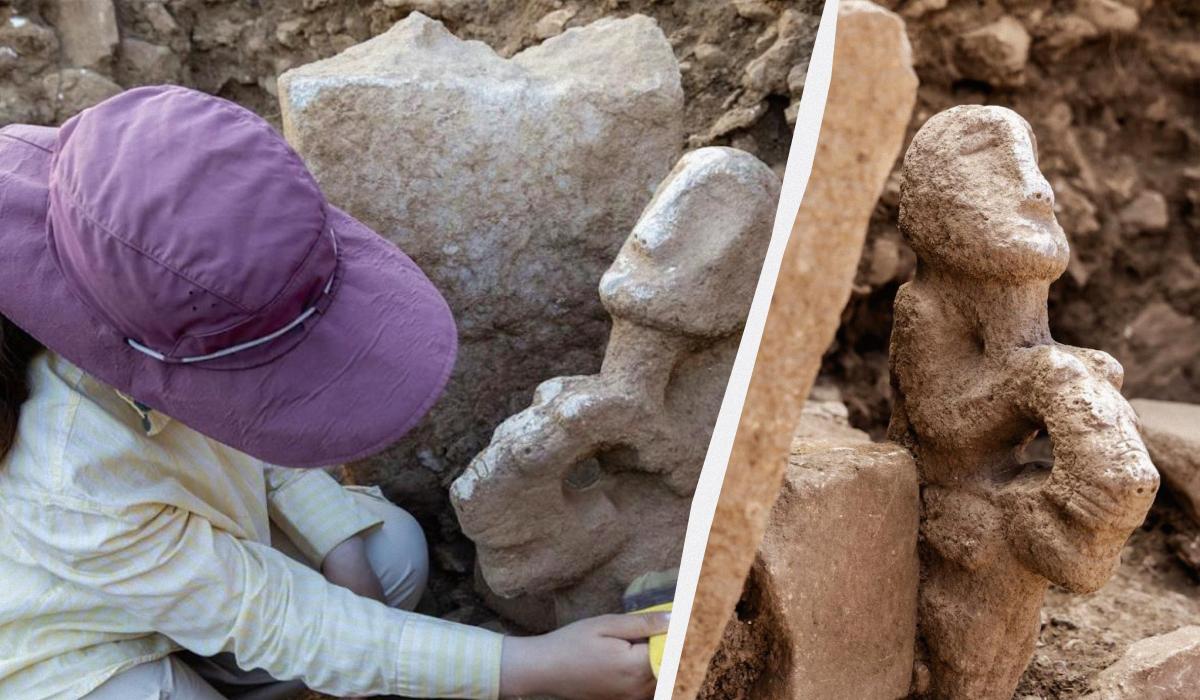
Archaeologists excavating in southern Turkey have discovered an 11,000-year-old statue of a person seated on the back of a leopard at Karahan Tepe.
The 70-centimetre sculpture was uncovered during summer excavations on a platform running along the wall of a circular structure measuring roughly three metres across. Experts and officials believe the artifact reflects an ancient cultural fascination with courage and male strength, while offering key insights into early human habitation in the region.
Turkish Minister of Culture and Tourism Mehmet Nuri Ersoy announced the discovery in a statement, noting that the carving was executed in a style never seen before. Ersoy said he believes the artifact opens the way to new questions regarding the earliest periods of human history and will have a significant impact on the scientific community. The find was first reported by Antena3.
Design and Historical Context
Jens Notroff, an archaeologist at the German Archaeological Institute who specializes in the Neolithic period and was not involved in the project, told Live Science that the sculpture appears to be a mirror image of the famous artistic motif where an animal stands over a human figure. Notroff explained that although the exact meaning of the human-leopard pairing remains unknown, it likely signifies bravery or physical power.
Notroff added that depicting a human standing without fear among wild animals, as seen at the nearby site of Sayburç, or dominating a beast as in the new Karahan Tepe carving, can be interpreted as a symbol of power and control over raw force and danger.
Karahan Tepe is situated in the Urfa province of southern Turkey, a region famous for containing some of the oldest known human settlements in the world. Established around 9750 BC, Karahan Tepe belongs to the same ancient pre-pottery Neolithic network as Göbekli Tepe, a UNESCO World Heritage site renowned for its monumental stone pillars and early ceremonial architecture. During this era, human societies in the Fertile Crescent were transitioning from nomadic hunting and gathering toward settled village life.
Significance for Neolithic Archaeology
The German Archaeological Institute, where Notroff is based, is one of the world's leading research organizations in prehistoric archaeology, having conducted extensive field studies across Anatolia. Discoveries across Urfa province have transformed modern understanding of early human ritual, social hierarchy, and artistic expression, revealing that complex symbolism emerged before the widespread adoption of agriculture.
Archaeological teams continue to study the circular structures at Karahan Tepe to uncover further details about the site's layout and prehistoric function. Researchers anticipate that detailed analysis of the leopard sculpture and its surrounding architecture will provide further clarity on how early human communities expressed authority, belief, and their relationship with the natural world.


