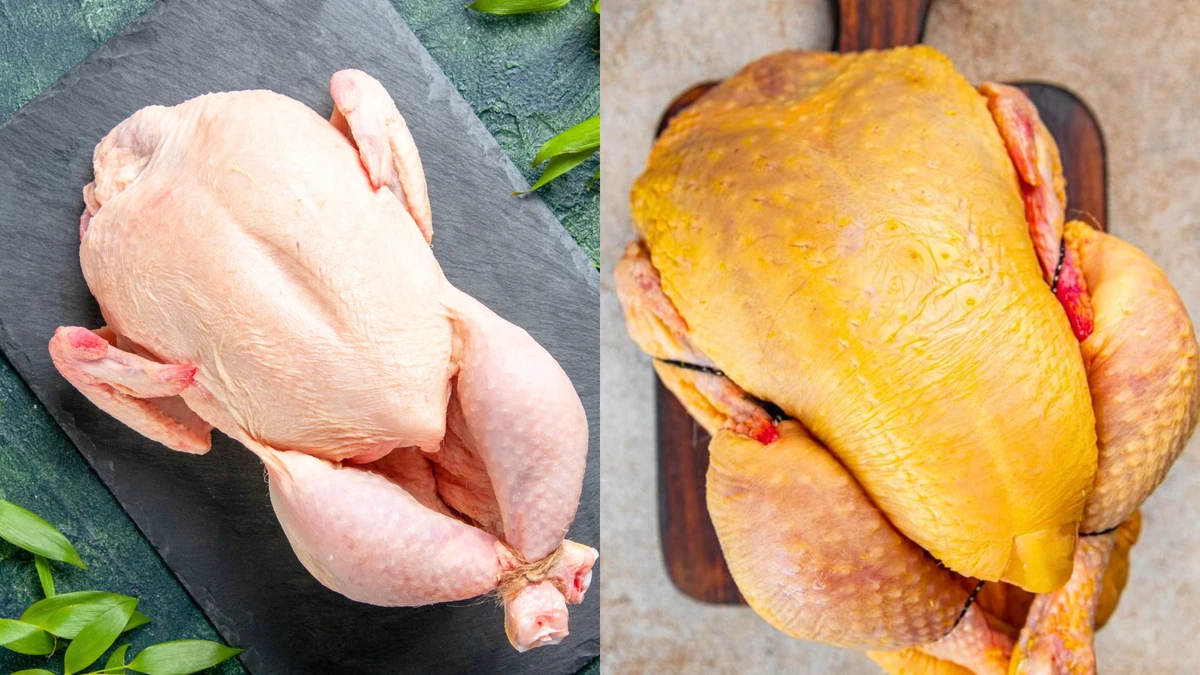
Shoppers staring at chicken in supermarket fridges and butcher shops often assume that yellow or white skin signals freshness, quality or nutritional value. Experienced butchers say that is not the case: neither color is better than the other, and the shade mainly comes down to what the bird was fed and the pigments in its feed.
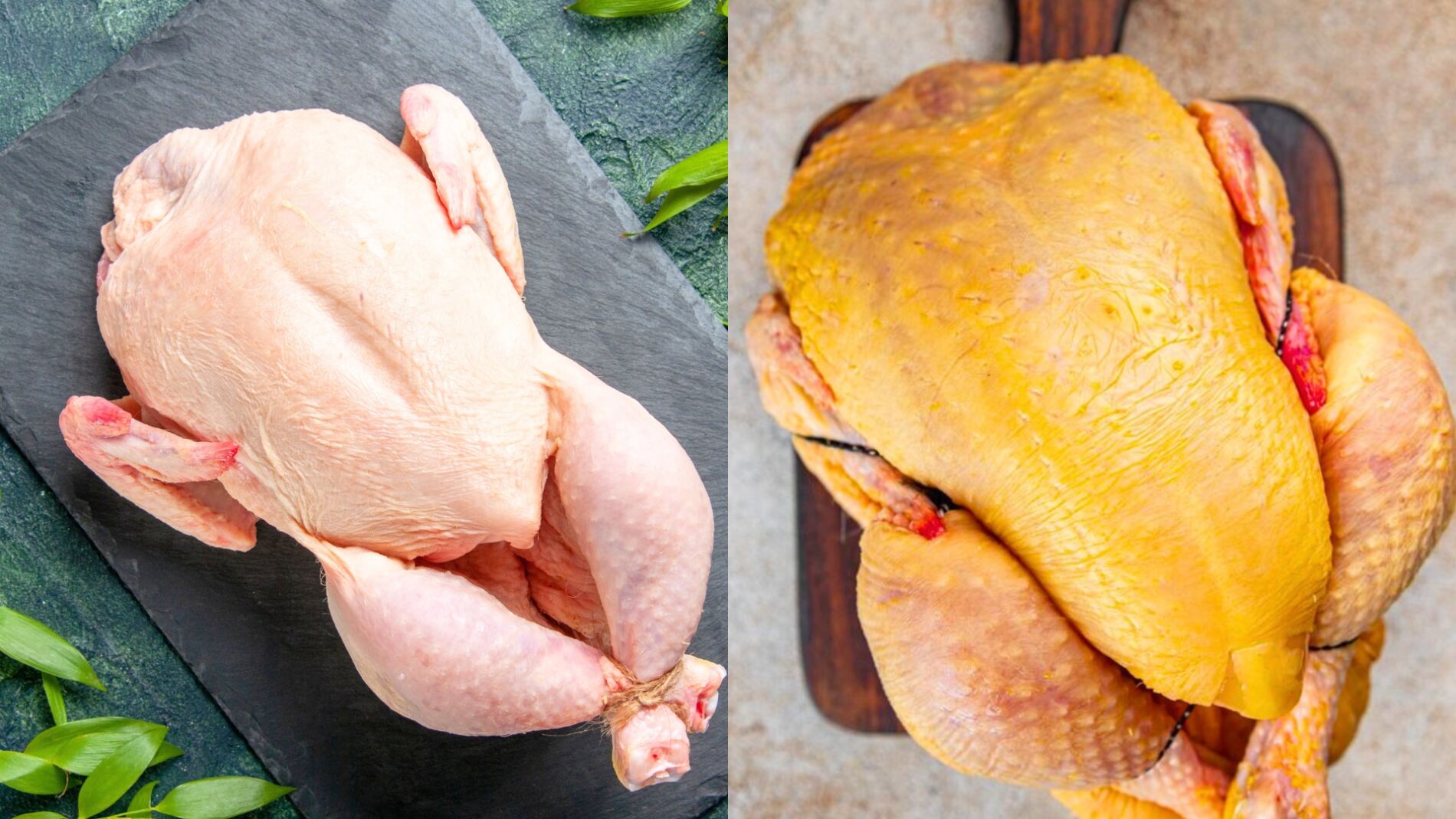
The yellow tone comes from carotenoids, natural pigments found in foods such as corn, alfalfa and marigold flowers, which build up in the subcutaneous fat. Yellow skin is often marketed as a sign of free-range or slow-growing chickens, though it can also appear in conventionally raised birds given approved food colorings.
Why skin color varies
White or lighter skin, by contrast, is typical of birds fed mainly on wheat, barley and soy. It tends to be linked to younger, fast-growing chickens that carry less subcutaneous fat.
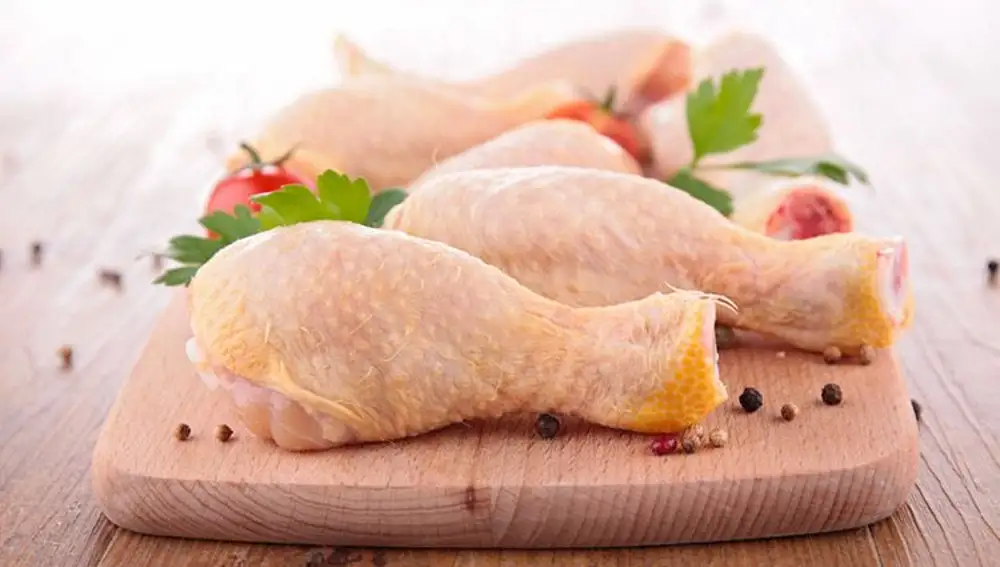
Carotenoids are the same group of pigments that give carrots, pumpkins and egg yolks their color, and they occur widely in plants and some animal feeds. Their presence in chicken skin is a matter of diet, not an indicator of how the bird was raised or how healthy the meat is.
Nutrition is the same either way
Nutritionally, both types of skin provide practically equal amounts of protein, vitamins and minerals. The real differences show up in texture and flavor once the chicken is cooked.
Yellow skin tends to have a firmer texture, with more defined muscle fibers and a more intense flavor. That makes it well suited to long cooking methods such as stews, roast chicken, soups and broths.
Which to choose for cooking
White skin offers a more tender, smooth and even texture with a milder, more neutral flavor. It is recommended for frying, grilling, breaded pieces, quick sautés and other fried preparations, where it takes on spices and marinades well.
The report on cooking suitability was compiled citing the outlet iEfimerida.
Test yourself
According to the article, what mainly causes the yellow color in chicken skin?
What diet is white or lighter chicken skin typically linked to?
Which cooking method does the article recommend for white chicken skin?
Have your say
Do you pay attention to chicken skin color when shopping?